Why Choose a Brushless DC Pump for Your Business?

Time:2026-11-07 Author:Amelia
0%

A Brushless Dc Pump can do more than move water or process fluid. It can help a business control flow precisely, reduce brush-related wear, and adapt output to changing demand. Yet “brushless” alone does not guarantee lower energy use. Pump sizing, controller settings, fluid properties, and operating hours all matter.

The U.S. Department of Energy’s 2006 Improving Pumping System Performance sourcebook estimates that pumping systems use nearly 20% of global electricity, and can account for 25–50% of energy use in some industrial operations. These figures cover pumping systems broadly, not brushless DC pumps specifically. They still show why even small efficiency gains deserve attention. R. Krishnan, author of Brushless DC Motor Drives, offers a useful engineering principle: evaluate the motor, electronic drive, and load as one system. That is practical advice, not a substitute for measured pump data.

In a facility, the difference may appear at a wash station, a cooling loop, or a dosing line that runs for long shifts. Match the pump’s flow and pressure curve to the real duty cycle, then compare power draw, noise, temperature, and maintenance records. Small details count. A unit that looks efficient on paper may perform poorly when oversized or installed with restrictive fittings. The right choice depends on the job—and on honest testing.
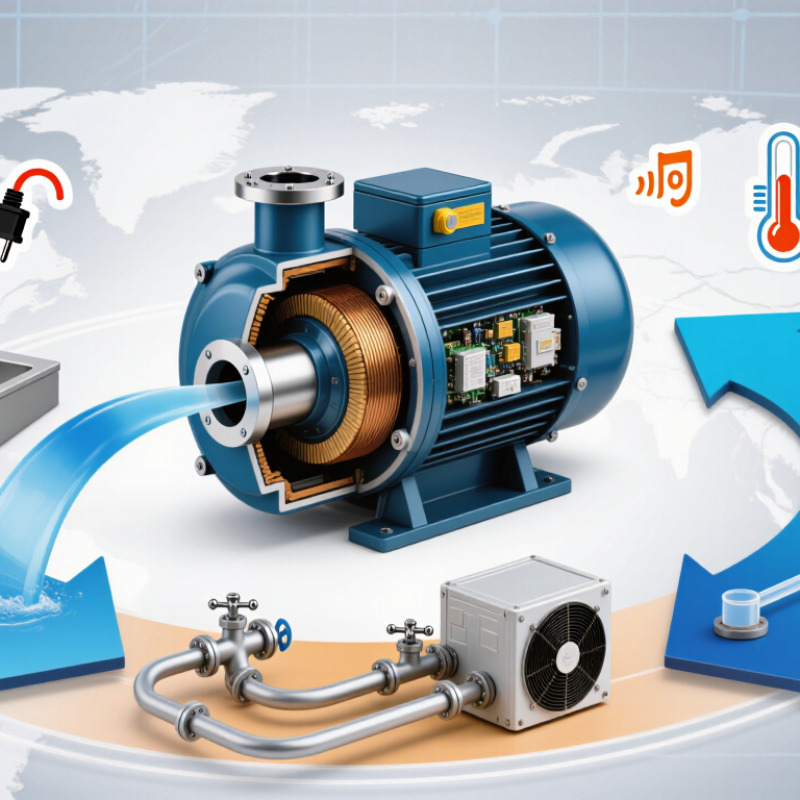
Why Choose a Brushless DC Pump for Your Business?

What a Brushless DC Pump Is and How It Works

A brushless DC pump uses a DC power supply and an electronically controlled motor to move liquid. Unlike a brushed motor, it has no carbon brushes rubbing against a rotating commutator. The motor typically has permanent magnets on its rotor and coils in its stationary section, called the stator. A controller switches current through those coils in sequence, creating a rotating magnetic field. The rotor follows that field and turns the pump’s impeller or other fluid-moving element.

No brush contact. Less friction. But the controller matters.

It times the electrical changes using rotor-position sensors or sensorless feedback, then adjusts motor speed to suit the demand. As the impeller spins, it creates pressure that draws liquid through the inlet and pushes it toward the outlet. Picture a small pump moving water through a narrow hose: a kink or a change in liquid viscosity can alter the flow, even when the motor speed stays constant.

A brushless design can run quietly and reduce wear, but it is not automatically more efficient in every setup. Pump size, fluid, temperature, and operating point all affect performance. The control system also adds complexity, and that detail is easy to overlook.

Key Performance Benefits for Business Operations

A brushless DC pump can make daily operations easier to control. Its motor uses electronic commutation instead of brushes, reducing one source of friction and wear. In many applications, that can mean less routine motor maintenance and fewer interruptions for brush replacement. Actual service needs still depend on fluid quality, duty cycle, and installation.

Speed control is a practical advantage. When process demand changes, operators can adjust pump output rather than relying only on throttling valves. For example, a filling line may need a steady flow at one stage and a lower rate during changeovers. Matching speed to demand can help limit unnecessary energy use, though savings depend on the system and operating point. Small adjustments matter.

These pumps can also support compact equipment layouts and quieter work areas, depending on the motor and pump design. Electronic controls may provide useful feedback for monitoring speed or detecting operating changes. That can help maintenance teams notice a problem before output becomes inconsistent. But the pump is not automatically the right choice. Confirm fluid compatibility, pressure, flow range, and control requirements before selecting one. A rushed sizing decision can erase the expected benefits.

Industries and Tasks Suited to Brushless DC Pumps

Why Choose a Brushless DC Pump for Your Business?

Industries and Tasks Suited to Brushless DC Pumps

Brushless DC pumps can suit tasks that need steady circulation, adjustable flow, or compact equipment. In laboratories, they may move water or compatible fluids through small test systems. In commercial refrigeration, they can circulate coolant around heat-sensitive components. Greenhouses and hydroponic setups may use them to deliver nutrient solution through narrow tubing. Quiet operation can also matter in mobile equipment or indoor work areas.

Tips: Check fluid compatibility, required flow, pressure, and temperature before choosing a pump. A quiet motor is useful, but it cannot compensate for undersized tubing or a poor system layout.

These pumps are worth considering when speed control and reduced brush wear are priorities. They can support repeated operation in dispensing equipment, small cooling loops, and water circulation systems. Still, “low maintenance” does not mean maintenance-free. Seals, bearings, and filters may need inspection, especially when fluid contains particles. A pump that performs well in a clean test may behave differently in a real installation. Measure the actual flow after setup, and leave room to adjust.

Factors to Consider When Selecting a Pump

Selecting a brushless DC pump starts with the real duty point, not the maximum rating. Record required flow, total dynamic head, daily operating hours, and demand changes. A pump advertised at 10 liters per minute may deliver less through narrow tubing or against higher pressure. Check its performance curve. Not just the headline figure.

The U.S. Department of Energy’s Improving Pumping System Performance: A Sourcebook for Industry estimates that pumping systems use nearly 20% of global electricity demand. It also reports that pumps can account for 25–50% of energy use in some industrial operations. That makes part-load performance worth checking. Ask for efficiency data at your expected operating point, and compare power draw across realistic flow rates.

Match wetted materials to the liquid’s temperature, viscosity, and chemical properties. For fluids with particles, verify the pump’s solids-handling limits; a small mismatch can mean frequent blockages. Check whether the controller supports your supply voltage and required speed range. Also consider noise, dry-run protection, service access, and spare-part availability. Brushless motors avoid brush replacement, but that alone does not guarantee low maintenance. A neat efficiency number can mislead. If possible, test the pump with your actual tubing and liquid, then measure flow and power.

Why Choose a Brushless DC Pump for Your Business? - Factors to Consider When Selecting a Pump

Selection factor What to assess Why it matters for a brushless DC pump Practical selection check
Required flow and pressure Determine the required flow rate and total dynamic head at the actual operating point. Include elevation, pipe friction, fittings, and system pressure. Pump performance depends on the system operating point, not on maximum flow or maximum head considered separately. Compare the system requirements with the pump performance curve. Confirm the pump can meet the duty point without operating outside its recommended range.
Flow variability Establish whether demand is constant, intermittent, or changes during operation. Electronic speed control can allow a compatible brushless DC pump to adjust output. Control range and performance depend on the pump and its driver. Check the permitted speed range, control input, and flow or pressure response. Do not assume speed control alone guarantees a particular flow rate.
Fluid properties Record fluid composition, temperature, viscosity, density, pH, and any suspended solids or abrasives. Fluid properties affect hydraulic performance, material compatibility, sealing, and wear. A motor type does not determine whether wetted parts suit the fluid. Verify the impeller, housing, shaft, and seal materials against the fluid supplier's compatibility information and the pump manufacturer's limits.
Power supply Confirm available DC voltage, supply tolerance, current capacity, wiring distance, and protection requirements. A brushless DC motor requires electronic commutation. The driver and power supply must be compatible with the motor and operating load. Check rated voltage, startup and operating current, driver requirements, wiring guidance, and overcurrent or thermal protection provisions.
Energy use Estimate operating hours, load profile, and energy consumption over a typical duty cycle. Brushless motors avoid brush friction and brush replacement, but overall pump efficiency varies with motor design, hydraulics, and operating point. Compare efficiency or power-input data at the required duty point rather than relying on motor type alone. Estimate energy cost using local electricity rates.
Duty cycle and service life Identify daily operating hours, starts per hour, continuous-running periods, and expected service life. Removing brushes eliminates brush wear as a maintenance item, but bearings, seals, electronics, and other components can still wear or fail. Confirm continuous or intermittent duty ratings, allowable starts, operating temperature limits, and recommended inspection intervals.
Dry running and priming Determine whether the pump is self-priming and whether it may run without liquid during startup, shutdown, or a supply interruption. Dry-running tolerance varies by pump construction. Brushless operation does not by itself protect seals, bearings, or hydraulic components from dry running. Check the manufacturer's dry-run limits and priming instructions. Use appropriate level, flow, or temperature protection where the application requires it.
Noise and vibration Consider the installation location, nearby work areas, mounting surface, and acceptable sound levels. Noise depends on pump hydraulics, motor control, mounting, fluid flow, and installation. Brushless design alone does not establish a noise level. Request sound or vibration data under representative operating conditions and follow mounting and pipe-support recommendations.
Installation environment Assess ambient temperature, moisture, dust, washdown exposure, ventilation, and risk of chemical exposure. The motor driver and electrical connections may need protection appropriate to the environment. Enclosure ratings apply only under their stated test conditions. Verify the specified ambient limits, enclosure rating, connector protection, and installation clearances for the intended location.
Maintenance and access Review available service space, replacement-part access, cleaning needs, and the consequences of downtime. Brushless pumps can reduce brush-related service, but routine care may still include checking for leaks, blockage, corrosion, and electrical issues. Review the maintenance manual, expected service tasks, spare-part availability, and whether the unit can be removed or serviced without disrupting operations.
Controls and protection List required control functions, such as on/off switching, speed input, pressure control, alarms, or fault signals. Control features vary by driver. Overload, overtemperature, reverse-polarity, and dry-run protections should be verified rather than presumed. Confirm supported signals, wiring interfaces, fault behavior, and included protection functions in the technical documentation.
Total cost of ownership Consider purchase price, installation, energy use, maintenance, replacement parts, and the cost of downtime. A brushless design may reduce brush maintenance, while total savings depend on duty cycle, energy performance, service needs, and application fit. Compare lifecycle costs using the same duty profile and evaluation period. Include installation and service requirements, not just initial price.

Installation, Control, and Maintenance Requirements

Why Choose a Brushless DC Pump for Your Business?

Installation, Control, and Maintenance Requirements

A brushless DC (BLDC) pump can simplify speed control, but reliable performance starts with correct installation. Check supply voltage, current limits, and controller compatibility against the pump’s rated data. Keep the inlet short and adequately sized; a tight elbow near the suction port can cause noise, unstable flow, or premature wear. Align fittings without forcing them, and protect electronics from splash, heat, and vibration. Small details matter.

The U.S. Department of Energy’s Improving Pumping System Performance: A Sourcebook for Industry estimates that pumping systems use nearly 20% of global electricity. That makes control setup more than a convenience. Use a compatible controller to ramp speed gradually and set practical pressure or flow limits. Place sensors where they measure the process accurately, away from turbulent outlets. Verify current and temperature under real load, then record baseline readings. A commissioning sheet helps, though it cannot fix poor plumbing.

Tips: Never run the pump dry unless its documentation permits it. Inspect the strainer, wiring, seals, and vibration on a regular schedule. Clean deposits before they harden, and compare readings with commissioning values. If flow drops, check the inlet and sensor before increasing speed. That shortcut may hide the real cause.

FAQS

How does a brushless DC pump move liquid?

A controller sends current through stationary coils in sequence. The magnetic field turns a rotor, which spins the impeller and moves liquid from inlet to outlet.

What makes this pump different from a brushed motor pump?

It has no carbon brushes rubbing against a commutator. Less brush friction can mean less routine wear. The controller adds complexity, though.

Can pump speed be adjusted when process needs change?

Yes. A compatible controller can change motor speed and pump output. For example, a filling line can use a lower flow rate during changeovers.

Does a brushless DC pump always save energy?

No. Savings depend on the system, fluid, and operating point. Matching speed to demand may help, but it is not guaranteed.

What should be checked before installation?

Match the supply voltage, current limits, and controller to the pump’s rated data. Keep the inlet short and adequately sized. Avoid tight elbows near the suction port.

What can cause noisy or unstable flow?

A restricted inlet, unsuitable plumbing, or changing liquid viscosity can affect flow. I might focus on motor speed first, but the inlet deserves an early check.

How should the pump be maintained?

Inspect the strainer, wiring, seals, and vibration regularly. Clean deposits before they harden. Compare readings with the values recorded during commissioning.

Is it safe to run the pump dry?

Only if its documentation permits dry running. Otherwise, keep liquid available at the inlet and investigate low flow before increasing speed.

Conclusion

A Brushless Dc Pump uses electronic commutation instead of traditional brushes to drive its motor, helping reduce friction and wear. For business operations, this design can offer efficient power use, quieter performance, consistent flow, and less routine maintenance. These qualities make it a practical option for tasks such as moving water or other compatible fluids in manufacturing, agriculture, cooling systems, and equipment circulation.

Choosing the right pump depends on the fluid, required flow rate and pressure, operating temperature, power supply, and installation environment. Businesses should also consider how the pump will be controlled, including speed adjustment and integration with existing systems. Correct sizing, secure connections, and following the manufacturer’s operating guidance can support reliable performance. Regular inspection of filters, seals, wiring, and fluid pathways helps identify issues early and maintain dependable operation over time.


Amelia

Amelia

Amelia is a seasoned marketing professional with a wealth of expertise in our company’s core offerings. With an unwavering passion for driving growth and innovation, she plays a pivotal role in shaping our marketing strategies and enhancing brand visibility. A key aspect of her responsibilities......