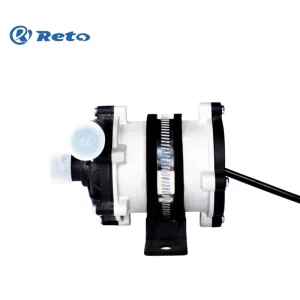
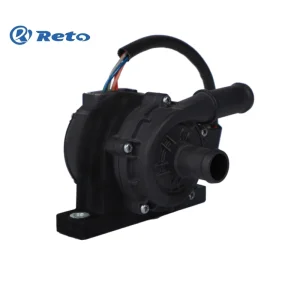
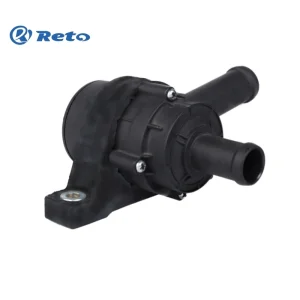
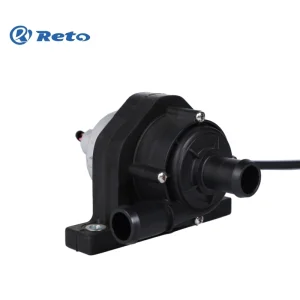
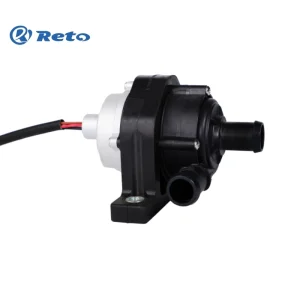
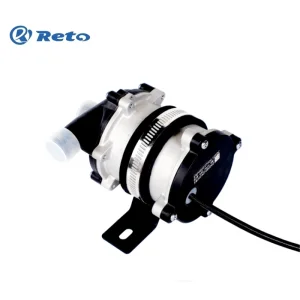
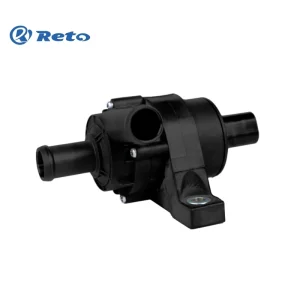
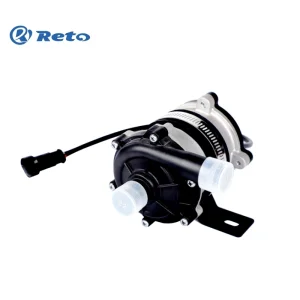
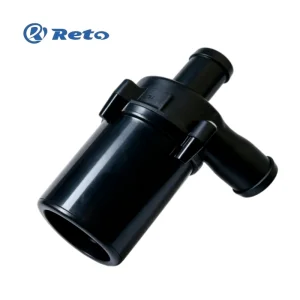
Engineered for high-efficiency thermal circulation across automotive traction battery modules, EV charging stations, and vehicle electrical circuits.
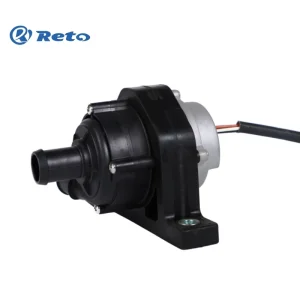
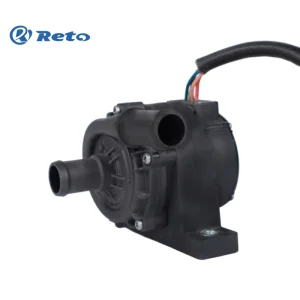
Analyzing the pivotal shift from mechanical belt-driven impellers to intelligent Brushless DC (BLDC) electric fluid circulation in modern electrification.
Unlike internal combustion engines where mechanical water pumps parasitically consume fuel regardless of load, modern automotive pump factories build electronic BLDC pumps that decouple fluid velocity from engine RPM. Operating via Pulse Width Modulation (PWM) or Controller Area Network (CAN) signals, flow rates dynamically calibrate down to the precise milliliter required to regulate power electronics and battery cells.
Lithium-ion cells within electric vehicles operate within a narrow thermal sweet spot between 20°C and 35°C. Excessive cell gradient delta exceeding 5°C triggers accelerated dendrite growth, rapid capacity degradation, and potential thermal runaway. RETO's automotive liquid cooling pumps provide low-pulsation, steady continuous flow across cold plates to secure absolute isothermal stability across pouch, prismatic, and 4680 cylindrical formats.
Traditional automotive water pumps inevitably suffer dynamic shaft seal wear, resulting in catastrophic coolant ingress into sensitive bearings or external leaks onto HV electronics. Our smart automotive factory implements static isolation sleeves utilizing PPS-GF reinforced polyphenylene sulfide. This separates the wet rotor cavity from dry stator coils entirely, eliminating dynamic seal degradation for long lifespan operation.
A strategic overview of Tier-1 procurement requirements, supply security, localization, and high-volume scalability.
The global electrification rush requires automotive pump manufacturers to function not merely as build-to-print vendors, but as co-development Tier-1 or Tier-2 design partners. OEMs demand rigorous Design Failure Mode and Effects Analysis (DFMEA), 3D CFD cavitation modeling, and Finite Element Analysis (FEA) vibration resistance before first prototype cutting, shortening engineering cycles from 24 months to under 8 months.
Regional mandates, such as the EU Net-Zero Industry Act, US Inflation Reduction Act, and Southeast Asian EV subsidies, create distinct procurement requirements. European car factories prioritize closed-loop material traceability (RoHS/REACH), low decibel NVH signatures (< 38 dB(A)), and recyclability, whereas emerging ASEAN and Latin American markets seek durable, high-ambient-temperature tolerance up to 125°C.
Reliance on fragmented sub-tier tooling suppliers exposes automotive OEMs to massive supply disruption. As a premier automotive pump factory based in Xiamen, Fujian, RETO ensures vertical self-reliance across critical processes: precision high-speed coil winding, multi-cavity injection molding, automated surface mount technology (SMT) for control PCBA, and 100% computerized end-of-line testing.
| Performance Dimension | Traditional Mechanical Pump | Brushed DC Automotive Pump | RETO Advanced BLDC Automotive Pump |
|---|---|---|---|
| Operating Lifespan | 5,000 - 8,000 Engine Hours | 2,000 - 4,000 Hours (Carbon Wear) | > 25,000 - 40,000 Continuous Hours |
| Speed & Flow Control | None (Direct Belt-Driven Speed) | Rudimentary Variable Resistor/Voltage | Precise PWM (0-100%) or CAN/LIN Bus |
| Acoustic NVH Level | 48 - 56 dB(A) + Mechanical Pulley Rattle | 45 - 52 dB(A) High Commutator Arcing Noise | ≤ 35 - 38 dB(A) Ultra-Quiet Running |
| EMC Interference (CISPR 25) | Not Applicable (Passive Mechanical) | High Electrical Spark EMI (Class 1-2) | Class 3 to Class 5 Zero Arcing Compliant |
| Energy Consumption / Drag | Continuous High Parasitic Friction Loss | Medium Efficiency (~55-65%) | High Motor Efficiency (> 82-89%) |
| Diagnostic Capabilities | Zero Feedback (Fails Catastrophically) | None | Real-Time FG, Stall & Dry-Run Protection |
Stringent production controls, PPAP documentation, and international certifications delivering zero-defect certainty.
Audited by accredited bodies for stringent automotive supply chain management, defect prevention, variation reduction, and full component lot-number traceability.
Global standard verification of factory operational management, lean continuous improvement protocols, and third-party laboratory product stress testing.
Specialized integrated electronic filtering and shielding that prevents high-frequency radiation from interrupting sensitive automotive ADAS, LiDAR, and infotainment systems.
Vacuum-tested ultrasonic or potting encapsulation preventing high-pressure steam cleaning washdowns or undercarriage submersion from causing electrical short circuits.
Production Part Approval Process documentation complete with PSW, Control Plans, Process Capability studies (Cpk > 1.67), and material certification dossiers.
100% lead-free, non-toxic polymer and alloy sourcing, compliant with European environmental regulations and end-of-life vehicle (ELV) recycling directives.
Targeted pump platforms designed to overcome unique operational stresses across vehicular subsystems.
Circulating 50/50 ethylene glycol-water mixtures through extruded aluminum micro-channel cold plates. Requires ultra-low internal hydraulic resistance, linear PWM flow modulation, and long-term fluid compatibility up to 105°C continuous without chemical leaching.
Silicon Carbide (SiC) and IGBT traction inverters generate acute, instantaneous heat spikes during rapid acceleration. High-head, rapid-spooling BLDC pumps purge localized thermal hotspots in fractions of a second, preventing localized power throttling.
High-power charging cables and charging gun terminals generate significant resistive heat during 400A+ megawatt-level charging sessions. Continuous-duty exterior liquid cooling pumps circulate coolant through flexible charging umbilical hoses to prevent handle overheating.
Secondary vehicle boosting for HVAC hydronic heaters, recreational vehicle potable water pressurization, and commercial transport auxiliary systems. Focuses on low power draw, silent operation, and reliable anti-airlock self-priming behavior.
A multi-year development trajectory aligning automotive pump design with the next wave of smart electric mobility.
Migrating from open-loop frequency feedback to intelligent LIN bus networks. Pump microcontrollers report internal winding temperature, real-time motor current draw, detected hydraulic air pockets, and impeller cavitation flags directly to the central vehicle Domain Controller.
Eliminating bulky centralized low-voltage DC-DC converters by integrating silicon carbide gate drivers directly into the pump end-cap assembly. Enables the fluid pump to operate straight from the main traction battery pack while meeting reinforced ISO 6469 galvanic isolation.
Embedding edge-computing micro-firmware algorithms that monitor high-frequency stator vibration anomalies and back-EMF ripple patterns. Facilitates zero-unscheduled-downtime maintenance warnings before bearing fatigue causes on-road vehicle breakdown.
Merging the electronic pump casing with multi-way motorized coolant directional valves, expansion tanks, and plate heat exchanger bodies into a single injection-molded monoblock housing. Drastically reduces vehicular assembly hours and eliminates multiple external hose clamps.
In-depth responses compiled by our senior engineering staff for OEM buyers and thermal system designers.
Thermal endurance validation is conducted in environmental chambers following ISO 16750-4 guidelines. Pumps undergo combined test profiles running between -40°C and +125°C ambient, paired with internal glycol fluid temperature shock cycles (-30°C to +105°C) across 3,000+ continuous hours under maximum design head pressure, validating solder joints and PPS rotor sleeves against micro-cracking.
Our proprietary internal BLDC control firmware incorporates an automated current-monitoring algorithm. If the pump detects a rapid decrease in hydrodynamic load (indicating air lock or dry-running conditions below critical torque thresholds), the microcontroller automatically throttles the motor down to 500 RPM, pulses intermittently to assist air purging, and enters thermal self-preservation sleep mode if no fluid is sensed after 30 seconds.
For rapid prototypes utilizing laser-sintered automotive-grade composite resin and CNC-machined impellers, functional prototypes are dispatched within 10 to 14 days. Production-grade steel multi-cavity injection tooling, complete with mold flow simulation reports, generally requires 35 to 45 calendar days, followed immediately by PPAP sample submittals.
We utilize a multi-tier EMC defense strategy compliant with CISPR 25 Class 4 or Class 5. The onboard PCBA integrates a high-order common-mode and differential-mode LC filter, high-permeability toroidal chokes, TVS diode overvoltage transient clamps, and copper-poured internal ground planes enclosed inside an optional anodized aluminum casing that attenuates radiated EMI.
High-temperature, compact, and specialized brushless DC pumps engineered for charging piles, car motors, and battery cooling loops.