1 / 5
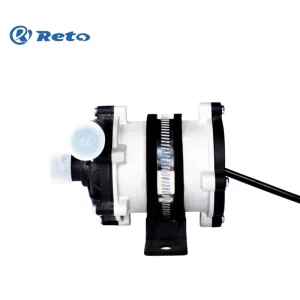
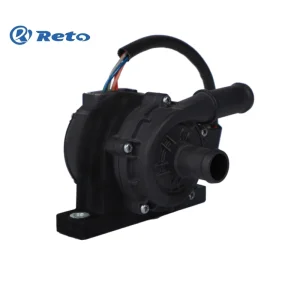
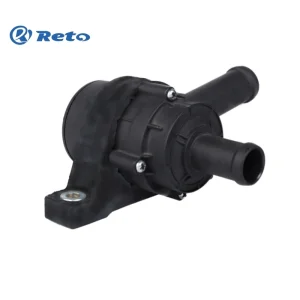
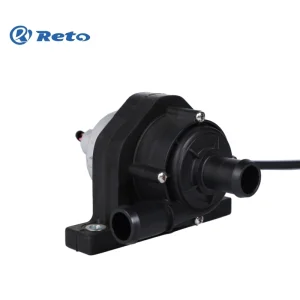
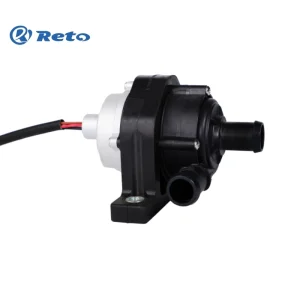
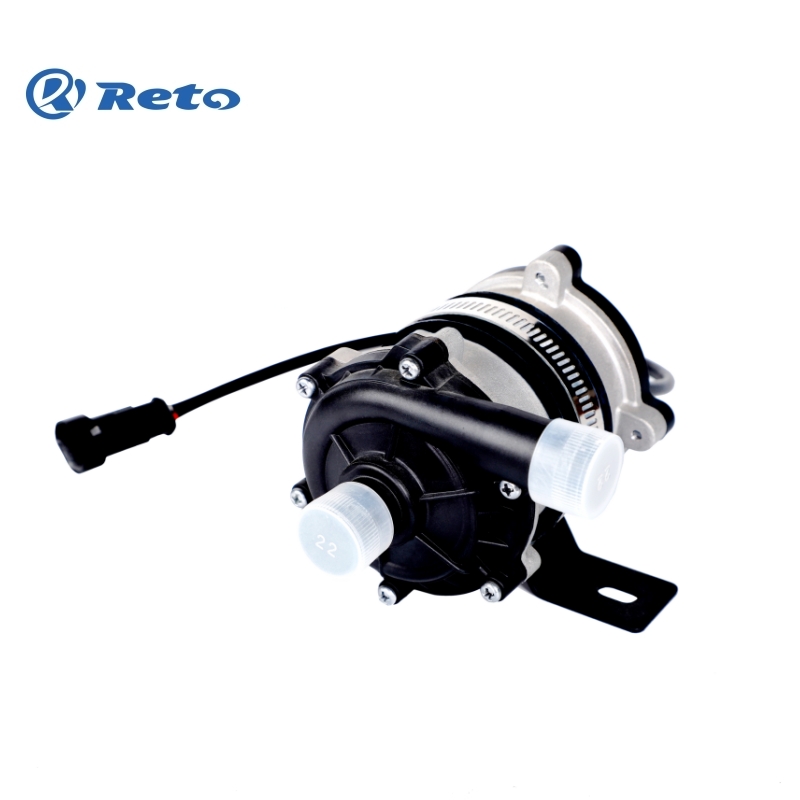
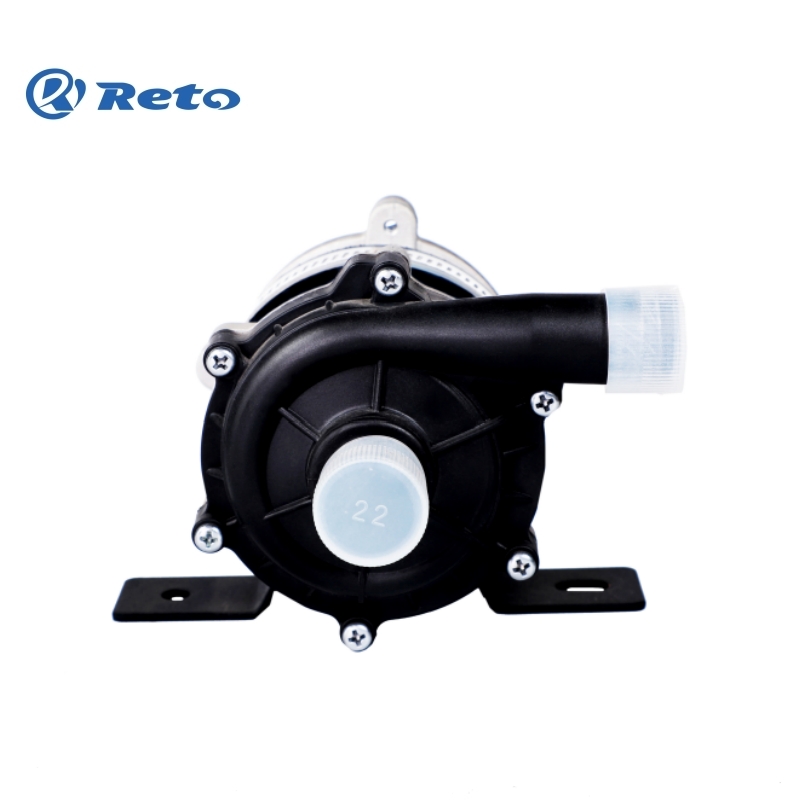
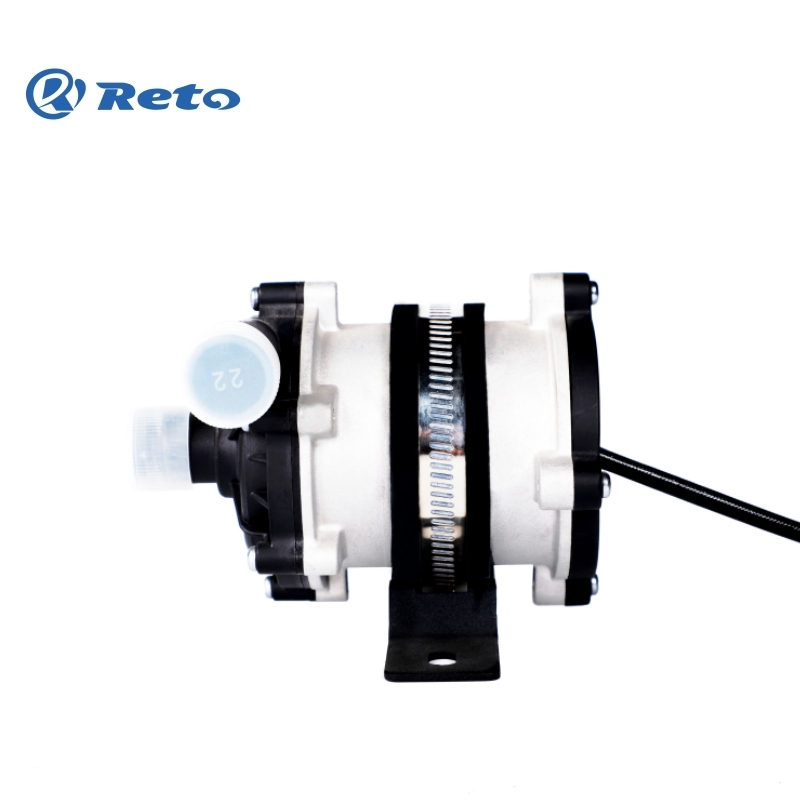
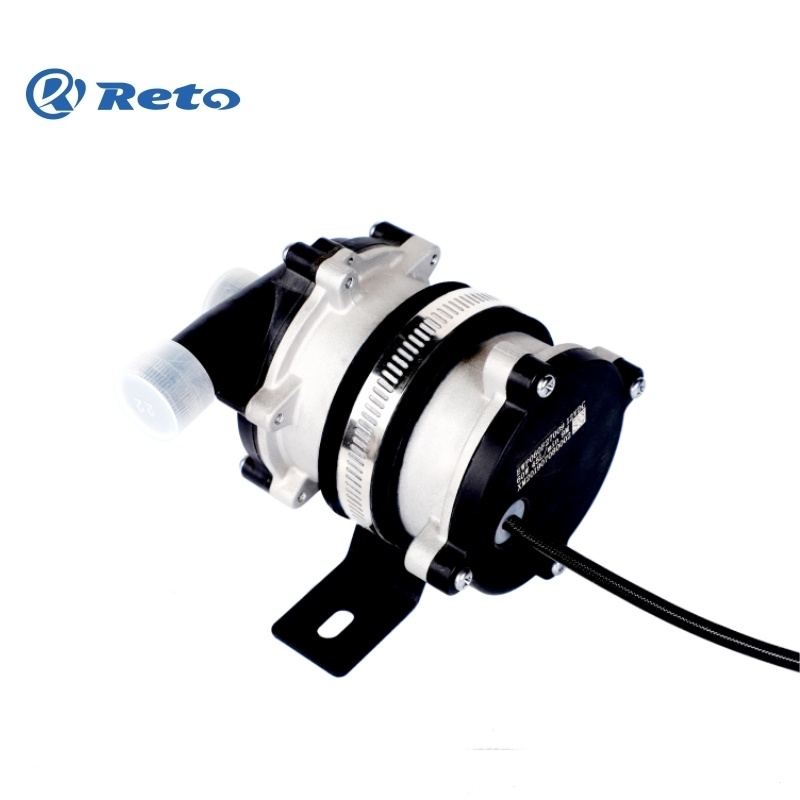
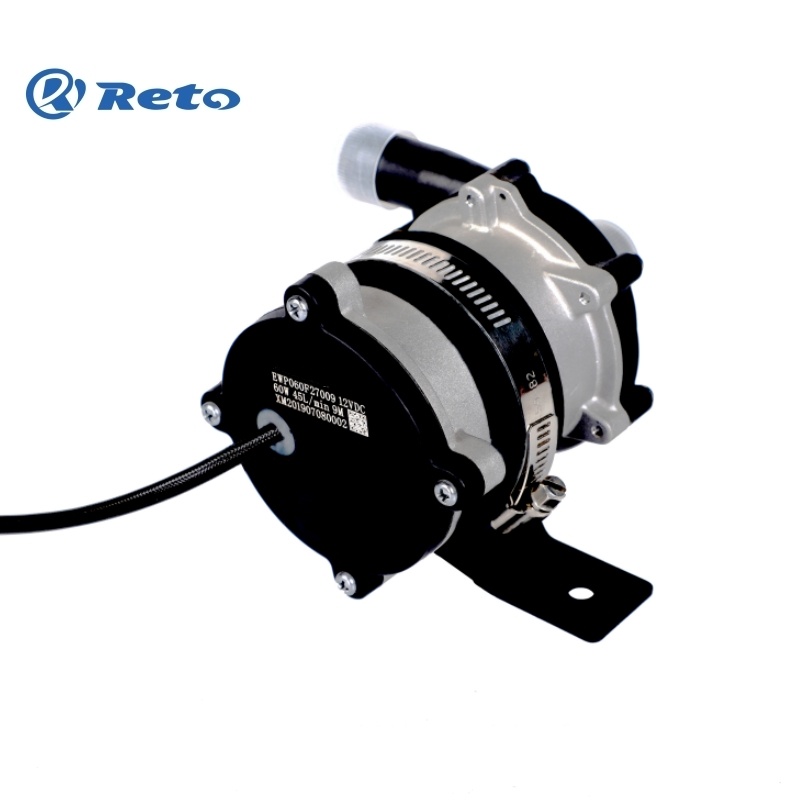
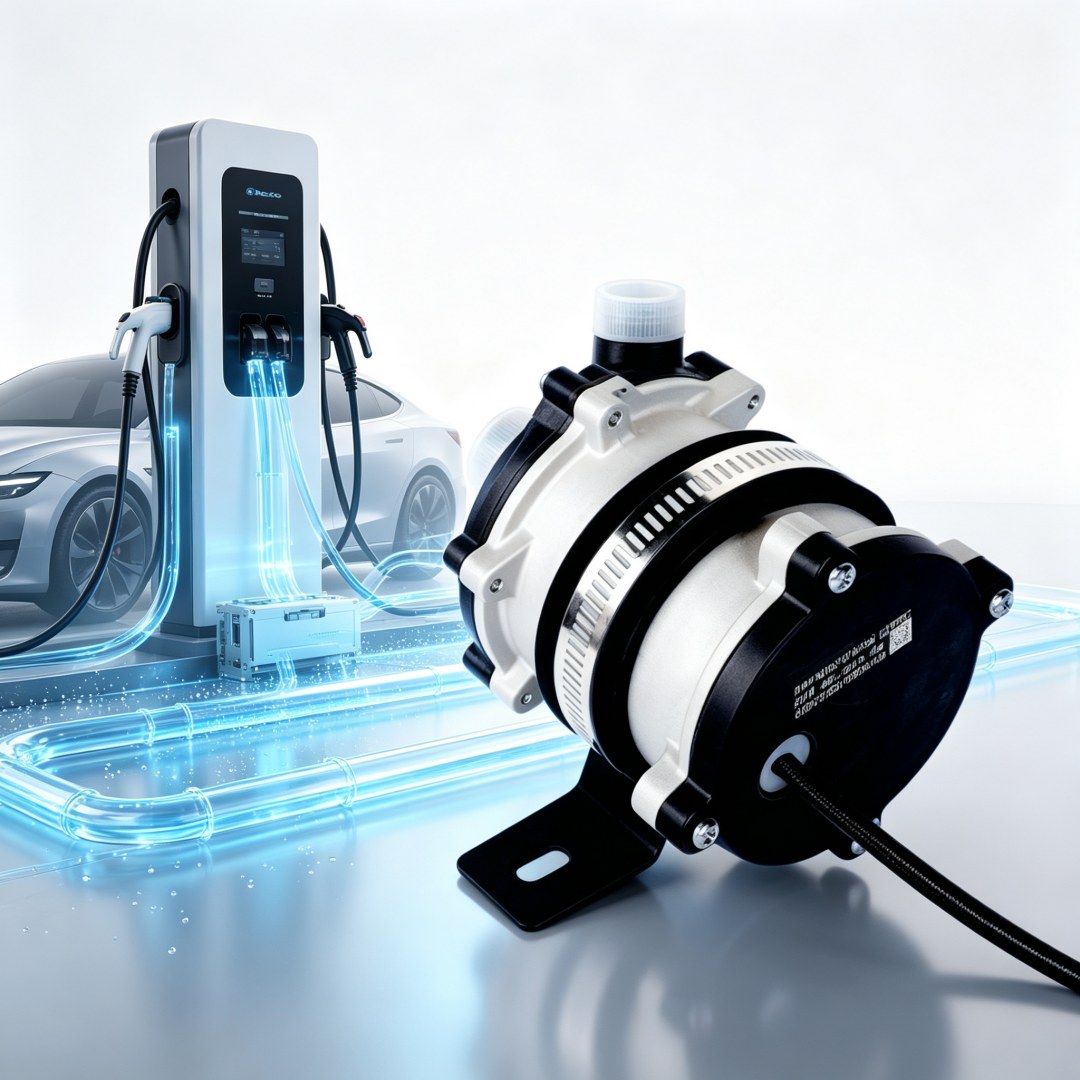
The Bldc Motor Pump utilizes an electronically commutated motor to drive a centrifugal impeller, circulating a 50/50 ethylene glycol-water mixture through microchannels embedded in silicon carbide inverters and charging cable conductors. Heat transfers from semiconductor junctions to the coolant medium, then dissipates through an external heat exchanger in a closed-loop circuit.
|
MODEL: EWP060F |
|||
|
AMBIENT TEMP |
-40~125℃ |
|
HUMIDITY |
Below 90% RH |
||
MEDIUM |
PURE WATER/ANTIFREEZE |
||
MEDIUM TEMP |
-40~100℃ |
||
WATERPROOF |
IP67 |
||
CONSTANT/CONTINUOUS PRESSURE |
NA |
||
SPECIFICATION |
FEATURE |
||
RATED VOLTAGE |
12V DC |
COLOR |
WHITE |
RATED CURRENT |
5(1±10%)A |
WEIGHT |
650 g |
RATED POWER |
60(1±10%)W |
NOISE |
≦ 45dB@1m |
MAX FLOW |
≧45L/min |
LIFETIME |
≧20 00H |
MAX HEAD |
9±1m |
INSULATION |
H (180℃) |
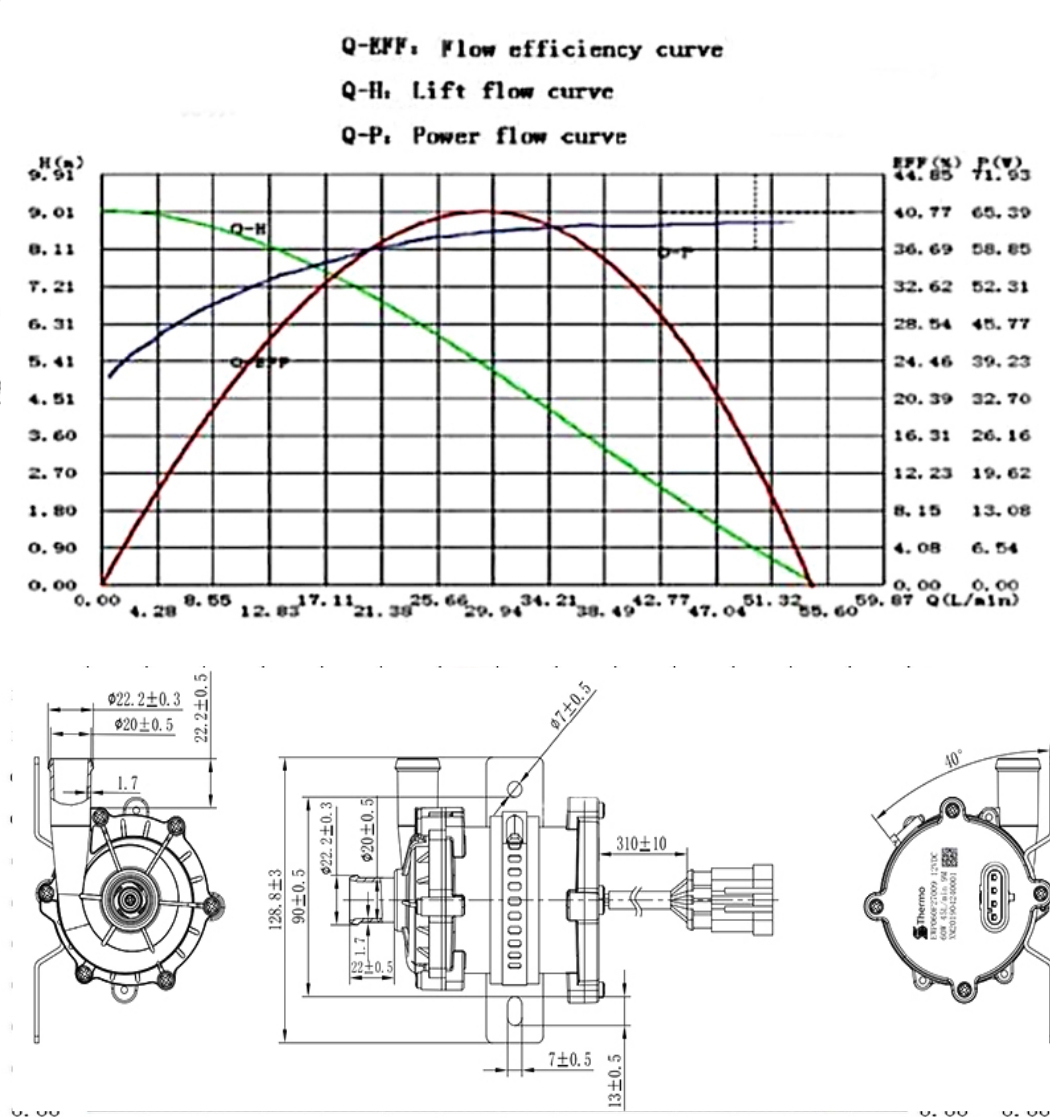
The architecture eliminates brush wear, achieving ≥20,000-hour operational lifetime compared to 5,000 hours for brushed alternatives. The EV charging pile liquid cooling water pump model EWP060F delivers 60W rated power at 5A current draw, with IP67 waterproofing suitable for outdoor deployment per NFPA 70 Article 625 requirements for EVSE installations.
U.S. Department of Energy data indicates that liquid-cooled charging cables can support up to 500A continuous current, enabling 10-minute charging for 80% battery capacity — a performance threshold unattainable with air-cooled conductors. The high-flow miniature pump design maintains a noise profile under 45 dB at 1 meter, ensuring compliance with urban installation regulations.
A Liquid Cooling Pc Pump uses a brushless DC motor with IP67 sealing, designed for continuous operation with glycol-water mixtures at temperatures from -40°C to 100°C, whereas standard water pumps handle pure water only at limited temperature ranges.
For 350 kW dispensers, a minimum flow rate of 45 L/min at 9m head pressure is required to maintain semiconductor junction temperatures below 85°C under full load.
Yes. The pump medium specification supports pure water and ethylene glycol-based antifreeze mixtures up to 50% concentration without impeller degradation.
The most common failure modes are cavitation from insufficient inlet pressure, dielectric fluid contamination causing insulation breakdown, and thermal stress exceeding the H-class insulation limit of 180°C.
With a rated lifetime of ≥20,000 hours and continuous operation, replacement intervals typically range from 2.3 to 5 years depending on duty cycle, ambient conditions, and coolant quality maintenance.