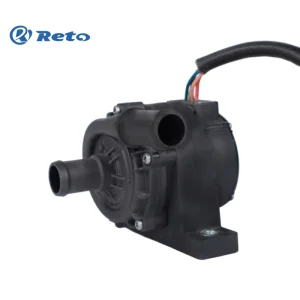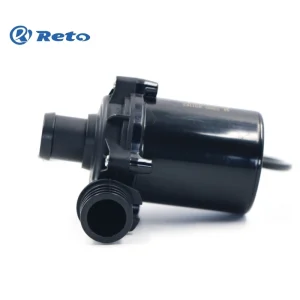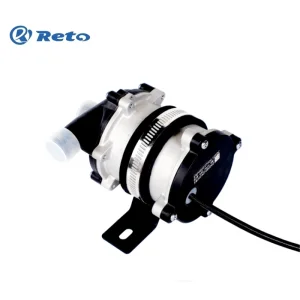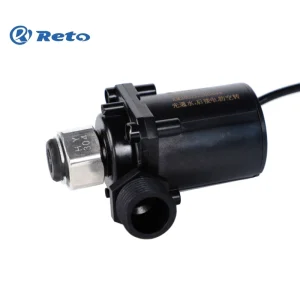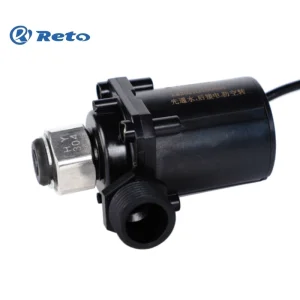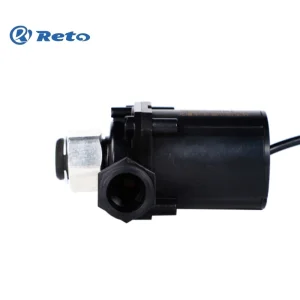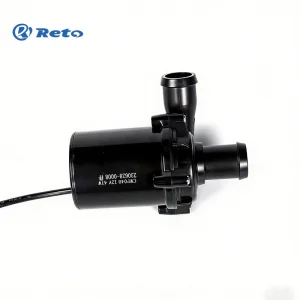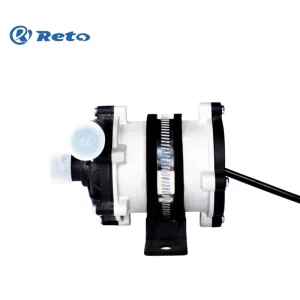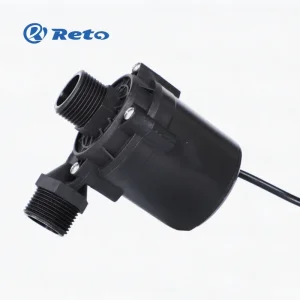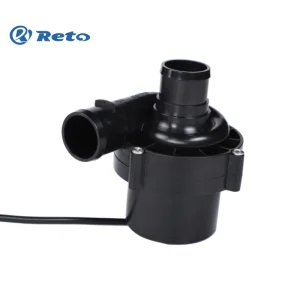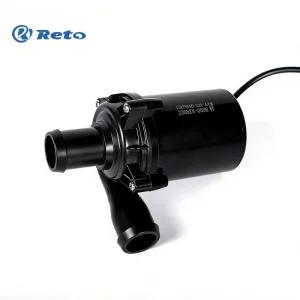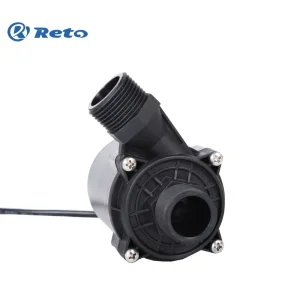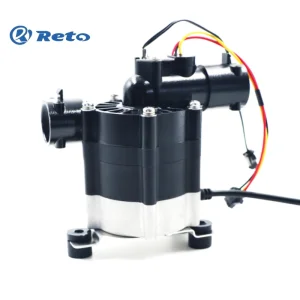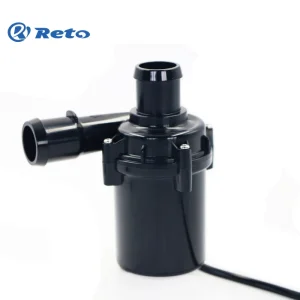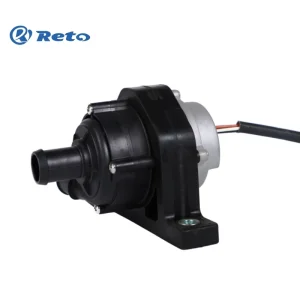
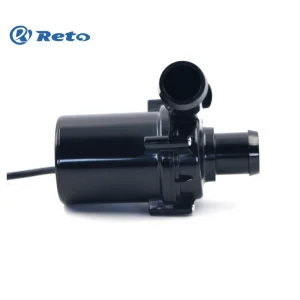
The global industrial and commercial fluid-handling landscape is undergoing a systemic transition toward high-efficiency, micro-controlled, and intelligent fluid displacement architectures. As Tier-1 OEMs, appliance conglomerates, automotive integrators, and industrial system designers modernize their product pipelines, sourcing high-reliability booster pumps from China has evolved from a pure cost-arbitrage maneuver into a strategic imperative for technological co-development. China’s manufacturing hubs—most notably specialized precision centers such as Xiamen, Fujian—have consolidated complete upstream and downstream supply chains for Brushless DC (BLDC) electric pumps, smart pressure-boosting systems, and high-temperature thermal management loops.
Modern enterprise procurement directors face complex engineering matrix evaluation metrics: duty cycle life expectations exceeding 30,000 continuous operating hours, zero-leakage magnetic drive hermetic isolations, precise Pulse Width Modulation (PWM) signal feedback, low Acoustic Noise Vibration and Harshness (NVH) profiles (<28-35 dB), and strict international material safety compliance (NSF, WRAS, REACH, RoHS, CE, IATF 16949). Partnering with a dedicated Chinese booster pump manufacturer and factory like Xiamen Reto Electric Appliances Co., Ltd. (RETO) provides global procurement teams with immediate access to automated BLDC production lines, extensive patent portfolios, and custom engineering teams capable of accelerating design-to-mass-production lifecycles by up to 40%.
Booster pumps are fundamentally fluid momentum multipliers designed to overcome hydraulic resistance, pipe friction losses, dynamic elevation heads, and mechanical restriction points. Modern engineering requires application-specific fluid customization rather than generic, off-the-shelf pump platforms. Below is an engineering overview of four macro industrial sectors where China BLDC booster pump manufacturing excels:
Electric Vehicles (EVs) require active, highly reliable coolant circulation across battery packs, drive motors, power electronics (MCU/OBC), and hydrogen fuel cell stacks. Specialized 12V and 24V BLDC liquid cooling pumps deliver high temperature tolerance (-40°C to +125°C), vibration resistance, automotive CAN/LIN bus or PWM speed control, and IP68 waterproof ratings manufactured under rigorous IATF 16949 automotive quality management standards.
Intelligent toilets, bidet seats, and modern smart bath fixtures demand compact, silent, and instantaneous pressure boosting. Operating under low municipal line pressure or erratic tank levels, custom 12V/24V potable water booster pumps deliver constant hydraulic head for hygienic washing and high-velocity rim flushing, maintaining acoustic levels under 40 dB to ensure premium user experiences.
Tankless water heaters, heat pump water heaters, water-heated mattress pads, and solar thermal collectors rely on continuous hot water return and booster circulation. Custom BLDC pumps engineered with polyphenylene sulfide (PPS) pump housings and food-grade ceramic shafts withstand continuous fluid temperatures up to 100°C without dimensional deformation or chemical leaching.
High-precision industrial equipment—such as semiconductor laser cutting machines, medical MRI chillers, commercial beverage dispensers, and server liquid cooling racks—require zero-downtime, continuous-duty fluid displacement. Hermetically sealed magnetic drive pumps completely isolate the drive electronics from glycol/water coolants, eradicating dynamic shaft seal leaks entirely.
To achieve industry-leading operational life, energy density, and noise attenuation, top China booster pump manufacturers have abandoned traditional brushed DC and shaded-pole AC induction motor designs. The technological roadmap below highlights the core engineering breakthroughs integrated into modern Chinese BLDC booster pump architectures:
By embedding intelligent microprocessors directly within the pump housing end-cap, electronic commutation is achieved via Sensorless FOC software algorithms. This eliminates delicate physical Hall sensors while ensuring smooth, sinusoidal motor currents. FOC drivers provide real-time dynamic torque regulation, soft-start capabilities, dry-running protection, over-voltage/over-current safeguard cutoffs, and locked-rotor automatic recovery.
Traditional mechanical shaft seals suffer from inevitable abrasive degradation, fluid crystallisation, and dry-friction seal failures over time. Advanced BLDC booster pumps utilize a static isolation containment shell (crafted from high-grade ceramic or engineering thermoplastics like PPE/PPS). The permanent magnet outer rotor drives the inner impeller rotor across this impermeable barrier, guaranteeing 100% leak-proof fluid containment throughout the unit's operational lifetime.
Fluid viscosity, temperature, and mineral content present severe mechanical stress to pump internals. Leading Chinese pump foundries implement high-precision zirconia ($ZrO_2$) or silicon carbide ($SiC$) ceramic shafts coupled with self-lubricating carbon-graphite or Teflon-infused bearings. This tribological pairing exhibits an extremely low friction coefficient, near-zero thermal expansion, and exceptional resistance to mineral scale buildup in hard water conditions.
| Engineering Parameter | Brushed AC/DC Conventional Pump | Next-Gen China BLDC Booster Pump (RETO Standard) |
|---|---|---|
| Motor Lifespan (MTBF) | 1,500 – 3,000 Hours | 20,000 – 30,000+ Hours |
| Electrical Efficiency | 25% – 45% Efficiency | 70% – 85% High Efficiency |
| Operational NVH (Noise) | 48 dB(A) – 60 dB(A) | < 28 dB(A) – 38 dB(A) Ultra-Quiet |
| Speed Control & Intelligence | Fixed Speed / Stepped Voltage | Closed-loop PWM, 0-10V, FG Speed Signal, CAN/LIN |
| Hermetic Sealing | Dynamic Shaft Mechanical Seal (Prone to Leakage) | Static Magnetic Coupling Isolation Shell (Zero Leakage) |
| Integrated Protection Features | Thermal Fuse Only (Single Use) | Dry-run, Locked-rotor, Over-voltage, Reverse Polarity Protection |
Enterprise purchasing managers must navigate divergent regional regulatory standards and environmental operational conditions when procuring booster pumps globally. Chinese manufacturers equipped with mature OEM/ODM export experience offer customized engineering adaptations tailored to specific regional markets:
Focuses heavily on food-grade material contact safety and electrical compliance. Pumps entering this region require NSF/ANSI 61 and NSF 372 lead-free certifications for drinking water safety, alongside UL/ETL electrical safety marks. Demand is surging for high-efficiency solar booster pumps and 12V/24V RV (Recreational Vehicle) plumbing pumps.
Driven by stringent environmental directives, including the Eco-design Directive (ErP), RoHS, and REACH toxic substance restrictions. EU buyers specify eco-friendly BLDC pumps integrated into heat pump boilers, instant water heaters, and hydronic radiant floor heating systems where low standby power (<0.5W) is mandatory.
Characterized by rapid urban expansion, high humidity environments, and fluctuating municipal grid pressures. Enterprise buyers prioritize robust 24V booster pumps for instant gas water heaters, smart toilet flushing systems, and tank-less home pressure boosting capable of handling wide input voltage tolerances (16V to 28V DC).
Reliability is the non-negotiable bedrock of fluid dynamics engineering. A pump failure in an Automotive EV battery loop or an integrated smart appliance can trigger catastrophic warranty claims and severe brand equity erosion. Premier Chinese manufacturers like RETO deploy rigorous Advanced Product Quality Planning (APQP) and Production Part Approval Processes (PPAP) to guarantee zero-defect manufacturing:
Before mass production release, pump designs undergo multi-stage laboratory stress evaluations:
Global enterprise buyers can engage Chinese pump engineers at any point during their development lifecycle:
Defining rated voltage, target $Q-H$ (Flow vs Head) operating points, fluid media characteristics, port connection geometry, and spatial enclosure constraints.
Executing Computational Fluid Dynamics (CFD) impeller modeling, electromagnetic FEA analysis, and delivering 3D-printed/SLA functional prototypes within 7 to 14 days.
Precision multi-cavity injection mold fabrication, SMT PCBA manufacturing, automated robotic assembly, and PPAP sample submission for customer verification.