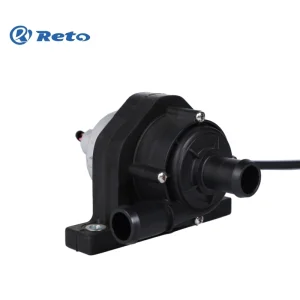
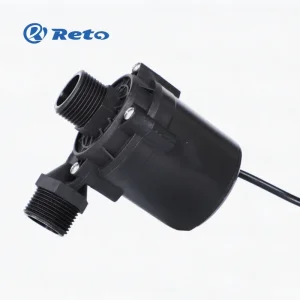
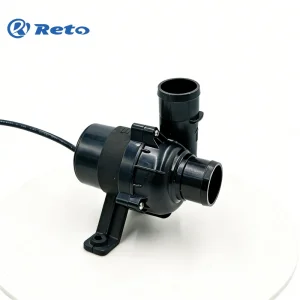
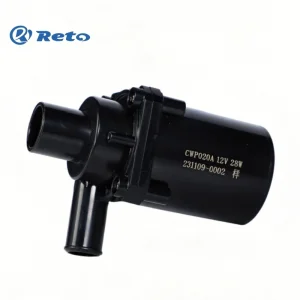
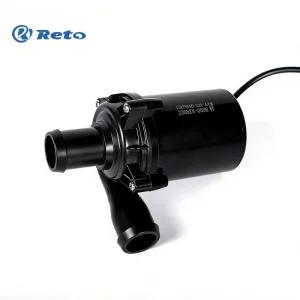
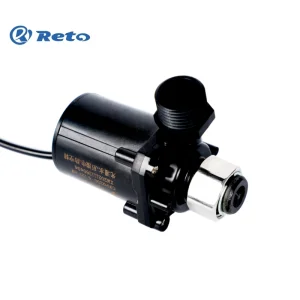
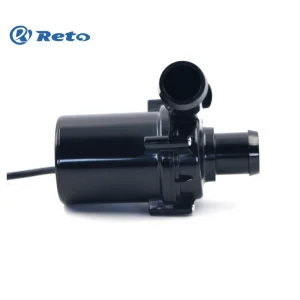
High-performance brushless DC (BLDC) solutions certified for smart sanitary installations, EV thermal loops, and high-efficiency tankless water heater recirculation systems.
Moving beyond basic labor arbitrage: How Fujian and Guangdong industrial clusters provide hyper-integrated supply chains, advanced stator windings, and rigorous quality ecosystems.
China's manufacturing centers integrate rare-earth magnet sintering, high-temperature PPE/PPS molding, precision ceramic shafts, and automated surface-mount electronic control units (SMT) within a 50km radius. This localization shrinks prototyping cycles from months to under 10 business days.
Pioneering Chinese factories leverage IATF 16949 production controls originally developed for electric vehicle thermal systems. Implementing APQP, FMEA, and PPAP standards into domestic home water pumps delivers failure rates under 50 PPM across multi-year continuous operations.
Traditional mechanical AC pumps suffer from cavitation, thermal throttling, and brush friction losses. Advanced Chinese plants deploy field-oriented control (FOC) algorithms and sensorless BLDC drivers that optimize electrical-to-hydraulic efficiency curves to over 85%.
From passive AC induction to smart, frequency-inverter, IoT-connected fluid dynamics engineered for global residential decarbonization and modern high-density dwellings.
With residential footprints shrinking and booster units installed directly behind walls or inside luxury cabinetry, manufacturers deploy wet-rotor centrifugal architecture. The fluid dampens motor vibrations, achieving ultra-silent operations below ambient residential thresholds.
Modern installations discard fixed single-speed cycles. Advanced 12V/24V DC booster pumps accept Pulse-Width Modulation (PWM) and 0-10V analog signals, letting microcontrollers scale impeller RPM in real time to match simultaneous appliance demands without pressure drop spikes.
Addressing potable water safety regulations (WRAS, NSF/ANSI 61, FDA), Chinese manufacturers have replaced unlined cast iron and lead-leaching brass with virgin polyphenylene ether (PPE) and food-grade stainless steels rated for continuous fluids exceeding 100°C.
Detailed technical trade-offs between legacy domestic pumps and next-generation brushless direct current pump assemblies.
| Evaluation Parameter | Next-Gen BLDC Booster Pump (RETO Platform) | Conventional AC Booster Pump | Traditional Brushed DC Pump |
|---|---|---|---|
| Operating Lifespan (L10) | 30,000 – 50,000+ Continuous Hours | 8,000 – 15,000 Hours (Capacitor/Seal breakdown) | 1,500 – 3,500 Hours (Carbon brush wear) |
| Operational Acoustic Emission | ≤ 26 – 32 dB(A) at 1 Meter | 48 – 62 dB(A) (Resonant electromagnetic hum) | 52 – 68 dB(A) (Mechanical commutating arcing) |
| Electrical Conversion Efficiency | 82% – 88% (Rare-earth rotor) | 35% – 50% (High stator winding hysteresis) | 50% – 60% (Frictional contact losses) |
| Form Factor & Volumetric Weight | Ultra-Compact (Fits inside chassis & walls) | Heavy & Bulky (Requires cast-iron stator iron) | Medium (Requires brush track housing) |
| Speed & Pressure Control | Dynamic Real-Time PWM / 0-5V / FG Feedback | Fixed Single/Dual Speed (Throttling valve required) | Voltage Stepdown (Poor low-end torque) |
| Low-Voltage Potable Safety | 12V / 24V SELV (Zero risk of shock in wet areas) | 110V / 230V Mains (Requires GFCI / RCD protections) | 12V / 24V (Sparks present hazard in damp locations) |
Proven engineering blueprints deployed across luxury sanitary ware, modern HVAC, off-grid solar arrays, and high-load commercial facilities.
The Constraint: Modern high-rise residences suffer from peak-hour hydrostatic pressure drops (<0.1 MPa), causing siphon flush failure and weak personal cleansing streams.
The Solution: Integrated 12V DC centrifugal booster pumps delivering immediate instantaneous 0.25 MPa static head, operating sub-30 dB(A) inside the ceramic skirt.
The Constraint: Low residential inflow fails to engage the water-gas proportional activation valve, causing cold showers or scalding temperature oscillations.
The Solution: 24V silent inline booster with magnetic flow-sensing activation, generating sustained 12-18 L/min throughput rated for continuous 100°C fluid cycles.
The Constraint: Off-grid rural and suburban homes require pressurization from low-head roof gravity tanks without relying on volatile grid power.
The Solution: Wide-voltage (8V-24V) solar-direct brushless DC pumps driven right from photovoltaic arrays, featuring smart dry-run protection and stall recovery.
A structured technical procurement checklist for engineering teams, sourcing directors, and white-label distributor networks.
Verify that the factory owns authentic certificates rather than third-party trading reports. Crucial requirements include: IATF 16949 / ISO 9001 for line discipline, CE, RoHS, and REACH for electronic directives, and sanitary material certifications like WRAS, NSF/ANSI 61, or ACS for components touching potable domestic drinking water.
Top-tier factories operate on-site testing cells: automated P-Q (Flow vs. Head) curve generators, semi-anechoic sound chambers rating decibel levels below 20 dB(A) background, long-term continuous fluid thermal stress chambers (120°C oil/water cycles), and burst-pressure hydrostatic test benches exceeding 3.5 MPa.
Clear answers to real questions on brushless booster pumps, manufacturing standards, and custom development programs.
High-reliability pump options engineered for automotive-grade fluid cooling, high-temperature solar water heaters, and sanitary fixtures.