
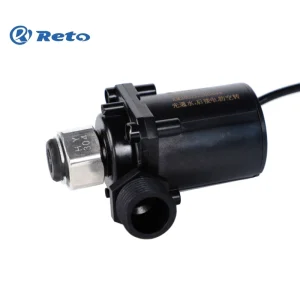
Engineered for high-durability mains boosting, point-of-use pressure stabilization, and continuous hot-water circulation under rigorous operational cycles.
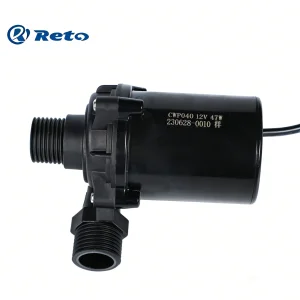
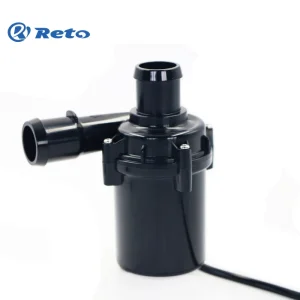
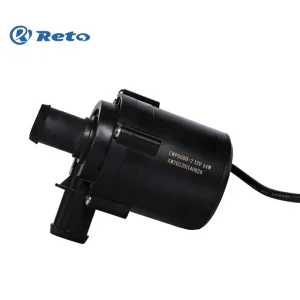
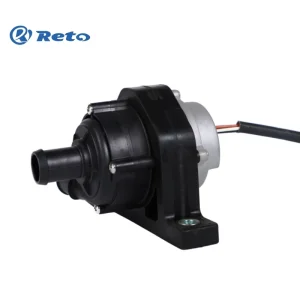
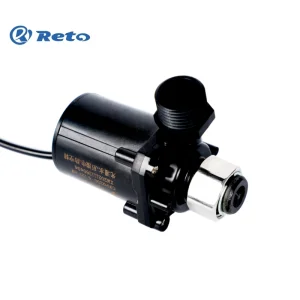
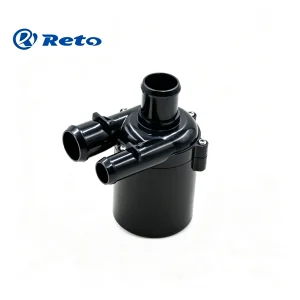
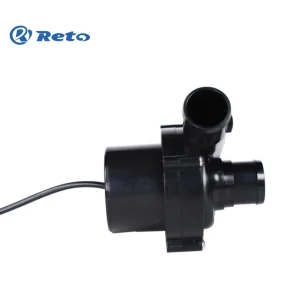
Urban density, deteriorating municipal pipe networks, and rising standards in multi-story residential buildings require decentralized and on-demand micro-boosting hydronic technologies.
Mature municipal infrastructures across North America, the UK, and continental Europe face systemic head-loss issues, leaving terminal consumers with pressures dropping below 1.0 bar (14.5 PSI) during peak intervals.
Modern luxury sanitary fixtures, intelligent tankless bidets, and point-of-use instant water heaters no longer tolerate passive mains pressure variations. Consistent inlet pressure is essential.
Global regulatory protocols such as the EU ErP Directive and US DOE requirements are phasing out inefficient AC shaded-pole and PSC motors in favor of variable-frequency BLDC systems.
Combining Xiamen's precision manufacturing supply chain with an automotive-grade IATF 16949 quality system to deliver high-reliability fluid machinery.
Unlike common commercial assemblers, RETO operates under IATF 16949 certified quality workflows. Rotor dynamic balance, potting hermeticity, and coil insulation are digitally captured for full component traceability.
With an R&D department of over 10 senior engineers each bringing a decade of hydraulic and software experience, we develop internal sensorless FOC (Field-Oriented Control) drive algorithms tailored to custom flow curves.
Located in the precision tooling hub of Tong'an District, Xiamen, RETO achieves rapid prototype-to-tooling iterations, qualifying food-grade engineering polymers (PPE, PPS) and ceramic thrust bearings within accelerated timelines.
Tailored hydraulic characteristics designed for varied installation environments across residential, commercial, and industrial thermal platforms.
Mains water fluctuations frequently cause erratic nozzle spray patterns or inadequate flush siphon actions. RETO miniature booster pumps ensure reliable performance:
Instantaneous water heaters require a minimum activation threshold flow rate (typically 2.0 to 2.5 L/min). Low mains pressure leads to flame blowout and cold-water sandwiching:
Water-heated mattresses and clinical patient temperature-management pads require gentle, laminar, non-pulsating circulation:
Automotive cooling loops require steady glycol-water recirculation through demanding ambient operating windows (-40°C to +125°C):
Commercial espresso machines, micro-breweries, and automated beverage dispensers rely on precise pressure ramps for extraction consistency:
Precision CNC spindles, medical MRI gradient coils, and fiber laser heads generate concentrated thermal loads requiring dedicated liquid cooling:
The micro-hydronics industry is transitioning toward brushless DC architectures. Review this technical comparison to guide specification requirements.
| Evaluation Parameter | RETO Advanced BLDC DC Pump | Traditional Brushed DC Pump | Conventional AC Asynchronous Pump |
|---|---|---|---|
| Operating Service Life (MTBF) | 20,000 – 30,000 Hours (Driven by ceramic shaft/bearing wear) | 1,500 – 3,000 Hours (Limited by carbon brush wear) | 8,000 – 12,000 Hours (Thermal stress on winding insulation) |
| Hydraulic Energy Efficiency | 65% – 80% (High-density NdFeB permanent magnets) | 40% – 55% (Contact brush friction loss) | 25% – 40% (Rotor induction losses and slip heat) |
| Acoustic Emission Level | < 35 dB(A) (Sine-wave FOC driver, quiet commutation) | 48 – 60 dB(A) (Mechanical brush friction) | 45 – 55 dB(A) (50/60 Hz line-frequency hum) |
| Control & Modulation | PWM / 0-10V Stepless with integrated FG tachometer | Simple voltage change (limited dynamic range) | Stepped windings or external variable frequency drive |
| Electromagnetic Interference | Low (Enables CISPR 25 Class 5 / EN 55014 compliance) | High (Arcing at brush-commutator interface) | Moderate (Inductive kick-back transients) |
| Electrical Safety Standard | Safe Extra-Low Voltage (SELV): 12V, 24V, 36V DC | SELV Compliant (Low DC) | High mains risk (110V – 240V AC wet-zone installation) |
To reduce integration timelines and ensure accurate tool design, include these hydraulic and electrical variables in your RFQ documentation.
Define operational conditions, not just zero-head maximum ratings:
Ensure power-rail and firmware compatibility:
Adapt packaging to your appliance geometry:
Industrial coolant pumps, solar thermal boosters, and appliance circulating pumps configured for international OEM supply programs.
In-depth responses covering engineering integration, compliance, lead times, and factory-level customization for international sourcing teams.