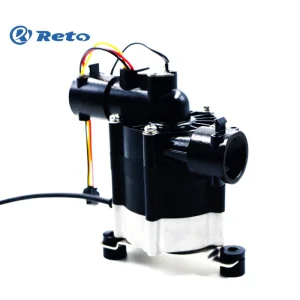
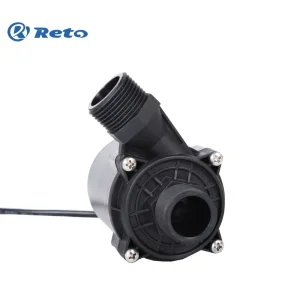
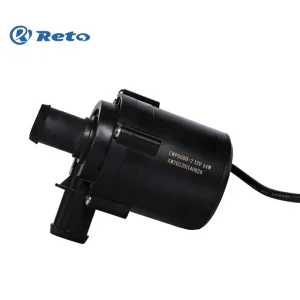
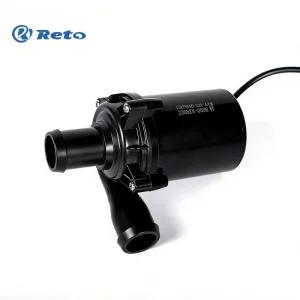
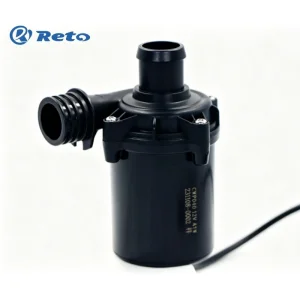
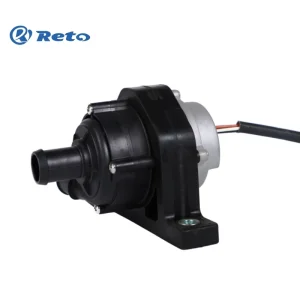
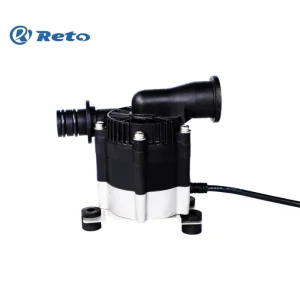
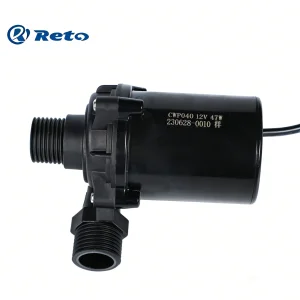
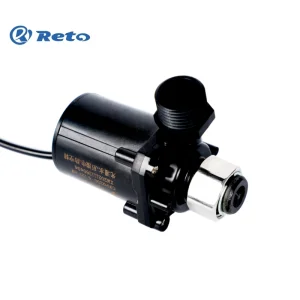
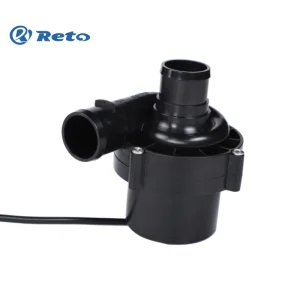
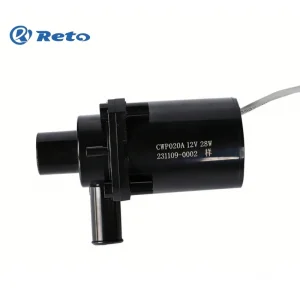
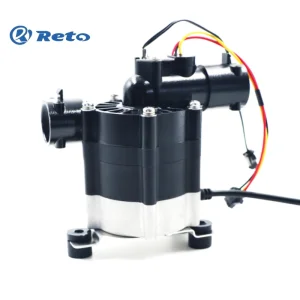
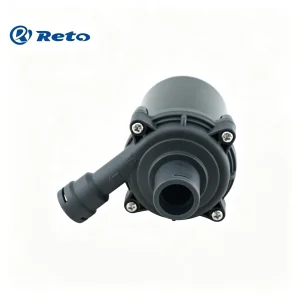
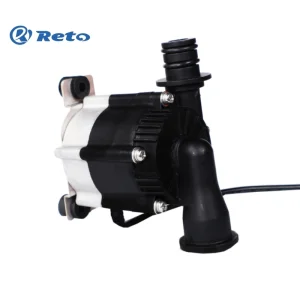
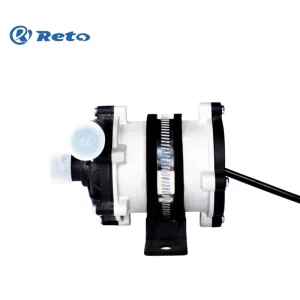
Engineered for instant water heating, sanitary bidet boosting, and automotive auxiliary loops. Explore verified performance platforms manufactured in our automated facility.
How concentrated supply clusters, automated micro-motor winding, and advanced polymer mold fabrication create unmatched value for global Tier-1 equipment builders.
China's micro-pump manufacturing centers—anchored along coastal industrial corridors such as Xiamen, Fujian and Guangdong—consolidate rare earth Neodymium-Iron-Boron (NdFeB) magnet sintering, injection tooling, copper wire extrusions, and precision ceramic shaft machining within a 50-kilometer radius. This eliminates upstream logistics lags and slashes prototype iterations from months to days.
By implementing automated multi-axis flyer winding and precision dynamic balancing equipment, Chinese mini pump manufacturers sustain ultra-tight stator slot fill factors and concentricity tolerances within ±0.005mm. Automated high-speed manufacturing delivers scale cost-efficiency while driving failure rates below 50 PPM across annual runs exceeding millions of units.
Leading Chinese factories bridge consumer cost paradigms with automotive-grade rigor. Integrating Advanced Product Quality Planning (APQP), Production Part Approval Process (PPAP Level 3), and Statistical Process Control (SPC), Tier-1 facilities subject 100% of pumps to helium mass-spectrometry leak detection, end-of-line acoustic checks, and dielectric breakdown testing.
The global fluid transfer ecosystem is undergoing a decisive transition away from conventional brushed DC and shaded-pole AC induction pumps toward electronically commutated Brushless DC (BLDC) systems. In high-duty cycles, traditional brushed mechanisms suffer from rapid mechanical friction, commutator carbon scoring, significant thermal build-up, and intense electromagnetic interference (EMI). These constraints make brushed systems unsuitable for modern connected consumer electronics, precision sanitary systems, and electric vehicle (EV) thermal management modules.
In contrast, contemporary mini water pumps manufactured in high-grade Chinese facilities incorporate three-phase sensorless or Hall-effect electronic commutation. By isolating the fluid-contacting wet end from the hermetically potted stator windings using static PPS or PPO isolation sleeves, the requirement for dynamic mechanical shaft seals is eliminated entirely. This sealless magnetic drive design circumvents the primary mode of pump failure: fluid leakage into motor windings causing catastrophic short-circuits.
Furthermore, Chinese research and development teams have spearheaded the integration of Field-Oriented Control (FOC) sinusoidal wave vector algorithms directly onto integrated micro-PCBs housed within the pump's rear chassis. Compared to rudimentary square-wave commutation, FOC vector control eliminates torque ripple harmonics, reducing structure-borne resonance and audible fluid noise to less than 28–35 dB(A) at 1 meter—an indispensable benchmark for modern domestic appliances and ultra-quiet smart sanitary environments.
| Evaluation Parameter | Advanced BLDC Magnetic Drive Pump | Legacy Brushed DC Pump | Traditional Shaded-Pole AC Pump |
|---|---|---|---|
| Operational Lifespan (MTBF) | 25,000 – 50,000 Hours | 1,500 – 3,000 Hours | 4,000 – 8,000 Hours |
| Energy Efficiency Factor (η) | 65% – 85% Efficiency | 35% – 50% Efficiency | 15% – 25% Efficiency |
| Acoustic Emission Level | 25 – 38 dB(A) Ultra Quiet | 48 – 62 dB(A) High Brush Noise | 42 – 55 dB(A) 50/60Hz Hum |
| Intelligent Feedback & Control | PWM, 0-5V, LIN-bus, FG Tachometer | Crude Voltage Throttling Only | Fixed Speed / Multi-tap Winding |
| Hermetic Ingress Protection | IP67 / IP68 Fully Submersible | IP44 – IP54 Non-Submersible | IP20 – IP44 Dry Chamber Only |
| EMI / EMC Compliance | CISPR 25 Class 3-5 Standard | Heavy Sparking; High Filtering Required | Low High-Frequency EMI |
How customized miniature pump platforms resolve hydraulic resistance, thermal dissipation, and space optimization across critical global industries.
Modern wall-hung and tankless smart toilets operate independently of municipal water line pressure by integrating an onboard mini booster pump. Operating on 12V or 24V DC safety extra-low voltage (SELV), these units provide rapid surge pressure to ceramic cyclonic flush jets (6.5 to 9.0 L/min) while powering instantaneous bidet heating nozzles with micro-metered, pulsation-free warmth without water hammer shocks.
New Energy Vehicles (NEVs) demand continuous, precisely modulated coolant circulation across high-voltage battery packs, silicon carbide (SiC) traction inverters, and on-board chargers (OBC). Automotive mini cooling pumps operating from -40°C to +125°C dynamically match coolant flow through CAN or LIN bus protocols, preventing localized thermal runaway under rapid charging regimes.
Compact gas and electric tankless water heaters deploy internal recirculating mini pumps to overcome high primary heat exchanger flow resistance. In high-density multi-story buildings, our booster designs eliminate cold-water lag, stabilizing inlet dynamic pressure above 0.15 MPa to prevent flameouts and temperature fluctuation during concurrent fixtures usage.
Commercial espresso machines, hot beverage dispensers, and automated ice makers require food-contact certified fluid paths. Leveraging NSF-61, FDA, and WRAS-compliant polyphenylene sulfide (PPS) wet-end casings and high-purity zirconia ceramic bearings, our pumps eliminate taste transfer, resist calcification scaling, and survive sustained near-boiling temperatures of 100°C.
High-power fiber laser cutting modules and high-density compute server racks generate localized heat fluxes exceeding 500 W/cm². Closed-loop mini BLDC pumps deliver precise glycol water mixture delivery at low pulsation levels, preventing cavitation erosion in micro-channel cold plates and preserving optical path calibration.
From biochemical analyzer reagent circulation to therapeutic temperature-controlled sleep systems, acoustic unobtrusiveness and long-term continuous reliability are non-negotiable. Our custom silent pump series maintains sub-25 dB(A) operation through high-resolution FOC sinusoidal tuning, allowing 24/7 bedside patient or residential operation without disturbance.
When selecting a mini water pump for high-volume serial production, global procurement and engineering teams must evaluate hydro-mechanical matching beyond nominal static catalog ratings. Specifying a pump solely based on "maximum flow" or "maximum static head" is a frequent engineering pitfall that results in motors operating in cavitation zones, excessive heat generation, or insufficient end-fixture pressure.
1. Operating Point Interception (H-Q Curve Matching): A pump operates precisely at the intersection of its head-flow ($H-Q$) characteristic curve and the hydraulic system resistance curve ($R_s = k \cdot Q^2$). OEM system architects must identify their continuous target operating flow rate and compute total system pressure drop—including elbows, orifice plates, check valves, and elevation lift. Selecting an operating point within 40% to 75% of maximum rated flow ensures the highest motor efficiency ($\eta$) and lowest operating temperatures.
2. Net Positive Suction Head Required ($NPSHr$): When pumping fluids at elevated temperatures (e.g., 85°C to 100°C in water heater recirculating loops or coffee boilers), localized vapor pressure increases exponentially. If the Net Positive Suction Head Available ($NPSHa$) at the pump inlet drops below the required $NPSHr$, microscopic vapor bubbles form and collapse violently against impeller vanes, resulting in rapid pitting, acoustic screaming, and catastrophic impeller failure within several hundred hours. Chinese engineering teams at RETO calculate and customize wide-blade inlet geometries to depress $NPSHr$ below 0.8 meters.
3. Electrical Interfacing and Control Signals: Modern platforms support multiple modulation types:
Engineered in Xiamen, China. Our facilities operate under stringent international compliance standards to deliver zero-defect quality across every production lot.
Every single manufactured unit passes through an end-of-line computer-controlled testing bench. The test cycle evaluates static pressure, flow rate, full-load wattage, startup voltage at low temperature, insulation resistance at 1500V AC, and high-frequency acoustic emissions in a hemi-anechoic hood.
Pumps undergo rigorous Design Verification Plan and Report (DVP&R) regimens: 10,000 thermal shock cycles from -40°C to +125°C, high-temperature fluid baking for 3,000 continuous hours, salt fog exposure tests exceeding 96 hours for automotive marine readiness, and continuous dry-run torture testing.
Factory production processes are governed under certified IATF 16949 and ISO 9001 quality systems. Products hold comprehensive regional compliance certifications including CE, RoHS, REACH, FDA, and TÜV, ensuring regulatory compliance across North American, European, and Asian markets.
Expert insights addressing key design, commercial, and operational considerations when partnering with our manufacturing facility.
For custom hydraulic volutes, port geometries, or housing brackets, high-precision injection molds require approximately 25 to 35 calendar days. Rapid 3D SLA functional prototypes and CNC wet-end samples can be dispatched for initial test bench validation within 5 to 7 working days.
Our intelligent PCB algorithms feature built-in micro-sensing dry-run protection. If current signatures indicate cavitation or complete liquid starvation for longer than 5 seconds, the micro-controller reduces speed or executes an automated shutdown/retry cycle, protecting ceramic bearings from thermal shock.
Yes. Although nominal standards are 12V DC and 24V DC, our automated stator winding systems can be calibrated for wide-input DC rails such as 5V, 18V, 36V, 48V, or even high-voltage automotive 310V/600V DC architectures, accompanied by tailored over/under-voltage protection cutoffs.
Wet-end housings are molded from virgin, fiber-reinforced Polyphenylene Sulfide (PPS) or PA66/612 compliant with FDA, NSF, and WRAS standards. O-rings are specified in high-grade EPDM or Viton (FKM), paired with 99% pure Zirconia ($ZrO_2$) or silicon carbide ($SiC$) shafts and precision carbon-graphite bushings.
External magnetic couplings use an outer motor driving an inner magnet through an isolation barrier, which increases size and cost. Our canned BLDC architecture houses the wet rotor directly in the pumped medium, separated from dry stator windings by an ultra-thin composite isolation sleeve for maximum compactness.
Acoustic performance is achieved through three integrated features: high-precision automated rotor dynamic balancing below 0.05g, closed-loop FOC sinusoidal wave motor commutation, and structural dampening via decoupled silicone rubber mounting cradles.
Explore our heavy-duty solar water heating, high-flow booster, and automotive liquid cooling pumps built to exceed rigorous OEM performance benchmarks.