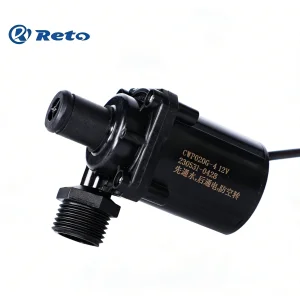
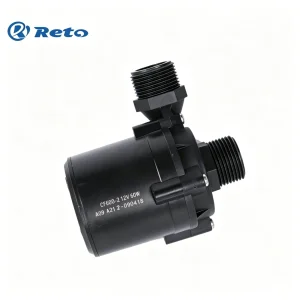
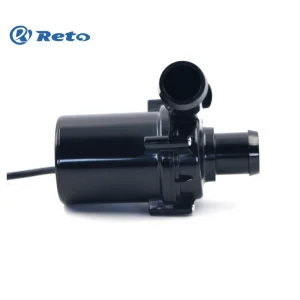
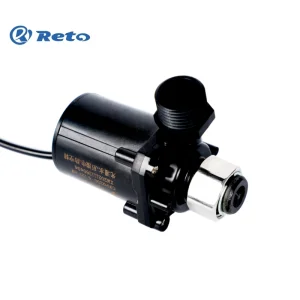
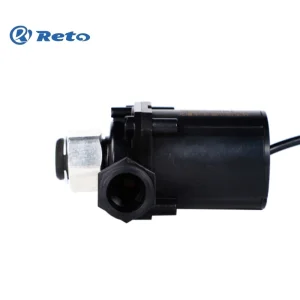
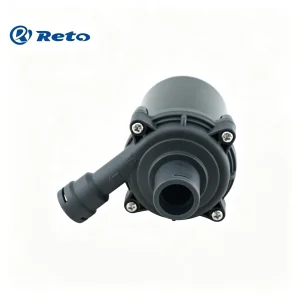
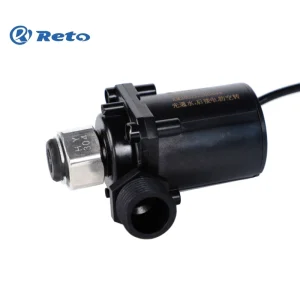
Direct-from-factory micro and miniature centrifugal pumps featuring brushless DC permanent magnet drives, canned-motor seal-less architectures, and tailored hydraulic geometries for Tier-1 OEMs worldwide.
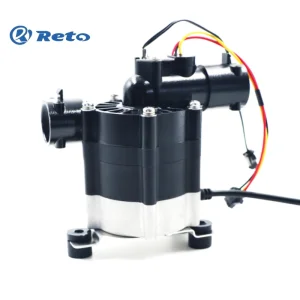
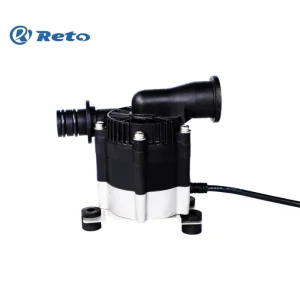
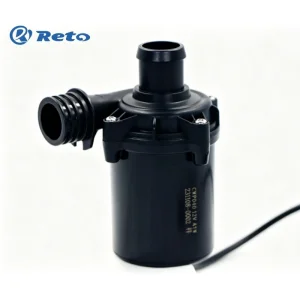
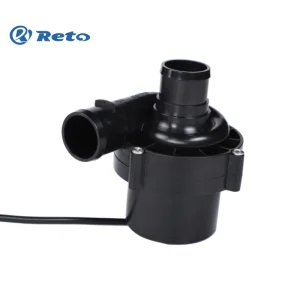
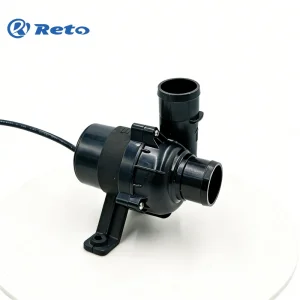
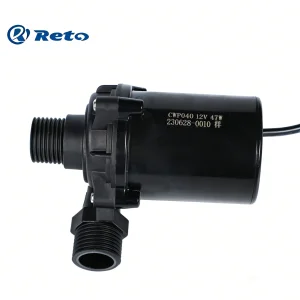
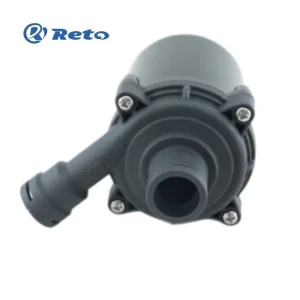
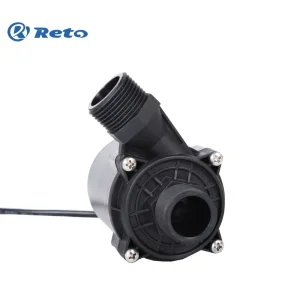
How modern canned-motor brushless DC centrifugal pumps overcome friction, cavitation, and thermal degradation across compact enclosed operational envelopes.
Traditional water pumps rely on dynamic mechanical shaft seals that suffer from gradual vulcanization, abrasive grit erosion, and catastrophic dry-running burnout. Our small centrifugal water pump platforms employ a static isolation containment can (PPS or ceramic) separating the wet rotor chamber from dry stator windings. This eliminates dynamic leakage pathways entirely, enabling MTBF figures exceeding 30,000 hours in continuous circulation.
Miniature centrifugal hydraulics operate at low Reynolds numbers where boundary layer viscous shear creates significant head loss. Utilizing high-fidelity computational fluid dynamics (CFD), our closed and semi-open impellers are profiled with backward-curved 3D blade geometries. This hydrodynamically reduces turbulent vortex shedding, mitigates local low-pressure cavitation zones, and delivers up to 68% hydraulic conversion efficiency in palm-sized envelopes.
Equipped with integrated digital Field-Oriented Control (FOC) microcontrollers, our BLDC motors run without physical Hall sensors while executing soft-start algorithms and high-bandwidth closed-loop RPM regulation. Pumps accept 0-10V, PWM, or LIN-bus protocols for dynamic head adjustment, providing active anti-lock de-scaling routines, dry-run zero-flow thermal shutdown, and over-current protection directly to OEM central controllers.
In hot water return circuits and instantaneous boiler systems operating between 85°C and 100°C, the fluid's vapor pressure approaches system absolute pressure. Custom micro-centrifugal impeller design requires exceptionally low NPSHr (under 0.8 meters) achieved through extended inlet eye diameters and optimized inlet vane angles to prevent micro-bubble implosion, surface pitting, and acoustic knocking.
An unvarnished analysis of supply chain verticality, precision tooling ecosystems, materials science integration, and IATF 16949 production scalability.
China produces over 70% of the world's sintered and bonded Neodymium-Iron-Boron (NdFeB) permanent magnets. Direct factory integration delivers grade N45SH to N52UH high-temperature magnets at competitive costs, allowing pump designs with high flux density, compact volumetric footprints, and thermal resistance up to 180°C without risk of irreversible demagnetization.
The concentrated tooling clusters in coastal industrial zones (Fujian, Guangdong, Zhejiang) allow OEM mold development cycles that outpace Western lead times by 65%. High-cavity injection molds with mirror-polish optical EDM (Ra < 0.05μm) ensure seamless volute profiles, balancing tolerances under 0.5 mg, and fast DFM turnaround from CAD to T1 functional samples within 20 calendar days.
Centrifugal water pump factories in China increasingly run unified automotive-grade manufacturing cells. Automatic multi-axis needle winding, automated vacuum epoxy potting, dynamic laser balancing, and 100% online pressure-decay air-leak detection eliminate human variability. Every production lot undergoes rigorous statistical process control (Cpk > 1.67) and full Traceability Barcoding down to the stator core batch.
With annual manufacturing capacities spanning millions of pumps, specialized Chinese factories maintain dual-supplier raw material security, continuous automated burn-in testing chambers, and direct container access via ports like Xiamen, Ningbo, and Shenzhen. This setup cushions global clients against supply disruptions, currency volatility, and lead-time shocks during peak seasonal demand.
A comparative evaluation of centrifugal, diaphragm, gear, and peristaltic fluid handling technologies for industrial design engineers.
| Evaluation Parameter | BLDC Small Centrifugal Pump | Positive Displacement Diaphragm | Micro Rotary Gear Pump | Flexible Tube Peristaltic |
|---|---|---|---|---|
| Hydraulic Delivery Profile | 100% continuous, pulse-free smooth laminar flow with high discharge velocity. | Reciprocating pulsating discharge requiring downstream dampeners. | Continuous low-pulsation, high shear fluid delivery. | Cyclic pulsing with progressive rollers, shear-sensitive. |
| Operating Acoustic Level | Ultra-silent (25 - 38 dB[A]); ideal for living spaces and medical clinics. | Moderate to loud (48 - 65 dB[A]) from mechanical reciprocation. | Moderate gear mesh whining (45 - 55 dB[A]). | Moderate roller rubbing noise (40 - 52 dB[A]). |
| Continuous Service Life (L10) | 25,000 to 40,000 hours (constrained solely by bearing wear). | 1,500 to 3,500 hours (limited by elastomer fatigue and flapper valve wear). | 3,000 to 6,000 hours (tooth meshing friction degradation). | 500 to 1,200 hours (tubing fatigue rupture failure). |
| High-Temperature Resistance | Up to 105°C continuous liquid (PPS / PVDF / Ceramic wet path). | Generally limited to ≤ 60°C due to diaphragm hardening. | Up to 90°C; fluid viscosity shifts heavily affect efficiency. | Limited to ≤ 50°C to prevent silicone degradation. |
| Tolerance to Debris / Scaling | Good; non-contact impeller clearance tolerates small limescale particles. | Poor; check valves easily fouled by mineral precipitates. | Critical failure risk; micro-grit causes gear seizure. | Excellent; isolated particulate handling, no internal valves. |
| Optimum Application Domain | Continuous circulation, cooling loops, smart toilets, and hot water boosting. | High pressure, low flow intermittent dispensing; air-liquid evacuation. | High viscosity oils, hydraulic actuation, high-pressure metering. | Sterile biological dosing, laboratory reagents, chemical titration. |
How custom-configured small centrifugal water pumps resolve complex fluid challenges in smart homes, renewable energy, and heavy-duty process cooling.
Modern tankless ceramic toilets demand instantaneous, zero-delay dynamic pressure boosting to supply high-energy cyclonic rim flushes and aerated posterior cleaning jets. Operating from municipal water mains with unstable pressure (0.05 to 0.7 MPa), custom 12V and 24V small centrifugal booster pumps deliver stable volumetric discharge rates without water-hammer transients, fitting within the narrow acoustic and spatial envelopes of luxury vitreous china fixtures.
Southeast Asian and European domestic plumbing networks increasingly mandate zero-cold-water return loops. Our 36V brushless DC centrifugal pumps withstand 100°C continuous fluid temperatures using polyphenylene sulfide (PPS) volutes, high-precision industrial zirconia shafts, and graphite-impregnated bushings. These materials prevent scaling seizure, lower standby thermal dissipation, and reduce parasitic electrical drain.
New energy electric vehicle cooling circuits require continuous, variable-speed circulation of water-glycol mixes across ambient conditions ranging from -40°C to +125°C. Built under IATF 16949 automotive standards, our customized centrifugal coolant pumps feature IP68/IP6K9K waterproof enclosures, automotive CAN-bus/LIN speed feedback interfaces, and robust structural isolation to survive heavy chassis vibration.
Fiber-optic laser cutting heads, semiconductor chillers, and CNC spindle cooling loops cannot tolerate thermal cycling or unexpected flow decay. Our customized inline centrifugal water pumps generate high head pressure to overcome long, narrow micro-channel cold plate friction, running 24/7 without electromagnetic interference (EMI) that could disrupt sensitive control electronics.
From commercial espresso machines to high-efficiency point-of-use reverse osmosis (RO) drinking systems, fluid integrity is paramount. RETO engineering integrates WRAS-, NSF-, and FDA-grade food-safe plastics and chemically inert ceramics. These components eliminate plasticizer leaching, maintain hydrolytic stability, and provide the steady dynamic flow needed for membrane degassing and filtration.
Automated vertical farming and high-precision patient cooling blankets require pulse-free, ultra-quiet water delivery. Our sub-mersible and inline centrifugal models deliver continuous non-turbulent oxygenation and fluid exchange, featuring low heat dissipation that prevents unwanted heat transfer into closed biological reservoirs.
How Tier-1 sourcing teams evaluate and deploy custom centrifugal pump programs from initial hydraulic curve matching to mass PPAP approval.
Direct answers to the most frequent technical, manufacturing, and compliance questions asked by OEM product designers and sourcing engineers.
Explore our complementary centrifugal product line engineered for solar thermal installations, instant potable water networks, and compact inline hydronic loops.