Pre-calibrated for Hanoi's seasonal plumbing pressures, tankless intelligent toilets, and integrated bidet modules.
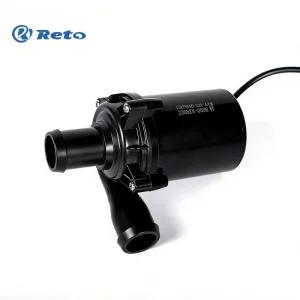
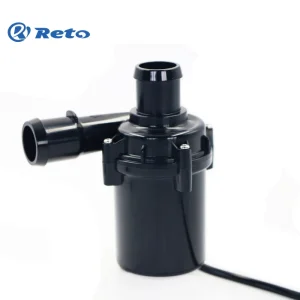
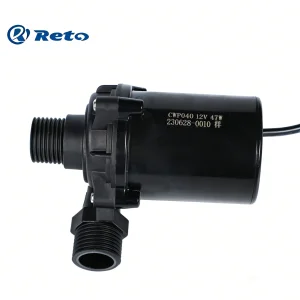
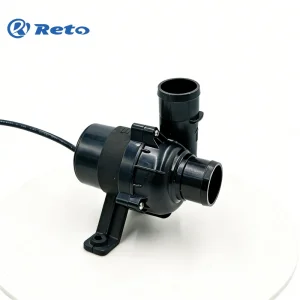
A comprehensive examination of hydraulic bottlenecks, architectural real estate trends, and water quality challenges across Vietnam's capital.
Hanoi is experiencing an unprecedented surge in urban density, driven by massive master-planned communities in districts such as Cau Giay, Nam Tu Liem, Tay Ho, Long Bien, and Ha Dong. Flagship condominium clusters and mixed-use towers developed by conglomerates such as Vingroup, Masterise Homes, and international joint ventures are standardizing luxury fixtures, including built-in smart toilets, integrated electronic bidets, and hidden-tank wall-hung commodes. However, architectural realities across Northern Vietnam introduce unique hydrodynamic constraints that standard gravity-flush valves and entry-level AC electromagnetic pumps fail to solve.
First, municipal water supply networks in central Hanoi suffer from substantial diurnal pressure fluctuations. Peak consumption hours between 06:30–08:30 and 18:00–20:30 frequently cause mainline water pressures in high-rise lateral distribution runs to drop below 0.10 MPa (1.0 bar). Traditional tankless smart toilets depend on at least 0.15 to 0.20 MPa of dynamic pressure to actuate the vortex siphon flush and cleanse the bowl effectively. When incoming line pressure dips, these unassisted units exhibit sluggish discharge, incomplete waste evacuation, and air-entrapment failures. Chinese brushless DC (BLDC) booster pumps, operating on variable-speed centrifugal architectures, resolve this pain point by delivering steady, high-head dynamic lift independent of fluctuating municipal line pressure.
Second, the regional water chemistry of the Red River Delta aquifer is characterized by high mineral hardness, elevated calcium carbonate (CaCO3) concentrations, and seasonal colloidal silt suspension. When hard, mineralized water passes through conventional brass mechanical impellers or tight-tolerance brushed motors, calcification occurs rapidly around the dynamic seals, leading to rotor seizure, coil overheating, and premature pump burnout within 12 to 18 months. China's leading pump manufacturers counter this specific challenge by implementing high-purity zirconia ceramic shafts, carbon-fiber reinforced polyphenylene sulfide (PPS) wet-end casings, and anti-scaling hydraulic clearances that prevent mineral encrustation under Hanoi's tap water chemistry.
Multi-story apartments in Hanoi utilize intermediate booster stations and rooftop gravity tanks. In lower and upper floor transition zones, dynamic pressures drop significantly, necessitating integrated 12V/24V micro-pumps to guarantee consistent 4.5L/min flushing.
Boutique hotels, service apartments, and French colonial shophouses in Hoan Kiem lack dedicated 50mm soil stacks. Compact BLDC macerator and booster pumps enable modern sanitary retrofits without structural demolition.
High carbonate hardness causes abrasive friction on typical mechanical seals. High-precision Chinese smart toilet pumps utilize wear-proof ceramic shafts and magnetic-drive isolation to guarantee a 10-year design life.
How the global smart sanitary ware industry phased out legacy solenoid flush systems in favor of closed-loop electronic pumping modules.
Across Japan, South Korea, North America, and Western Europe, the smart sanitary industry has transitioned from passive hydraulic actuation to active electronic fluid management. In the early eras of intelligent commodes, manufacturers relied on AC solenoid valves paired with atmospheric gravity tanks. While mechanically simple, this design suffered from three fatal compromises: bulky vitreous china cistern dimensions, dependency on high external static line pressures, and loud water hammer transients reaching 68 dB(A) during flush cut-off.
Today, the global benchmark is defined by brushless DC (BLDC) magnetic-drive centrifugal pumps. Operating across 12V, 24V, and 48V low-voltage safety buses, these units integrate embedded Hall-effect sensors and digital motor controllers. This allows intelligent toilets to run variable washing curves, instantaneous bidet heating pressure compensation, and multi-stage vortex flushing. By isolating the fluid chamber hermetically from the stator coils via static potting and magnetic coupling, brushless pumps completely eliminate the traditional failure points of rotating mechanical shaft seals.
| Evaluation Parameter | Brushless DC (BLDC) Smart Pump (RETO Platform) | Legacy Brushed DC Motor Pump | Traditional AC Mains Solenoid Flush Valve |
|---|---|---|---|
| Operating Lifespan | 25,000 – 35,000 Hours (Brushless Rotor) | 1,500 – 3,000 Hours (Carbon Brush Wear) | 50,000 – 100,000 Cycles (Diaphragm Creep) |
| Acoustic Noise Signature | ≤ 35 – 38 dB(A) @ 1 Meter | 52 – 62 dB(A) (Mechanical Commutator Arc) | 65 – 72 dB(A) (Severe Water Hammer Shock) |
| Minimum Line Pressure Requirement | 0.00 MPa (Zero Pressure Self-Priming/Tank Assist) | 0.05 MPa | 0.15 – 0.25 MPa Dynamic Requirement |
| Flow & Pressure Modulation | Linear PWM / 0-5V Vector Speed Regulation | Crude Voltage Stepping | Binary Open / Closed Only |
| Electrical Shock Safety Hazard | Low Voltage 12V / 24V DC Safe Extra-Low Voltage | 12V / 24V DC (Sparks from Commutator) | 220V AC Mains (Requires Wet Zone Isolation) |
| Resistance to Hard Water Scaling | High (Zirconia Ceramic Shaft + PPS Cavity) | Low (Metal Friction Shaft Seizure) | Extremely Low (Pilot Pin Hole Clogging) |
Analyzing the precision tooling, vertical integration, and cost efficiencies that position China as the prime supplier for Vietnam's OEM toilet brands.
Vietnam's domestic sanitary ware industry is expanding rapidly, with established ceramic casting hubs in Viglacera, Inax Vietnam, and American Standard facilities located around Hanoi, Bac Ninh, and Binh Duong. However, the production of precision micro-hydraulics—specifically brushless DC electronic water pumps—requires an entirely different industrial ecosystem. Vietnam's local tier-2 sanitary supply chain focuses on ceramic extrusion, brass stamping, and basic plastic injection. High-precision micro-hydraulic engineering requires electromagnetic simulation, multi-cavity hot-runner tooling for engineering resins, automated coil winding, and dynamic rotor balancing. China maintains a decisive competitive advantage in this sector.
Centering around specialized clusters in Xiamen (Fujian Province) and the Greater Bay Area (Guangdong), Chinese manufacturers have achieved world-leading vertical integration in brushless DC sanitary pumps:
High-speed automated winding machines wind ultra-pure enameled copper wire with micrometer-level tension control, eliminating hot-spots and guaranteeing 90%+ electrical efficiency ratings across all 12V and 24V motor platforms.
Utilizing high-flux neodymium-iron-boron (NdFeB) permanent magnets encapsulated in injection-molded PPS resin, our impellers maintain perfect hydrodynamic balance at 4,500+ RPM without acoustic resonance.
Borrowing thermal management standards from new energy vehicle (NEV) electric water pump production lines, our sanitary pumps undergo 100% automated pressure decay, helium leak detection, and continuous fluid burn-in.
For sanitary ware distributors, OEM assemblers, and MEP contractors in Hanoi, sourcing directly from audited Chinese manufacturers offers an unbeatable balance of cost-efficiency, customized port geometry, and rapid delivery. Proximity through maritime logistics corridors—such as shipping from Xiamen Port or Shenzhen Port directly to Hai Phong Port in as little as 3 to 5 transit days—allows Vietnamese bathroom brands to maintain agile inventory models while accessing cutting-edge hydraulic innovations.
Specific installation topologies designed to overcome plumbing anomalies in Vietnamese residences, boutique resorts, and commercial developments.
In high-rise developments in Nam Tu Liem and Ha Dong, pressure-reducing valves (PRVs) create low dynamic flow zones. Integrated 24V high-flow pumps deliver immediate 28 kPa boost pressure, guaranteeing strong 3.8-liter dual-flush siphoning without backflow.
Traditional "tube houses" (Nhà Ống) in Hoan Kiem and Ba Dinh have narrow floor footprints with no vertical gravity drop. Our miniature 12V inline booster pumps tuck into slim porcelain cavities, modernizing heritage washrooms without structural re-piping.
Hospitality suites require acoustic silence. Standard pumps transmit vibration through porcelain bowls into master bedrooms. Our brushless pumps operate below 35 dB(A) via silicone anti-vibration footings and smooth sinusoidal commutation.
From Field-Oriented Control (FOC) vector drives to cavitation-suppression impellers, discover the engineering powering the next decade of intelligent bathrooms.
The convergence of consumer demand for ultra-quiet home environments and strict municipal water conservation targets has pushed micro-pump design to unprecedented heights. Leading Chinese manufacturers are investing heavily in four transformative technological domains:
1. Field-Oriented Control (FOC) Vector Motor Driving: Early brushless pumps used square-wave (trapezoidal) commutation, which generates electromagnetic torque ripple at switching transitions, causing high-pitch buzzing sounds. Modern intelligent toilet pumps utilize 32-bit ARM-core microcontrollers that compute dynamic rotor positions in real time to generate pure sinusoidal currents. This eliminates high-frequency electromagnetic whining and reduces operational noise below 35 dB(A)—imperceptible even in nighttime bathroom use.
2. Anti-Cavitation Vortex Impeller Geometry: Rapid valve shut-offs and irregular incoming water supplies in high-rise buildings often lead to localized cavitation—a phenomenon where vapor bubbles form and collapse violently against impeller surfaces, causing pitting, vibration, and hydraulic breakdown. Utilizing Computational Fluid Dynamics (CFD) modeling, our engineers have developed proprietary backward-curved 3D impellers molded from 40% glass-fiber reinforced polyphenylene sulfide (PPS). This reduces fluid shear stress and prevents cavitation degradation across wide pressure bands.
3. Advanced Ceramic Isolation & Zero-Wear Bearings: Water with high mineral content causes rapid scoring on standard stainless steel 304/316 motor shafts. Premium smart toilet pumps for the Hanoi market feature mirror-polished 99% purity Zirconia (ZrO2) ceramic shafts mated with precision carbon graphite or silicon carbide sliding sleeves. This combination operates with ultra-low friction, produces zero abrasive wear debris, and remains completely immune to mineral scale adhesion over an operating life exceeding 30,000 continuous hours.
4. Closed-Loop Pressure & Flow Sensing Integration: Next-generation smart toilets communicate bidirectionally with the pump via PWM (Pulse Width Modulation) control lines. When incoming municipal line pressure fluctuates, internal pressure sensors feed data back to the toilet's primary MCU, which dynamically throttles pump RPM to maintain steady, gentle cleansing streams on bidet nozzles and instant high-torque bursts for bowl siphoning.
Auditing manufacturing quality, regulatory certifications, and factory reliability before issuing OEM purchase orders.
For international sanitary brands and Vietnamese project contractors procuring components from China, verifying regulatory credentials and quality control processes is crucial to preventing expensive product recalls and field failures. Global tier-1 smart toilet brands mandate rigorous compliance across several key quality dimensions:
Factory-wide implementation of APQP, FMEA, PPAP, and SPC. Production incorporates automated poka-yoke (error-proofing) checks at every stage, including automatic winding, robotic potting, and digital test benches.
Bidet wash cycles contact delicate human skin. All polymers, epoxies, and O-ring elastomers (EPDM/Silicon) must be 100% certified free of toxic plasticizers, heavy metals, and lead, conforming to CE, RoHS, and REACH directives.
Bathroom environments in Northern Vietnam endure 95%+ relative humidity during spring months (Trời Nồm). Potted electronics with high-grade polyurethane ensure complete moisture insulation against condensation.
Explore our complete OEM production line for Vietnamese sanitary assemblers, commercial retrofit contractors, and regional distributors.
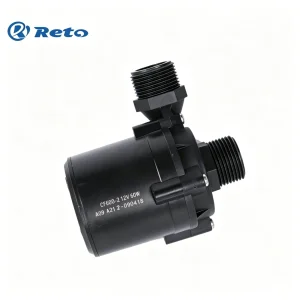
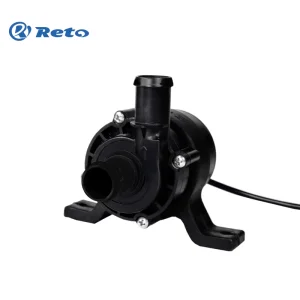
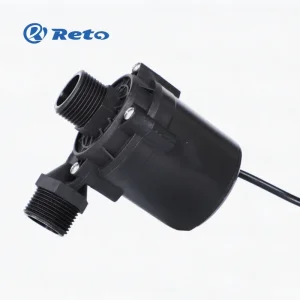
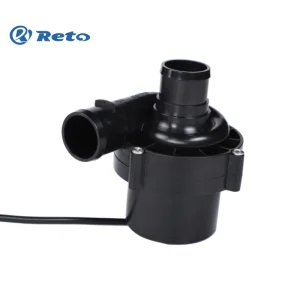
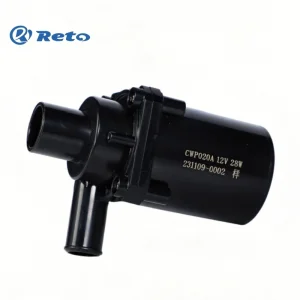
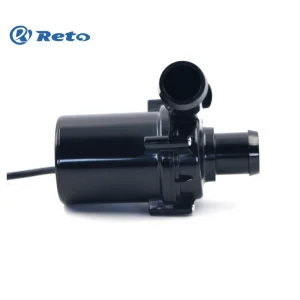
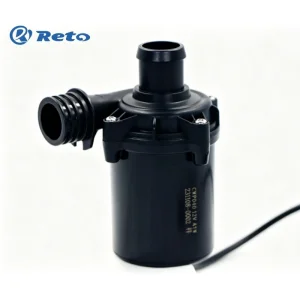
Comprehensive engineering, operational, and commercial responses for procurement specialists and sanitary product developers.