These four benchmark models represent our core engineering solutions delivered to system integrators, HVAC distributors, and sanitary manufacturers across Lisbon, Porto, and Braga. Designed for 24/7 reliability under diverse hydronic conditions.
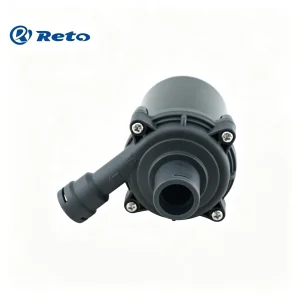
Optimized for instantaneous domestic hot water delivery in residential apartment blocks across Lisbon.
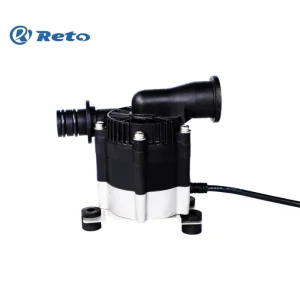
36V wide-voltage DC brushless architecture with zero brush maintenance and elevated cavitation margin.
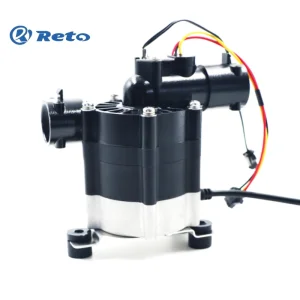
Direct integration pump unit engineered for factory assembly lines producing domestic thermodynamic heat pumps.
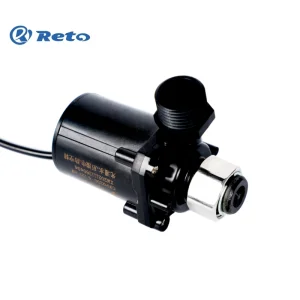
Direct-PV drive configuration tailored for thermosiphon and forced circulation solar installations in the Algarve.
Portugal stands at the vanguard of the European clean energy transition. Guided by the Plano Nacional de Energia e Clima 2030 (PNEC 2030) and strict municipal building regulations (Decree-Law no. 101-D/2020), hot water infrastructure is undergoing structural decarbonization. The historical reliance on vented gas geysers (esquentadores) and low-efficiency AC circulation pumps is rapidly dissolving, replaced by thermodynamic heat pumps (Bomba de Calor AQS) and high-efficiency solar thermal loops.
Internationally, original equipment manufacturers (OEMs) and building service contractors face intense margin pressures, rising energy rating mandates, and increasingly stringent fluid hygiene directives (such as the EU Drinking Water Directive 2020/2184). Procurement managers in Lisbon, Porto, Setúbal, and Coimbra demand localized, drop-in BLDC water pump architectures that deliver both superior hydraulic lift and dynamic speed regulation while minimizing lifecycle maintenance overhead.
Water heater circulating pumps operate across hostile micro-environments: continuous elevated temperatures up to 105°C, thermal cycling shock, dissolved calcium carbonate precipitate (limescale), and fluctuating electrical grids. RETO answers these constraints with specialized brushless DC platforms engineered for hydraulic balance and thermal endurance.
Specially tailored for Monobloc and Split AQS systems. Featuring variable PWM flow matching to preserve stratifying thermal boundaries inside secondary storage tanks without disturbing efficiency metrics.
Engineered with ceramic shaft assemblies and PPS wet-end housings capable of enduring continuous exposure to glycol heat transfer fluids and intermittent thermal stagnation states exceeding 110°C.
Compact canned-motor architecture eliminating mechanical shaft seals to permanently eradicate exterior leakage paths while reducing internal friction losses to fraction-watt idle levels.
As building telemetry interfaces converge with smart grid infrastructure across Southern Europe, water heater pumps must evolve from static electromechanical components into digital micro-drives. RETO’s motor and hydraulic engineering roadmaps reflect this transition:
| Evaluation Parameter | Legacy AC Wet Rotor Pumps | RETO Precision BLDC Generation | Operational Impact for Portugal Installations |
|---|---|---|---|
| Hydraulic Electrical Efficiency | 15% – 25% | 55% – 68% (High-Flux BLDC) | Reduces parasitic energy use; satisfies EDP tier efficiency mandates. |
| Acoustic Footprint (dBA @ 1m) | 38 – 45 dB(A) | ≤ 26 – 28 dB(A) FOC Silent Drive | Critical for compact urban dwellings in Lisbon with zero utility acoustic barriers. |
| Scale & Limescale Resistance | Moderate; rotor jamming common | Zirconia Ceramic Shaft + Magnetic Decoupling | High resistance to hard water minerals common in Sintra, Cascais, and southern zones. |
| Communication Telemetry | None (Single or 3-speed manual) | 0-10V, PWM, LIN bus, Modbus RTU | Allows dynamic heat-balancing communication with main heat pump controllers. |
| Continuous Thermal Rating | Up to 90°C | -20°C to +105°C (125°C Peak Glycol) | Guarantees integrity during intense summer stagnation cycles in Algarve solar loops. |
Entering and competing in the Portuguese market requires rigid adherence to both European Union statutory baselines and Portuguese national sanitary safety standards. RETO products undergo third-party auditing to maintain uncompromised export qualification:
All internal polymers, composite impellers, EPDM O-rings, and ceramic wet surfaces adhere strictly to EU Drinking Water Directives, WRAS, and ACS hygiene standards. Zero release of lead, plasticizers, or organic contaminants.
Inherited automotive-grade process rigor applied to appliance pump manufacturing. Standardized APQP, PPAP level 3 submissions, and automated end-of-line hydrodynamic, acoustic, and insulation testing.
Streamlined customs and shipping coordination into the Port of Sines and Port of Leixões. Flexible consignment arrangements, scheduled DDP drops, and localized sample delivery within 7 working days.
The following 8 specialized brushless DC units cover varied commercial, residential, and off-grid sanitary configurations. Each model incorporates specialized winding insulation, high-pressure cavitation protection, and food-grade fluid pathways.
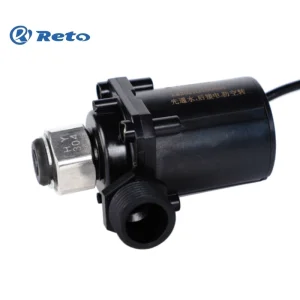
High static head model for off-grid cistern extraction and primary solar thermal replenishment.
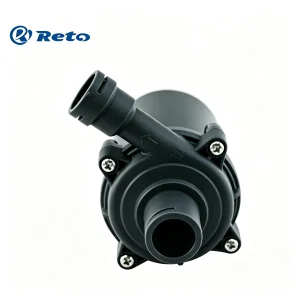
Whisper-quiet inline booster pump intended for low-pressure historic renovation plumbing in Porto.
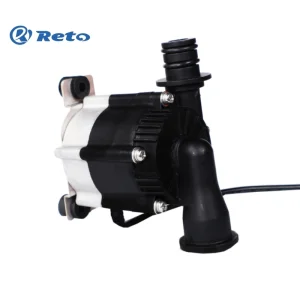
Dedicated internal loop pump designed for integration into wall-hung instant gas/electric units.
High torque motor design providing exceptional anti-stalling capabilities under severe limescale environments.
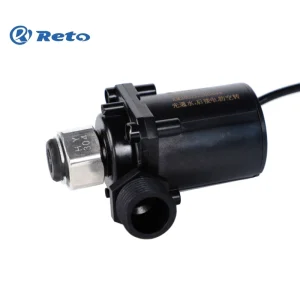
Low power, continuous-duty recirculation system with integrated dry-run thermal protection.
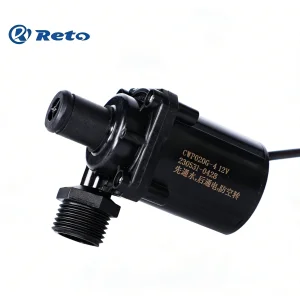
Direct photovoltaic matching capability with low startup voltage (from 6V) for passive solar loops.
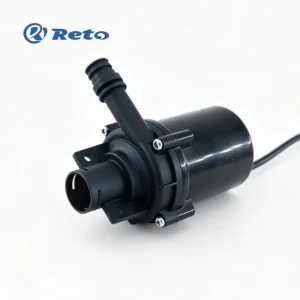
Engineered with compact envelope and rapid throttle response for on-demand domestic water heating.
Flagship OEM hydronic circulation platform featuring selectable speed modes and smart telemetry feedback.
Detailed answers addressing key engineering criteria, regulatory protocols, and commercial terms for equipment manufacturers and plumbing specialists.
Several coastal and inland aquifers in Portugal (such as Setúbal, Coimbra, and parts of the Algarve) exhibit elevated calcium carbonate and magnesium concentrations. Conventional canned-motor pumps suffer from calcification along tight rotor clearances. RETO employs high-purity zirconia ceramic shafts matched with graphite or diamond-carbon bushings, alongside an expanded magnetic rotor separation cavity. This mechanical architecture prevents mineral agglomeration and eliminates startup seizure even after prolonged seasonal stagnation.
Yes. European Commission Regulation No 641/2009 and subsequent amendments mandate stringent Energy Efficiency Index (EEI) thresholds for standalone and integrated circulators. By leveraging proprietary field-oriented control (FOC) algorithms and high-energy-product NdFeB permanent magnets, RETO BLDC platforms routinely achieve EEI metrics below 0.19, comfortably exceeding ErP efficiency expectations and contributing directly to A+++ equipment ratings for heat pump manufacturers.
Absolutely. Our in-house electronics R&D engineering division designs and manufactures custom PCB assemblies. While standard voltages include 12V, 24V, and 36V DC, we readily implement custom operating ranges (such as wide-input 9V-48V DC or integrated AC-DC rectify drivers). Control interfaces include linear 0-10V analog voltage, frequency-modulated PWM input, tachometer FG output, or bi-directional bus communication protocols customized to your master controller.
For initial engineering evaluation, fully customized functional samples are typically dispatched within 7 to 10 working days. Standard pilot production runs feature an MOQ of 500 units, while commercial volume deliveries scale past 50,000 units monthly. Standard ocean transit from Xiamen to the Port of Sines or Lisbon takes approximately 28 to 35 days, with expedited air cargo available for urgent production milestones.
Connect directly with RETO senior hydronic design engineers. Receive comprehensive 3D CAD envelopes, hydraulic test benches, and compliance dossiers customized to your exact Portuguese or European system specifications.
Send Inquiry Now