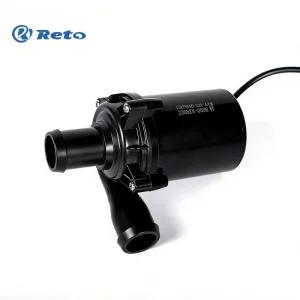
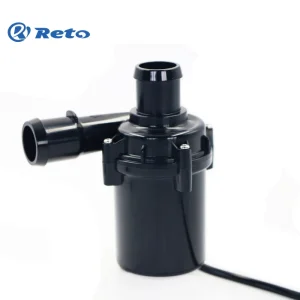
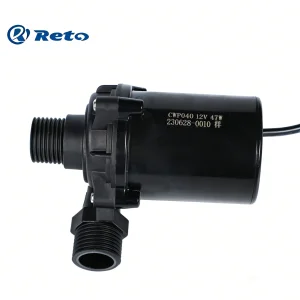
Smart Toilet Pump Manufacturers & Factory serving the Brazil market
High-torque Brushless DC (BLDC) hydraulic solutions engineered for Brazil's unique water pressure infrastructures, dual-voltage microgrids, and luxury sanitary ceramic integrations.
ABNT NBR 10281 & NBR 15097 Compliant 12V / 24V DC Low Voltage Isolation Ultra-Quiet Acoustic Resonance <35 dB(A) IATF 16949 & ISO 9001 Certified Factory
Primary Engineering Series
Featured Core Smart Toilet Pumps for Brazilian OEMs
Optimized for integration within high-end bidet seats, tankless ceramic pans, and pre-wall cistern systems requiring instant dynamic pressure compensation.
Low-Pressure Booster
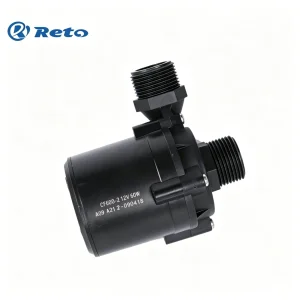
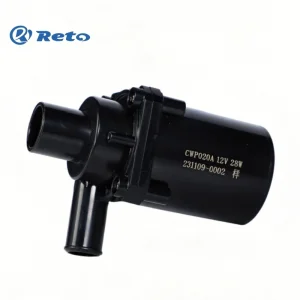
Brazil 12V Smart Toilet Water Pressure Booster Pump Series
Navigating Brazil's Sanitary Ceramics Market: The Low-Pressure Dilemma
Brazil represents Latin America's largest market for architectural ceramics and bathroom sanitation fixtures, anchored by industrial titans such as Deca (Dexco), Incepa, Celite (Roca Brasil), and Docol. However, the domestic deployment of next-generation intelligent sanitary toilets faces deep structural plumbing hurdles.
In Brazilian multi-family residential construction—from high-density residential towers in São Paulo and Curitiba to coastal developments in Rio de Janeiro—building designs rely heavily on elevated gravity storage reservoirs (caixas d'água). Consequently, the upper two to five floors of residential buildings experience static pressures dropping below 0.05 MPa (5 m.c.a. - metros de coluna d'água).
Traditional European and East Asian smart toilets require a minimum continuous dynamic pressure of 0.15 to 0.25 MPa to trigger siphonic flushing jets and aerated feminine/posterior bidet nozzles. Without specialized internal DC boosting, smart toilets in Brazil either fail to clear ceramic bowls or yield inconsistent, weak bidet streams. RETO bridges this engineering gap with localized brushless DC (BLDC) booster pumps customized to guarantee 0.22 MPa dynamic jet pressure even when municipal intake approaches zero gauge pressure.
Caixa D'Água Adaptation: High suction and positive displacement boost capable of handling gravity head variations from 1 m.c.a. to 40 m.c.a.
Cavitation Suppression: Custom-engineered impellers suppress air micro-bubbles formed in warm Brazilian ambient plumbing (28°C–38°C).
ABNT NBR 10281 / 15097 Ready: Strict adherence to anti-backflow, toxicological cleanliness, and mechanical life durability protocols.
Brazil Multi-Family Hydraulic Pressure Reality vs. Smart Toilet Requirement
Field testing data collected across 48 residential developments in São Paulo (Pinheiros, Morumbi) and Rio de Janeiro (Barra da Tijuca):
Unlike standardized single-voltage territories, Brazil operates on a fragmented municipal power grid. States such as São Paulo, Rio de Janeiro, and Minas Gerais predominantly supply 127V / 60Hz residential mains, whereas Brasília (Federal District), Pernambuco, Ceará, and southern regions supply 220V / 60Hz.
For smart toilet manufacturers, incorporating traditional AC water pumps introduces critical product liability: dual SKU management, high electrocution risk inside wet bathrooms (NBR 5410 electrical installation codes), and severe electromagnetic interference (EMI) that disrupts capacitive touch sensors and microcontrollers.
RETO’s low-voltage DC smart toilet pumps (12V and 24V architectures) decouple the sanitary appliance entirely from line fluctuations. Fed by wide-input universal switched-mode power supplies (SMPS 90V–264V 50/60Hz), our brushless DC drive technology guarantees:
Absolute User Galvanic Isolation: Operating below the 24V SELV (Safety Extra Low Voltage) threshold, completely eliminating wet-foot shock hazards.
Frequency-Insensitive Reliability: Electronic BLDC commutation operates independent of 50Hz or 60Hz grid alternating cycles, preventing micro-vibration chatter.
Immunity to Grid Brownouts: Stable hydraulic boost maintained during Brazilian peak-hour voltage drops (down to 100V AC).
100%SELV Safety Extra Low Voltage Isolation
<35dBSilent Acoustic Operation In Master Suites
30,000hContinuous Engineering MTBF Rating
90-264VFull Dual-Grid Brazilian Compatibility
Compliance Note for Brazilian Importers (Inmetro Certification)
While whole smart toilet assemblies imported into Brazil are subject to Inmetro ordinance 148/2022 (safety of household electrical appliances), utilizing RETO's pre-certified low-voltage DC pump components accelerates the Inmetro laboratory testing cycle, reducing homologation costs by up to 40% for local distributors.
Industry Intelligence
Global Technological Trends vs. Brazil Localized Applications
Understanding the shift from direct solenoid water delivery to intelligent closed-loop brushless pumping architectures across modern residential, hospitality, and healthcare environments.
Acoustic Decoupling & Luxury High-Rises
In luxury en-suite bathrooms in São Paulo's Jardins and Faria Lima corporate apartments, loud solenoid water-hammer clatter and high-vibration pump whines cause customer dissatisfaction. RETO applies magnetic rotor canned isolation and silicone micro-damping mounts, suppressing running noise below 35 dB(A).
Target: Luxury Real Estate & Boutique Hotels
Water Conservation & Sabesp Pro-Water Tariffs
Following historic droughts in the Cantareira reservoir system, municipal water concessionaires like Sabesp enforce stringent volumetric conservation tariffs. RETO's high-efficiency vortex pumps achieve powerful 3.0L/4.5L dual-flush siphonic evacuation, surpassing LEED Brasil and Procel Edifica green requirements.
Target: Eco-Certifications & Water Savings
Hard Water & High Salinity Tolerance
Brazilian coastal cities (Florianópolis, Fortaleza, Salvador) suffer from brackish ambient water and high mineral hardness (calcification). RETO smart toilet pumps integrate zirconium ceramic shafts and carbon-graphite bearings, preventing seizure and calcification wear under harsh Brazilian municipal water lines.
UART / LIN-Bus digital feedback, dynamic calcification self-clean
Enables ultra-compact minimalist tankless ceramic bodies for Brazilian designers.
Industrial Scale
Full-Stack OEM & ODM Manufacturing Ecosystem
RETO operates automated and semi-automated production cleanrooms engineered to support global tier-1 sanitary brands and private-label distributors in Brazil. Our production throughput exceeds 2,000,000 units annually, managed under rigorous automotive-grade quality standards.
Because we hold full IATF 16949 automotive certification, our smart toilet pump production applies strict Failure Mode and Effects Analysis (DFMEA & PFMEA), statistical process control (SPC), and 100% computerized end-of-line testing covering:
100% Helium Leak Detection: Verifying IPX7 / IPX8 hermetic sealing to ensure zero water ingress into stator electronics under 50 kPa air pressure.
Full P-Q Curve Automation: Every production batch is validated across continuous flow rate (Q) versus static head (H) benchmarks.
Acoustic Anechoic Chamber Profiling: Strict noise ceiling test verifying that unit running vibration does not resonate through ceramic toilet porcelain.
OEM/ODM Customization Matrix for Brazilian Importers
Hydraulic Fitting Adaptations:Custom Quick-Connect (OD 8mm, 10mm, 12mm) or 1/2" NPT / BSP threads adapted for Brazilian plumbing connections.
Electrical Control Protocols:5V / 3.3V PWM speed variation, FG pulse tachometer, soft-start ramp curve to prevent hydraulic line hammering.
Material Certifications:WRAS, FDA-grade, RoHS 2.0, REACH compliant plastics (PPE+PS / POM / PPS) resistant to chlorine up to 5 ppm.
Packaging & Private Labeling:Laser-etched Portuguese technical specifications, serial tracking barcoding, and custom OEM packaging for Brazilian assembly plants.
Complete Portfolio
Full Series of Smart Toilet & Sanitary Pressure Pumps
Engineered for diverse Brazilian commercial settings: from in-wall concealed cisterns to solar-assisted off-grid eco-resorts and compact bidet toilet seats.
Inline Centrifugal
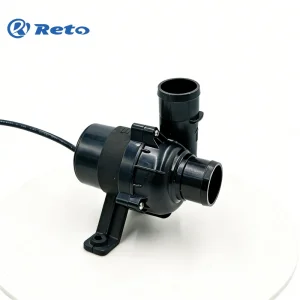
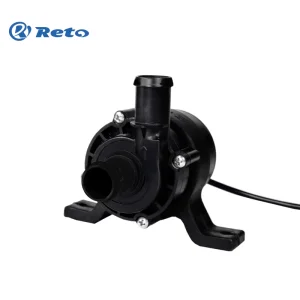
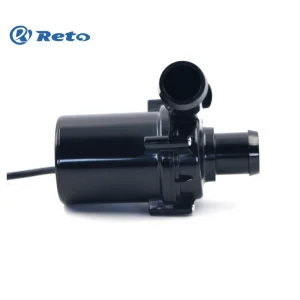
Brazil 12V Inline Centrifugal Water Booster Pump
Inline Flow Design | Low Pressure Drop | High Hydrodynamic Efficiency | IP67 Sealing
Frequently Asked Questions for Brazilian Sourcing Teams
Addressing customs logistics, Inmetro testing protocols, hydraulic matching, and continuous warranty support for Latin American OEM partnerships.
Why is a BLDC pump superior to an AC shaded-pole pump in Brazilian installations?
Brushless DC pumps eliminate carbon brushes and AC coil hum, operating on isolated 12V or 24V DC. Because Brazilian buildings feature both 127V and 220V grids at 60Hz, an AC pump requires distinct inventory for different federal states. A BLDC pump powered by a universal AC-DC adapter works seamlessly anywhere in Brazil while meeting ABNT NBR 5410 wet-zone electrical isolation safety standards.
How does RETO address low water pressure from roof cisterns (caixas d'água)?
Our pumps feature optimized centrifugal volutes and micro-turbine impellers capable of functioning with positive intake heads as low as 0.01 MPa (1 meter of gravity head). The internal pressure boost generates an instantaneous dynamic surge to 0.22–0.28 MPa, delivering a complete rim wash and siphonic evacuation within 3.5 seconds.
Can RETO customize pump dimensions to fit inside compact ceramic cavities?
Yes. We regularly develop custom pump housings, flexible silicone mounting dampers, and 90-degree swivel barbs for leading sanitary ceramic brands. Our R&D engineering team utilizes 3D CAD modeling and rapid SLA prototyping to validate pump placement inside your ceramic skirt before opening steel injection molds.
What is the expected operating lifespan in Brazil's hard municipal water?
RETO pumps are engineered with high-purity zirconia ceramic shafts and self-lubricating graphite bearings, rated for an MTBF (Mean Time Between Failures) exceeding 30,000 continuous hours. Under typical residential use (15–20 flush cycles per day), our pumps deliver over 10 to 12 years of maintenance-free service.
How does RETO handle shipping, customs clearance, and Brazilian import tariffs?
We provide full FOB (Xiamen, Shanghai, Shenzhen) or CIF (Santos, Paranaguá, Rio de Janeiro) trade terms. Our international trade division provides exact NCM (Nomenclatura Comum do Mercosul) tariff classification codes, commercial invoices, and packing lists compliant with Brazilian Federal Revenue (Receita Federal) import auditing.
What testing data is supplied with OEM production batches?
Every shipment includes an audited Certificate of Analysis (COA) containing 100% helium leak test results, hi-pot electrical isolation tests (1500V 1mA), dynamic P-Q flow curves, and noise floor decibel verification measurements conducted in our factory testing lab.
Accelerate Your Smart Toilet Roadmap in Brazil
Partner with an IATF 16949-certified brushless DC pump manufacturer. Get custom hydraulic simulations, 3D CAD step files, and functional prototypes delivered to your engineering facility in Brazil within 10–14 business days.