
JIS Compliant
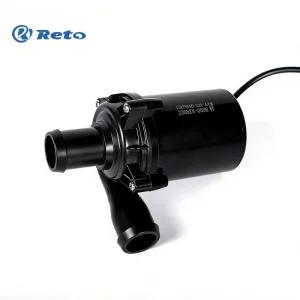
Direct factory supply from our IATF 16949-audited production lines, engineered to satisfy Japan’s rigorous low-noise, compact-form, and low-energy criteria.
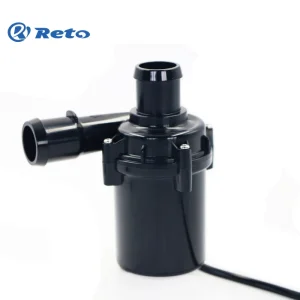
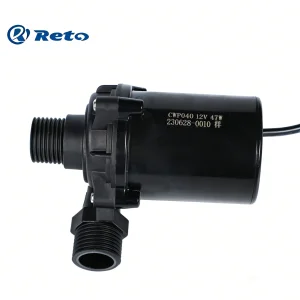
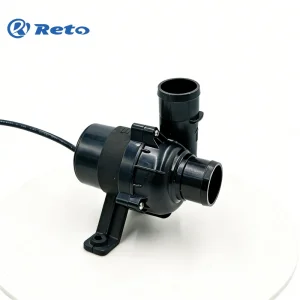
Japan represents the global zenith of smart toilet penetration, with residential household adoption exceeding 82% and near-universal implementation across commercial offices, hotels, and public transport networks.
Unlike emerging bidet markets that prioritize simple retrofits, the Japanese sanitary industry—anchored by standards such as JIS A 4422 (Electrically heated toilet seats with bidet washers) and the Japan Water Works Association (JWWA) guidelines—demands zero-leakage acoustic perfection, microscopic spray stability, and extreme reliability under continuous low-flow operation.
In high-density metropolises like Tokyo, Osaka, and Yokohama, multi-story wood-frame residential constructions (apāto) and luxury residential towers (mansion) impose strict structural vibration transmission limits. Micro DC pumps powering instantaneous heaters and cyclone flushing mechanisms must operate under 35–38 dBA, eliminating transient pressure thumps and hydraulic resonance.
Japan’s Green Purchasing Law and regional municipal conservation regulations necessitate ultra-low flush volumes (down to 3.8L or 3.0L for a full siphon flush). BLDC booster pumps must provide high instantaneous peak torque within milliseconds to ensure reliable waste evacuation without multi-cycle flushes.
Over 29% of Japan's population is over 65. The domestic market requires gentle-pulse feminine washes, high-pressure pulsating hydrotherapy, and assistive automatic opening/closing coupled with autonomous silent flushing—placing heightened demands on the pump’s PWM responsiveness and duty cycle endurance.
From Shinkansen high-speed rail restrooms to compact Tokyo modular unit baths (UB), our pumps are calibrated for unique engineering limits.
Upper-floor installations in older high-rise towers in Tokyo often suffer municipal water pressure dips below 0.05 MPa during peak morning hours. Our 12V/24V inline centrifugal booster pumps dynamically bridge inlet pressure deficits, stabilizing flow to instant heating heat exchangers.
Traditional Japanese inns (Ryokan) undergoing upscale bathroom modernization require compact footprint, concealed installations within timber cabinetry. Pumps must exhibit non-cavitating silent operation, preserving tranquil indoor atmospheres while handling non-potable or soft spring water compositions.
In transit rolling stock, vibration resistance and low power draw are vital. Featuring potted electronics rated to IP68 and anti-harmonic magnetic impellers, our BLDC pumps maintain consistent hydraulic heads even during acceleration, banking, and varying onboard DC bus voltages.
Leading Japanese sanitary ware brands maintain strict cost-efficiency goals alongside zero-defect defect benchmarks. RETO bridges this challenge via automated manufacturing clusters in Xiamen, Fujian.
Fujian is the global hub for sanitary fluid control engineering. Our vertical manufacturing integration spans automated stator winding, high-precision injection molding of PPS/PPO engineering plastics, precision zirconia ceramic shaft machining, and automated vacuum potting. This delivers a 40–55% cost-performance superiority over domestic Japanese component manufacturers without sacrificing precision.
Agile OEM/ODM Cycle Times: While traditional Japanese domestic engineering timelines require 6–9 months for sample validation and hydraulic retooling, our modular BLDC platforms enable functional 3D prototype delivery within 14 business days and full PPAP production tooling in 35 days.
Mitigating geopolitical and logistics risks, our rare-earth neodymium-iron-boron (NdFeB) magnetic rotors and automotive-grade microcontrollers have dual-qualified domestic and international supply lines.
Every production batch undergoes automated dry-run testing, pressurized helium micro-leak detection (threshold <1x10^-6 mbar·l/s), and sound chamber verification against background noise floors.
By transferring thermal management pump protocols from our electric vehicle lines into sanitary smart toilet modules, we achieve field PPM failure rates well below 50 PPM.
Designing pumps for the Japanese market requires understanding structural variances compared to European concealed systems and North American high-flow macerators.
| Evaluation Parameter | Japan Domestic Market | North American Market | European (EU) Market |
|---|---|---|---|
| Acoustic Noise Threshold | < 35 - 38 dBA (Stringent nocturnal limit) | < 50 - 55 dBA (Higher tolerance) | < 42 - 45 dBA (Concealed wall cisterns) |
| Primary System Pressure | 0.05 – 0.75 MPa (Booster often necessary) | 0.14 – 0.55 MPa (Higher line pressure) | 0.10 – 0.50 MPa (Standardized EN) |
| Flush Volume Standard | 3.0L – 4.8L (High conservation) | 4.8L – 6.0L (EPA WaterSense) | 4.0L – 6.0L (Dual flush standards) |
| Motor & Commutation Tech | 12V/24V FOC Brushless DC (BLDC) | AC Shaded Pole / Brushed DC | BLDC & Synchronous AC |
| Key Certifications Required | PSE, JIS A 4422, SIAA Antibacterial | cUPC, UL, WaterSense | CE, WRAS, EN 997, RoHS/REACH |
| Primary Installation Architecture | Tankless monolithic & bidet integrated seats | Floor-mount gravity & macerator pumps | Wall-hung concealed cisterns |
Advancements driving smart toilet hydraulic efficiency, acoustic stealth, and preventative maintenance for future Japanese product lines.
Transitioning from traditional 6-step block commutation to Field-Oriented Control (FOC) sinusoidal drive algorithms, completely eliminating electromagnetic switching whine and torque ripple down to undetectable levels.
Integrating localized venturi negative-pressure micro-cavitation into the impeller housing, infusing microscopic air bubbles (50–100 μm) into the bidet wash stream to heighten cleaning efficacy while slashing water volume by 35%.
Embedded current-signature monitoring communicating with the main toilet controller via UART/LIN bus, detecting calcification, limescale buildup, or bearing wear before sudden failure occurs in commercial installations.
Ultra-efficient motor architectures designed to interface directly with low-profile integrated micro-turbines, reclaiming energy from main incoming line pressure to power localized standby electronic sensors.
Importing fluid systems into Japan requires uncompromising traceability. RETO provides exhaustive verification data dossiers to support seamless customer certification.
Under the Electrical Appliance and Material Safety Law (DENAN), DC water pumps operating inside smart toilet assemblies must guarantee thermal insulation class E/B, anti-tracking materials complying with CTI > 175V, and failsafe stall-protection circuits that shut down power within milliseconds during locked rotor incidents.
All wetted plastics are strictly selected from FDA/WRAS/NSF certified PPO, PPS, or POM resin suppliers, satisfying Japan's Food Sanitation Act and Ministry of Health guidelines for human-contact bidet wash spray.
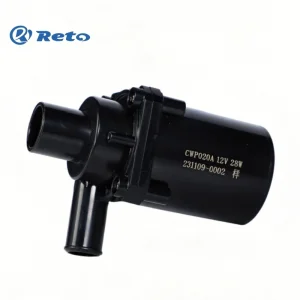
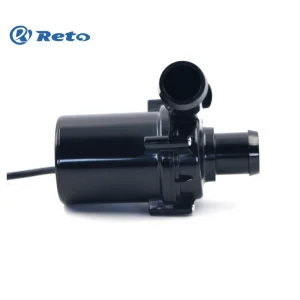
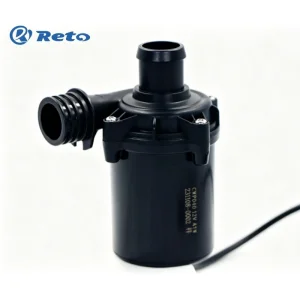
Explore our complete platform range configured for smart bidets, pressurized flush cycles, instant heaters, and eco-flushing systems.
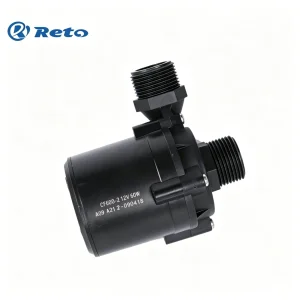
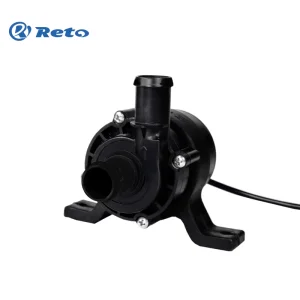
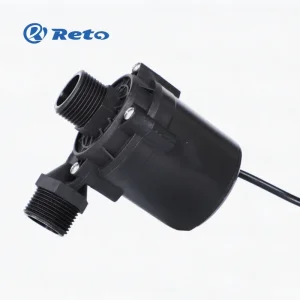
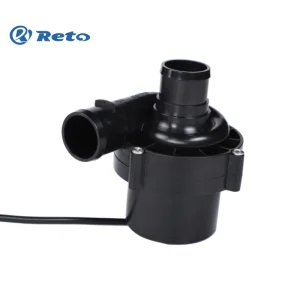
Clear, engineering-level answers addressing electrical specs, certifications, supply guarantees, and customized platform adaptations.
Request bespoke 3D CAD step files, electrical schematic integration guides, or custom sample prototypes tailored to your enclosure dimensions and flow dynamics.