Engineered for seamless integration into condensing boilers, residential heat pumps, and multi-family solar hydronic systems across the Benelux zone.
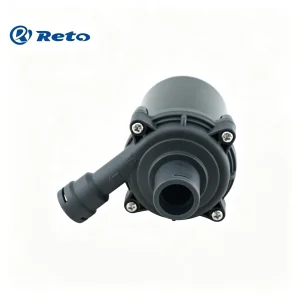
Ultra-quiet canned rotor mechanism designed for zero standby heat dissipation in high-efficiency Luxembourgish residential spaces.
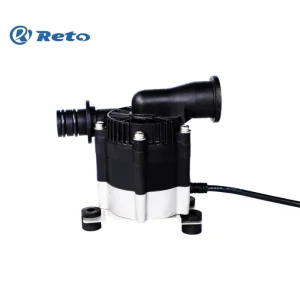
Heavy-duty polyphenylene sulfide (PPS) chamber preventing calcareous crusting in hard-water municipalities across Luxembourg.
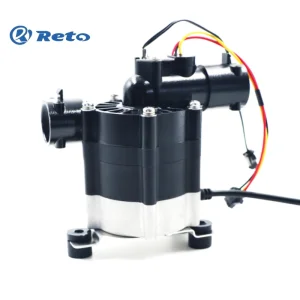
Variable-duty cycle controller optimized for solar hydronics and hybrid domestic hot water heat pumps (HPWH).
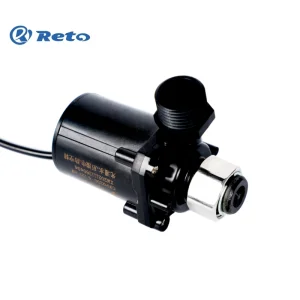
Direct DC solar-drive compatible circuit with intelligent dry-run protection designed for zero-carbon building frameworks.
A rigorous examination of Luxembourg's strict thermal engineering guidelines, decarbonization mandates, and supply-chain logistics for sanitary fluid machinery.
Luxembourg holds a unique status in the Western European hydronic and sanitary landscape. Despite its compact territory, its industrial and residential sectors maintain among the highest per-capita investments in sustainable heating systems within the European Union. In accordance with Luxembourg's updated Plan National Intégré en matière d'Énergie et de Climat (PNEC 2030) and the expansive Klima-Prämie subsidy framework, the Grand Duchy has systematically accelerated the phase-out of fossil-fuel-based heating equipment. Consequently, the commercial demand for ultra-efficient domestic hot water (DHW) circulation machinery has surged across municipalities such as Luxembourg City, Esch-sur-Alzette, Differdange, and Dudelange.
Industrial facilities and original equipment manufacturers (OEMs) servicing the Grand Duchy do not simply assemble conventional centrifugal pumps. The regional focus has transitioned decisively toward smart, electrically commutated brushless direct current (BLDC) sanitary booster units. These units interface seamlessly with state-of-the-art air-to-water heat pumps, centralized district heating networks (such as those managed by Luxenergie and Sudcal), and solar thermal closed loops. Given Luxembourg’s strict statutory guidelines on residential acoustic thresholds and life-cycle electrical consumption (EEI ≤ 0.20), local specifiers and global factories must engineer fluid systems characterized by zero acoustic cavitation and negligible parasitic power draw.
A key engineering hurdle encountered by MEP (Mechanical, Electrical, and Plumbing) contractors throughout central and northern Luxembourg is mineral water hardness. Tap water sourced from the sandstone aquifers of the Luxembourg Gutland region frequently registers calcium carbonate concentrations exceeding 15° to 25° French degrees (°fH). In conventional water heaters operating above 60°C—a benchmark mandated to neutralize Legionella pneumophila colonies—calcium precipitation rapidly fouls unshielded rotor assemblies, inducing mechanical stall and premature dielectric breakdown.
Leading water heater pump production ecosystems partnering with Luxembourgish industrial distributors deploy advanced canned spherical motor designs equipped with polished ceramic shafts, diamond-hard silicon carbide (SiC) bearings, and anti-limescale composite wet ends. By eliminating the conventional dynamic mechanical shaft seal, these pumps offer complete hermetic isolation, preventing dry running, fluid leakage, and galvanic corrosion even across multi-decade operating spans in high-demand residential and light-industrial environments.
Comprehensive engineering strategies addressing hydraulic friction losses, acoustic resonance in timber-framed constructions, and automated flow balance.
Traditional alternating current (AC) shaded-pole asynchronous pumps draw an average of 45W to 95W of continuous power. In Luxembourg's high-efficiency residential buildings, this parasitic load undermines heating coefficients of performance (COP).
Luxembourgish multi-family dwellings constructed to NZEB (Nearly Zero-Energy Building) standards enforce strict airborne and structure-borne sound mitigation standards (DIN 4109 guidelines).
Modern building management systems (BMS) in Kirchberg business complexes and residential smart estates require real-time hydraulic monitoring and remote modulation.
Rigorous mechanical breakdown highlighting operational advantages for European OEM assembly plants and procurement agencies.
| Engineering Metric | RETO Smart BLDC Series | Standard Asynchronous AC Pumps | Conventional Brushed DC Motors |
|---|---|---|---|
| Motor Architecture | Electronically Commutated Wet-Rotor | Induction Squirrel-Cage Stator | Mechanical Carbon Brushes & Commutator |
| Hydraulic Energy Index (EEI) | ≤ 0.18 (Exceeds ErP Class A) | 0.45 – 0.70 (Non-compliant for new builds) | Unrated (Excessive thermal friction) |
| MTBF Service Life | > 50,000 Continuous Hours | 15,000 – 25,000 Hours | 1,500 – 4,000 Hours (Brush degradation) |
| Acoustic Emission Level | 22 – 25 dB(A) at 1 Meter | 38 – 48 dB(A) with line hum | 42 – 55 dB(A) with mechanical arcing |
| Thermal Fluid Endurance | -20°C to +110°C (Glycol safe) | 0°C to +95°C (Thermal limits) | -10°C to +80°C (Internal heating) |
| Electromagnetic Immunity (EMC) | EN 61000-6-3 / Class B Certified | Standard Line Induction | High RF Spurious Noise / Arcing |
Strategic purchasing recommendations for HVAC equipment manufacturers, plumbing wholesalers, and mechanical contractors across the European Union.
Procuring sanitary circulation machinery for distribution or mechanical installation within the Grand Duchy requires rigorous alignment with EU technical files:
Luxembourg represents a prime multimodal logistics node in Europe. Sourcing partners leverage comprehensive transit routes via Antwerp, Rotterdam, and Frankfurt-Hahn:
Certifications, environmental audits, and hygiene approvals governing hydraulic and sanitary installations in Luxembourg.
Full adherence to circulator energy efficiency benchmarks. Motors integrated with frequency converters ensure EEI indexes below 0.20, meeting the highest European green benchmarks.
Wetted plastics and elastomers undergo thorough laboratory extraction tests complying with German KTW/W270, French ACS, and European 4MS common compositional directives.
Certified compliance with EN 60335-1, EN 60335-2-51, EN 55014-1, and EN 55014-2. Immune to severe mains disturbances and transient voltage surges in industrial sectors.
Strict exclusion of SVHCs (Substances of Very High Concern). Verified lead-free soldering and non-toxic polymer resins aligned with circular economy product stewardship.
Strategic technological paradigms bridging digital twins, self-balancing neural networks, and ultra-sustainable pump components.
By 2026–2028, embedded microcontroller architectures will feature neural inference engines capable of predicting residential hot water demand curves. Instead of continuous operation or manual timers, the pump calculates consumer behavioral cycles, saving up to 85% of thermal distribution loss.
In anticipation of tighter EU circular economy mandates through 2030, next-generation motor drives will adopt advanced synchronous reluctance (SynRM) and specialized high-grade anisotropic ferrite configurations, eliminating heavy reliance on imported dysprosium and neodymium materials.
Targeted for 2032–2035, micro-pumps will communicate over wireless Matter-over-Thread and 5G RedCap protocols directly with decentralized neighborhood heat-sharing grids, balancing district flow rates dynamically without requiring centralized balancing valves.
Explore our certified range of low-voltage DC booster, solar circulation, and tankless instantaneous water heater units available for global and Benelux OEM delivery.
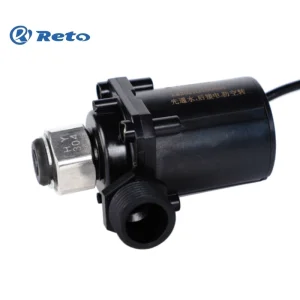
Hermetically sealed casing designed for deep thermal storage buffer tanks and solar drainage loops.
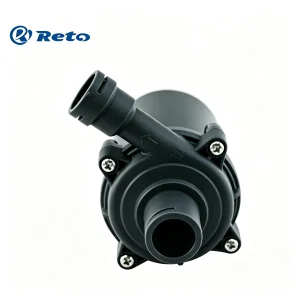
Automatic flow sensor activation delivering instantaneous pressure boosting for multi-head shower systems.
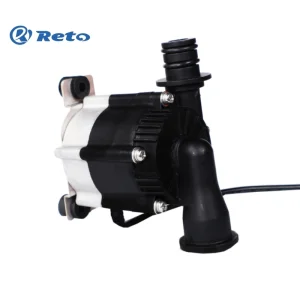
Ultra-rapid hot water response avoiding plumbing dead-legs and eliminating domestic water wastage.
Engineered with integrated electronic driver module for continuous-duty heating loop circulation.
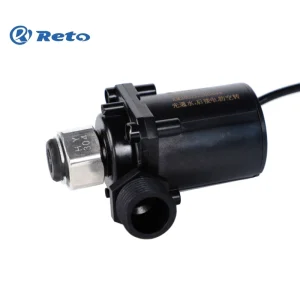
Compact foot-mount design with high thermal head capability for modern apartment utility risers.
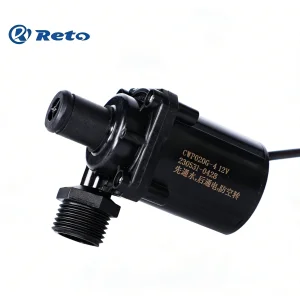
Glycol-compatible seal-less hydraulic end rated to operate reliably under extreme stagnation temperatures.
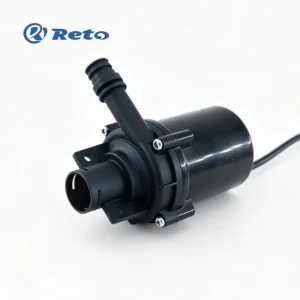
Rapid response dynamic impeller overcoming internal heat-exchanger backpressure in wall-hung combi units.
Universal drop-in replacement pump with adjustable speed presets and dry-run auto-recovery mechanisms.
In-depth responses regarding hydronic performance, manufacturing tolerances, and compliance standards for procurement professionals in Luxembourg.
Connect directly with our engineering team in Xiamen or request comprehensive product catalogs, CAD drawings, and technical quotation dossiers tailored to your Luxembourg installation parameters.