Precision-engineered miniature brushless DC centrifugal and recirculation pumps optimized for low operating acoustic footprint, compact boiler integration, and continuous duty cycles.
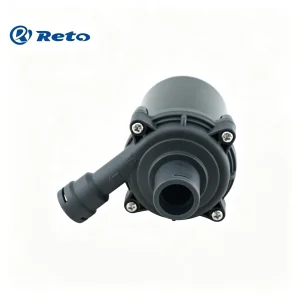
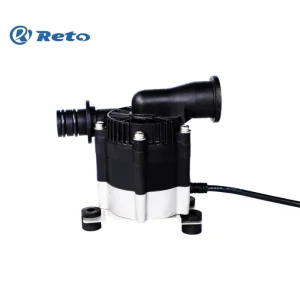
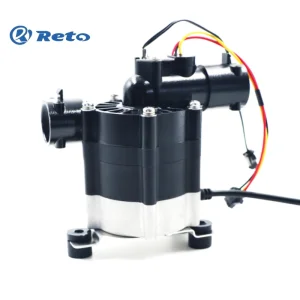
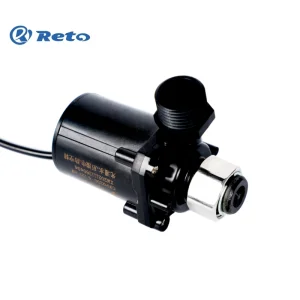
A technical examination of architectural constraints, thermal transfer dynamics, and municipal regulatory enforcement shaping water pump engineering across Greater Tokyo and the Kanto Plain.
The Tokyo Metropolitan Government (TMG) has established some of the world's most rigorous climate and urban infrastructure standards under the framework of the "Zero Emission Tokyo Strategy." Designed to cut greenhouse gas emissions by 50% below 2000 levels by 2030 and reach absolute carbon neutrality by 2050, this regulatory pressure directly impacts water heating architectures. Domestic and commercial hot water systems constitute roughly 28% of total primary energy consumption in typical high-density Tokyo residential structures. As a consequence, legacy atmospheric gas boilers and brushed AC induction pump circuits are being rapidly phased out across Shinjuku, Minato, Chiyoda, and Shibuya wards in favor of ultra-efficient CO2 heat pump water heaters (Eco-Cute / エコキュート) and hybrid tankless systems.
To comply with Tokyo's revised Building Energy Efficiency Act and municipal green procurement guidelines, original equipment manufacturers (OEMs) require hydronic pumps with extraordinary wire-to-water efficiency. Brushless Direct Current (BLDC) motor topologies with field-oriented sinusoidal control (FOC) deliver mechanical efficiencies exceeding 85%, cutting auxiliary electrical parasitics by up to 60% compared to traditional shaded-pole or asynchronous induction pumps. The transition to DC-driven low-voltage circulating pumps (operating at 12V, 24V, or 36V) enables flawless integration with rooftop photovoltaic installations, micro-inverters, and localized lithium-ion energy storage systems (BESS), reinforcing Tokyo's resilient urban microgrid objectives.
Strict residential decibel ceiling for Tokyo high-rise apartments and studio condominiums.
Engineered continuous duty rating under hydrodynamic high-temperature water lubrication.
Reinforced PPS engineering thermoplastics and fluorocarbon elastomeric seal endurance.
Full certification for electrical safety, anti-seismic anchoring, and zero heavy metal leaching.
Residential floorplans in central Tokyo average under 60 square meters, with utility balconies adjacent to sleeping quarters. Wall reverberation thresholds dictate pump noise must stay below 35-38 dB(A) at 1 meter. RETO ceramic bearings and electronically commutated motors eliminate high-frequency acoustic harmonics, preventing structural noise transmission through light-gauge steel and ALC concrete panels.
Due to the active tectonic fault lines across the Kanto Plain, water infrastructure must survive cyclic micro-vibrations and localized water hammer transients. RETO pumps utilize dual canned rotors with dynamic seal-less separation, mitigating mechanical seal breakdown and bearing binding under earthquake-induced hydraulic pressure spikes.
Exacting fluid dynamics engineering ensures cavitation-free operation across wide fluid temperature bandwidths from 0°C to 105°C continuous thermal cycling.
Conventional water booster and circulation pumps rely on mechanical elastomer seals and spring-loaded graphite faces. In closed-loop pressurized hot water heaters, high fluid temperatures degrade elastomer elasticity over time, causing micro-leakage, bearing contamination, and catastrophic short circuits. RETO water heater pumps integrate a hermetically sealed canned-motor design: the liquid medium completely surrounds the static internal rotor chamber while a non-magnetic high-precision containment can (fabricated from 316L stainless steel or polyphenylene sulfide engineering plastic) isolates the stator windings from wet media.
Fluid dynamics within the pump volute are simulated using three-dimensional computational fluid dynamics (CFD) to maximize head coefficient while mitigating Net Positive Suction Head required (NPSHr). When hot water reaches temperatures above 85°C, local static pressure drops near the suction eye of standard impellers often initiate vapor pocket formation (cavitation). The implosion of these vapor cavities erodes plastic impellers and induces destructive shockwaves. RETO's proprietary twisted backward-curved 3D centrifugal impellers, molded from 40% glass-fiber-reinforced polyphenylene sulfide (PPS), smooth the velocity gradient, suppress flow separation, and maintain stable pressure margins even under high-vacuum return conditions.
| Performance Parameter | Legacy AC Induction Pump | Standard Commercial DC Pump | RETO Tokyo-Spec BLDC Pump Platform |
|---|---|---|---|
| Motor Commutation | Mechanical Shaded Pole / Capacitor | Carbon Brush / Commutator Bars | 3-Phase Electronic FOC Commutation |
| Motor Overall Efficiency | 28% – 38% | 50% – 62% | 82% – 88% Wire-to-Water |
| Rotor Shaft & Bushing | Carbon Steel / Bronze Sleeve | Hardened Steel / POM Bushing | High-Purity Al2O3 / ZrO2 Ceramic & Carbon |
| Operating Noise @ 1m | 45 – 52 dB(A) | 42 – 48 dB(A) | ≤ 28 – 35 dB(A) Smooth Low-Vibration |
| Dynamic Sealing | Mechanical Carbon-Ceramic Ring | NBR Rubber O-Ring Lip Seal | Seal-less Canned Static Dual Isolation |
| Speed Modulation | Step Resistors / Triac Dimming | Voltage Throttling (Unstable) | Linear 0-5V / PWM Speed Feedback (FG) |
| Potable Water Compliance | Frequent Heavy Metal Risk | Variable Industrial Grades | JIS S 3200-7 / WRAS / FDA Food Grade |
Navigating the regulatory labyrinth of Japanese plumbing, electrical, and public health codes with verified engineering certification.
Integrating foreign-manufactured electromagnetic hardware into Japanese plumbing networks requires strict adherence to the Electrical Appliance and Material Safety Act (DENAN Law / 電気用品安全法) administered by Japan's Ministry of Economy, Trade and Industry (METI). For AC-input auxiliary supplies or embedded DC pumps integrated with heating appliances sold in Tokyo, obtaining the Circle PSE or Diamond PSE mark is a mandatory market-entry condition. RETO's engineering team designs drive electronics to withstand Japan's unique 100V / 200V dual grid frequencies (50Hz in Eastern Japan / Tokyo vs. 60Hz in Western Japan / Osaka), utilizing high-dielectric galvanic isolation, EMI suppression chokes that comply with VCCI Class B electromagnetic standards, and robust surge suppression capable of handling coastal transient surges.
Beyond electrical certification, any wet-end hydraulic assembly installed in domestic hot water lines must comply with JIS S 3200-7 (Testing methods for toxic substance elution into potable drinking water). Japanese drinking water standards enforce exceptionally strict thresholds for heavy metal leaching, including lead (≤ 0.007 mg/L), cadmium (≤ 0.003 mg/L), copper, and arsenic. RETO pumps eliminate low-grade brass castings entirely. Wetted components utilize injection-molded polyphenylene sulfide (PPS) or precision CNC-machined SUS316L stainless steel, accompanied by FDA and WRAS-certified food-grade EPDM gaskets. This guarantees zero chemical contamination and non-reactive compatibility with acidic onsen spring water or chloramine-treated municipal water from Tokyo Waterworks (東京都水道局).
Wetted housing materials undergo continuous 24-hour boiling extraction assays to certify the absence of endocrine disruptors, volatile organic compounds (VOCs), and heavy metal ions, passing Tokyo public health standards for direct bath filling and culinary consumption.
Unlike mechanical pumps that suffer head-loss when shifted from 60Hz to Tokyo's 50Hz grid, RETO brushless DC pumps run on rectified stable DC current. Stator rotating magnetic flux remains independent of line frequency, delivering invariant volumetric flow regardless of regional grid phase.
Combining China's world-leading precision manufacturing ecosystem with automotive-tier quality engineering to deliver unparalleled total cost of ownership (TCO) for Tokyo procurers.
Tokyo-based plumbing brands, HVAC system integrators, and boiler manufacturers face intense cost pressures alongside unrelenting quality expectations. Relying solely on domestic Japanese manufacturing creates high unit costs and lengthy lead times for custom tooling. RETO bridges this challenge by providing an advanced production base in Xiamen, China, operating under both ISO 9001 and automotive-certified IATF 16949 management systems. Our factory applies automated copper wire tension-controlled winding, automatic optical inspection (AOI) for PCB driver soldering, and 100% helium mass-spectrometer leak testing across all sealed motor assemblies.
By tapping into China's world-leading rare-earth permanent magnet ecosystem (sintered Neodymium NdFeB with high thermal resistance ratings up to N45SH), RETO guarantees high-torque motor power within miniature physical envelopes. This supply chain consolidation ensures Tokyo procurement teams enjoy 30% to 45% capital efficiency savings compared to European or domestic Tier-1 pump equivalents, while securing shorter R&D turnarounds. Our dedicated engineering team can develop custom hydraulic volutes, tailor BSP/NPT or quick-connect fittings, and modify PWM firmware control maps within 14 business days, slashing time-to-market for Tokyo boiler development programs.
Automated assembly cells guaranteeing rapid fulfillment of OEM contracts.
Every pump verified for P-Q curve, power draw, high-voltage leakage, and sound level.
From 3D CAD step files and custom wiring harness design to bench-test prototypes.
Weekly direct maritime container shipping from Xiamen Port with bonded customs support.
From micro-condominium tankless boosters to Ginza restaurant grease-water preheaters and Tama residential solar arrays, RETO pumps provide tailored fluid motion solutions.
High-pressure instantaneous hot water boosters compensating for top-floor municipal pressure drops in multi-story residential towers across Chuo and Koto wards.
Secondary closed circulation pumps maintaining high thermal equilibrium between heat pump outdoor units and pressurized interior thermal storage tanks.
Corrosion-proof ceramic shaft circulation assemblies resisting high-mineral bathwater in historic public sento bathhouses undergoing modern energy retrofits.
High-temperature differential loops for zero-emission detached homes in western Tokyo (Hachioji, Machida), powered straight from 12V/24V solar DC buses.
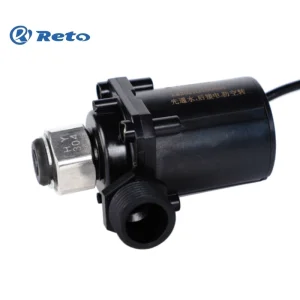
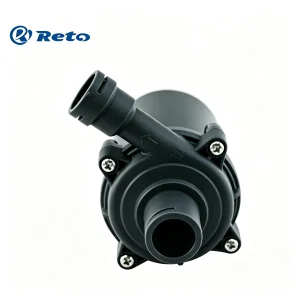
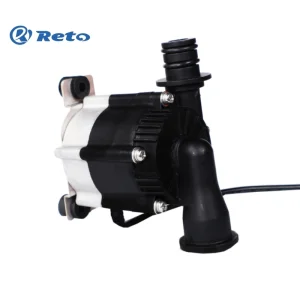
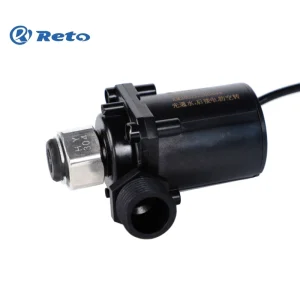
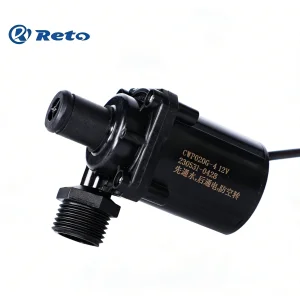
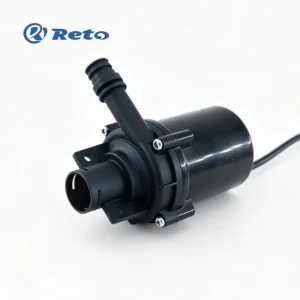
Explore our full line of 12V, 24V, and 36V hot water pumps, engineered for long-life operation in compact boiler enclosures, high-head installations, and energy-conscious hydronic circuits.
In-depth technical answers addressing electrical interface protocols, fluid chemistry compatibility, lead times, and customization flexibility.
Request pump performance curves (P-Q), 3D STEP models, or order customized sample units tailored to your project requirements.