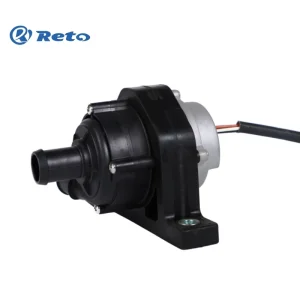
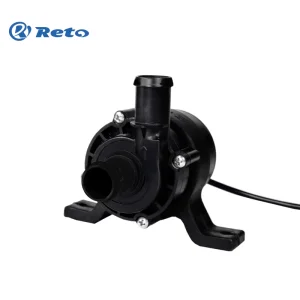
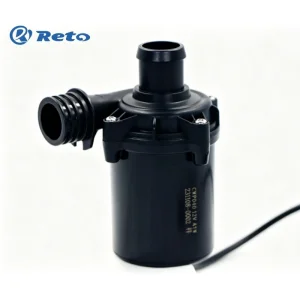
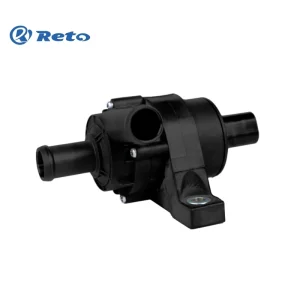
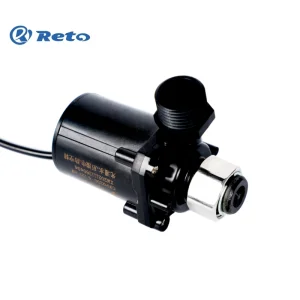
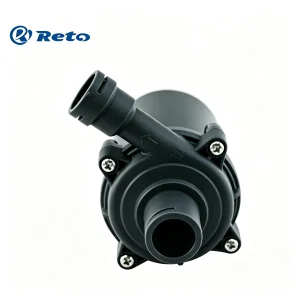
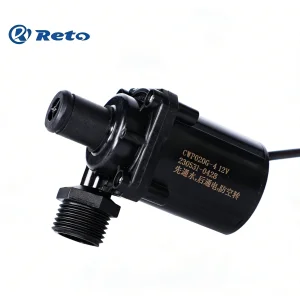
Verified hydraulic pressure boosting solutions engineered for extreme low inlet pressure, tankless thermal stability, and EV powertrain circuits.
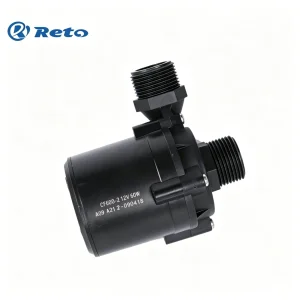
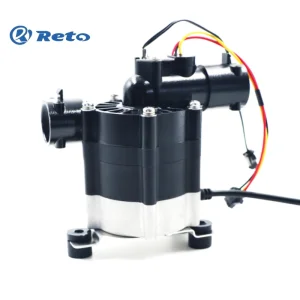
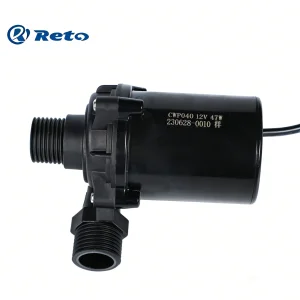
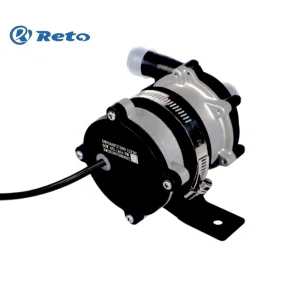
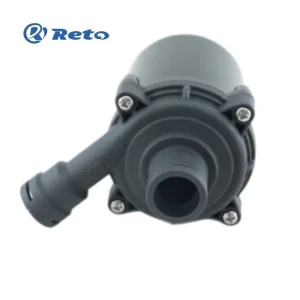
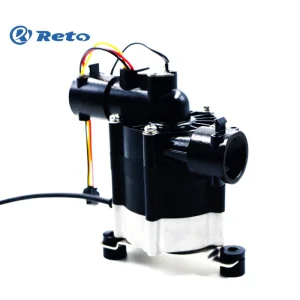
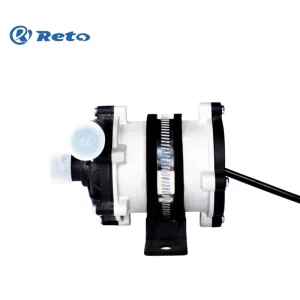
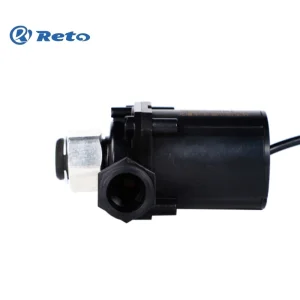
Rapid urban density, deteriorating water transmission networks, and stringent architectural environmental requirements have transformed pressure boost mechanics from a simple commodity into an integrated electronic engineering discipline.
Multi-story residential towers across Southeast Asia, Latin America, and European metropolitan suburbs continuously experience terminal dynamic pressures below 0.05 MPa (0.5 bar). Standard appliance valves and gas flow sensors fail to trigger, resulting in severe water heater ignition failures, erratic shower temperatures, and smart toilet flush malfunction. RETO's advanced China booster pump factories design inline BLDC units providing constant head pressure up to 2.5 bar even with variable flow profiles.
Traditional AC asynchronous motors and brushed DC pump models waste up to 60% of electrical input as ambient heat, alongside suffering rapid brush carbon wear and heavy acoustic noise (>55 dB). Global energy protocols (such as EU Ecodesign, ErP directives, and US DOE standards) now favor electronically commutated Brushless DC (BLDC) booster pumps. Modern low-pressure factories utilize magnetic rotor design with Field-Oriented Control (FOC) vectors, achieving thermal savings over 45%.
Sourcing engineers face persistent hurdles regarding lead times, copper pricing volatility, and uneven QA. Certified by IATF 16949, ISO 9001, and TÜV, Chinese high-precision pump manufacturing clusters in Xiamen have consolidated motor winding, injection tooling, and SMT circuit printing. Sourcing directly from our specialized factory gives tier-one sanitary brands and thermal system integrators automated production scale, high MTBF (>25,000 hrs), and robust cost stability.
A technical evaluation framework for OEM mechanical and hydraulic engineering teams evaluating booster pump systems for low water pressure applications.
| Evaluation Parameter | RETO BLDC Low Pressure Booster (FOC) | Brushed DC Booster Pump | Traditional AC Shaded-Pole / Induction Pump |
|---|---|---|---|
| Operational Lifetime (L10) | 20,000 – 35,000 Hours (Bearing limited) | 1,500 – 3,500 Hours (Carbon brush wear) | 8,000 – 15,000 Hours (Winding insulation failure) |
| Acoustic Emission Level | ≤ 26 – 32 dB(A) (Near-silent sine wave) | 45 – 58 dB(A) (Mechanical brush friction) | 48 – 65 dB(A) (50/60 Hz electromagnetic hum) |
| Motor Electrical Efficiency | 82% – 90% (Neodymium permanent magnet) | 50% – 62% | 25% – 45% (Substantial copper/iron loss) |
| Dynamic Speed Regulation | Full PWM (0-100%) or 0-5V Analog Control | Stepped Voltage Resistor Only | Requires bulky, expensive VFD modules |
| Low-Pressure Dry-Run Defense | Integrated Smart MCU Sensorless Dry Protection | No internal protection (Burn-out risk) | Thermal cut-off switch only (Non-reversible) |
| EMI / High-Frequency Sparks | Zero electrical arcing, Class B EMC compliant | Continuous brush sparks, high EMI noise | Phase back-EMF spikes |
Rather than running at maximum speed against closed valves, RETO BLDC pumps communicate directly with appliance microcontrollers. When water taps are slightly opened or toilet fill valves restrict flow, input power throttles back linearly, preventing system over-pressurization, fluid water hammer, and excess electrical consumption.
Traditional dynamic mechanical shaft seals are replaced with static ceramic shaft isolating sleeves and high-grade PPE/PPS resin encapsulation. Water stays entirely separated from motor stator windings, eliminating mechanical seal wear and fluid leakage over decades of continuous operation.
Utilizing nano-zirconia ceramic shafts paired with self-lubricating graphite composite sleeves results in near-zero hydrodynamic friction. This core engineering decision ensures the pump resists hard-water scale accumulation and particulate erosion common in low-pressure municipal grids.
Real-world integration examples demonstrating how low-pressure booster pumps eliminate operational failures in mission-critical applications.
Instantaneous water heating spray wands and tankless vortex flushing mechanisms require an inlet pressure of 0.15–0.25 MPa. Low city line pressure yields weak spray patterns and dirty bowl flushes. Our 12V/24V high-pressure mini bidet booster pumps provide instantaneous 0.35 MPa boost with near-inaudible noise under 30 dB.
Widely deployed in Southeast Asian markets like Malaysia, instantaneous electric and gas water heaters shut down when dynamic inlet flow drops below 1.5 L/min. Customized 12V–36V centrifugal booster pumps activate seamlessly at 0.6 L/min micro-flow, sustaining constant hot showers without scalding temperature spikes.
In electric vehicles and supercharging stations, coolant passages have low cross-sections generating fluid resistance. Low head pressure means poor heat dissipation. Our IATF 16949-grade automotive electric liquid cooling pumps overcome high flow-resistance cooling plates, maintaining battery safety between 20°C and 45°C.
Rooftop solar water heaters suffer from gravity-fed pressure losses on upper building levels. Miniature 12V–24V DC circulating booster pumps survive fluid temperatures exceeding 100°C, providing pressure compensation to hot showers and preventing cold-water backflow into the solar vacuum tubes.
Ensuring complete product traceability, market approval, and engineering reliability from our Xiamen manufacturing base to worldwide distribution.
Operating under the rigorous IATF 16949 automotive standard, every booster pump assembly line implements APQP, FMEA, PPAP, and SPC. Key production procedures feature 100% automated electrical parameter verification, dynamic laser balancing, and high-pressure water seal decay testing.
Wet fluid parts are manufactured using food-grade raw materials certified to RoHS, REACH, FDA, and WRAS requirements. Plastic housings utilize polyphenylene ether (PPE) and PPS reinforced with glass fibers to ensure zero bisphenol A (BPA) leaching and resistance to chlorinated drinking water.
RETO backs international OEM customers with localized technical engineering files, comprehensive 3D CAD step libraries, accelerated environmental stress chambers, and dedicated logistics pipelines across Europe, North America, Japan, and Southeast Asia.
Bridging mechanical fluid boosting with predictive IoT algorithms, energy harvesting, and ultra-compact integration.
Next-generation RETO booster pump drive microchips will incorporate high-frequency current ripple analytics. When extreme low inlet conditions induce pump cavitation (micro-bubbles that corrode impellers), the internal MCU algorithm automatically adjusts the motor speed curve to eliminate cavitation before acoustic noise or damage manifests.
By transitioning onboard driver transistors from traditional MOSFETs to wide-bandgap Gallium Nitride (GaN) switching circuits, RETO R&D engineers are slashing motor drive controller dimensions by 40% while raising inverter electrical efficiency above 96%. This facilitates internal pump integration into narrow tankless wall-hung water heaters.
Eliminating analog wire harnesses, future booster models integrate native CAN-bus, LIN-bus, and Modbus RTU communication ports. This unlocks centralized telemetry for commercial apartment installations, allowing maintenance operations to track individual pump operational hours, load status, and line pressure anomalies remotely.
Technical reference guide for procurement managers, mechanical architects, and distribution specialists.
Explore our complete tier-one range of low-pressure boosting solutions, EV battery circulating pumps, and quiet toilet flush systems.