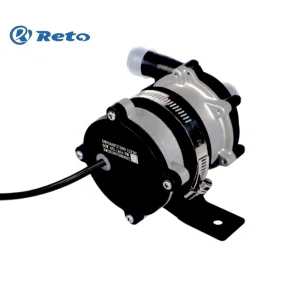
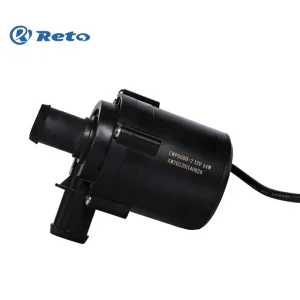
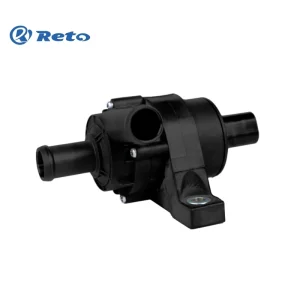
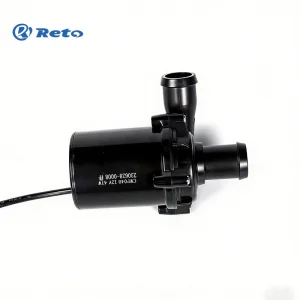
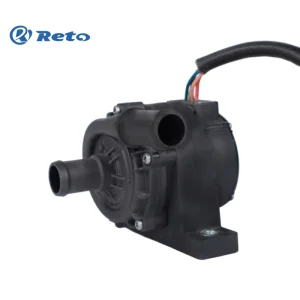
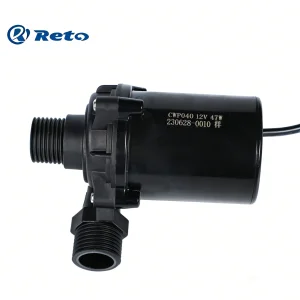
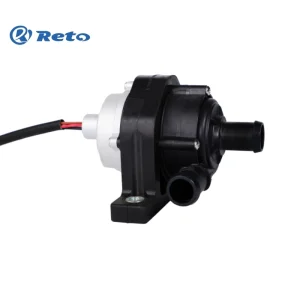
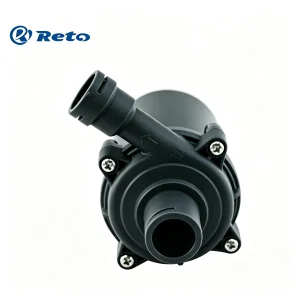
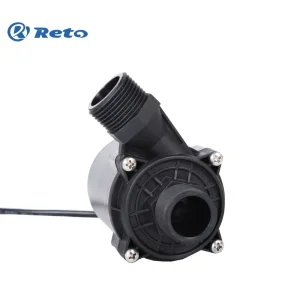
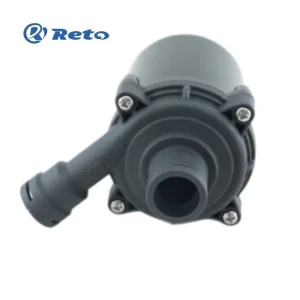
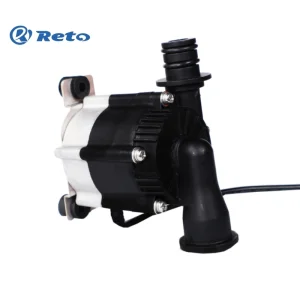
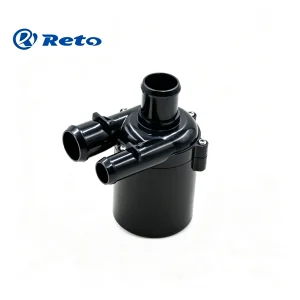
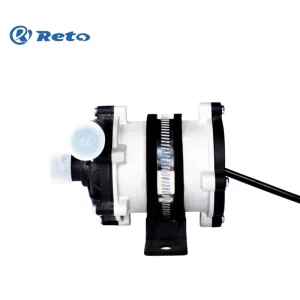
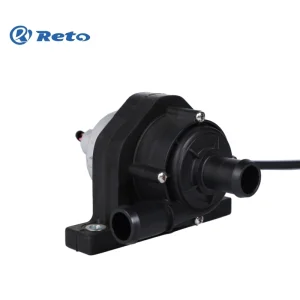
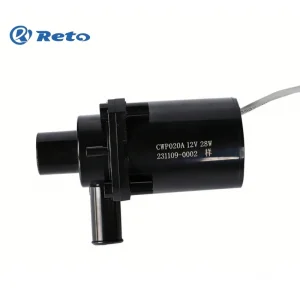
Engineered for low NVH, continuous-duty cycle resilience, and precision micro-controller integration across automotive electric loops and specialized home appliances.
Analyzing the global migration from mechanical belt-driven impellers to intelligent Brushless DC (BLDC) platforms across electrified transport, computing clusters, and modern residential infrastructures.
Across the international manufacturing landscape, thermal management has shifted from a peripheral thermodynamic consideration to a core determinant of system efficiency, product lifespan, and functional safety. The electrification of mobility—spanning passenger battery electric vehicles (BEVs), commercial buses, and high-power charging (HPC) networks—has mandated liquid cooling loops capable of dynamically modulating coolant flow rates under extreme temperature differentials (-40°C to +125°C). In legacy internal combustion engines (ICE), mechanical cooling water pumps extracted parasitic energy continuously, irrespective of engine thermal necessity. Today, micro-controlled BLDC cooling water pumps consume power solely on demand, communicating directly via Pulse Width Modulation (PWM) or Controller Area Network / Local Interconnect Network (CAN/LIN) buses to slash parasitic losses by up to 85%.
Parallel to the automotive sphere, industrial equipment designers face unprecedented thermal densities. The rapid global deployment of artificial intelligence data clusters, edge server infrastructure, medical laser arrays, and high-temperature tankless water heating systems requires coolant circulation pumps that operate seamlessly for tens of thousands of hours without maintenance. Sourcing managers and chief technical officers no longer evaluate pump manufacturers solely on static hydraulic curves (Head vs. Flow Rate); procurement decisions hinge upon mean time between failures (MTBF), electromagnetic compatibility (EMC class 3 to 5), wet-rotor canned cavity hermeticity, and supply chain scalability.
Key Insight for Sourcing Directors: Modern cooling systems operate under variable hydraulic resistance. Specifying a pump with integrated closed-loop electronic commutation ensures real-time stall detection, dry-running protection, and over-current fail-safes without requiring external auxiliary controllers, thereby lowering total system integration costs.
Integrated field-oriented control (FOC) algorithms allow step-less velocity adaptation from 1,000 to 6,000 RPM, maintaining strictly regulated coolant flow rates based on real-time sensory feedback from battery packs or CPU thermal jackets.
Eliminating mechanical shaft dynamic lip seals through static O-ring isolations and PPS-carbon graphite composites completely terminates leak paths, preventing catastrophic coolant breaches in high-voltage and cleanroom enclosures.
Precision-molded dynamic impellers coupled with ceramic shaft balancing algorithms minimize hydrodynamic cavitation and structural resonance, fulfilling the stringent acoustic requirements of smart sanitary ware and luxury EV cabins.
How Chinese precision pump manufacturing centers integrate advanced robotics, automated coil winding, and end-of-line optical testing to maintain global supply continuity.
The global dominance of China's cooling water pump manufacturing ecosystem rests on deep industrial clustering, agile precision tool-making, and the systemic integration of Industry 4.0 methodologies. Far beyond basic assembly lines, our manufacturing facilities in Fujian represent end-to-end vertically integrated production complexes. From multi-cavity injection molding using engineering-grade polyphenylene sulfide (PPS) and polyphthalamide (PPA) to high-speed surface-mount technology (SMT) cleanrooms producing automotive-grade electronic driver boards, every phase is localized within a tight geographic cluster. This eliminates supply chain chokepoints and drastically reduces bill-of-materials (BOM) volatility.
Quality management is governed strictly under IATF 16949 automotive standards, ISO 9001, and TÜV safety certifications. In our modern facilities, stator coil winding is 100% automated, utilizing multi-axis CNC machines that ensure tight winding tension and exact resistance consistency. Rotors undergo precision two-plane dynamic balancing, followed by 100% helium mass-spectrometer and dry-air pressure-decay leak testing to verify housing integrity up to 3.5 bar. Automated automated optical inspection (AOI) and comprehensive dynamometer end-of-line (EOL) testing capture real-time voltage-current curves, pressure-head output, and noise spectra for every pump unit before palletizing.
Detailed technical breakdown for engineering procurement teams comparing conventional brushed pumps against state-of-the-art electronically commutated BLDC canned solutions.
| Evaluation Parameter | Traditional Brushed DC Pump | Standard Magnet Drive Pump | RETO Advanced BLDC Canned Pump |
|---|---|---|---|
| Operating Lifespan | 1,500 – 3,000 Hours (Carbon brush wear limit) | 10,000 – 15,000 Hours | 30,000 – 50,000+ Hours (Bearing limited only) |
| Acoustic Emission (NVH) | High (>55 dB, mechanical brush friction) | Moderate (42 – 48 dB) | Ultra-Quiet (<38 dB, FOC vector drive) |
| Electrical Efficiency | 40% – 55% (High frictional & arcing loss) | 60% – 72% | Up to 88% Efficiency |
| Hermetic Seal Structure | Dynamic Mechanical Lip Seal (Prone to leakage) | Static Isolation Sleeve | Seamless PPS/Ceramic Canned Stator Isolation |
| EMI / EMC Shielding | Severe sparking; requires heavy chokes/filters | Standard compliance | CISPR 25 Class 3-5 Automotive Compliant |
| Intelligent Diagnostics | None; external monitoring required | Basic on/off tachometer | Full PWM/LIN speed feedback, stall & dry run detect |
| Thermal Fluid Range | -10°C to +70°C | -20°C to +90°C | -40°C to +125°C (Automotive Coolant Compatible) |
From electric drive trains navigating sub-zero conditions to ultra-compact sanitary appliances, explore how RETO pumps solve unique hydraulic bottlenecks.
Lithium battery packs require stringent temperature equilibrium (20°C to 35°C) to prevent thermal runaway and maintain rapid charging acceptance. RETO 12V and 24V electric water pumps circulate 50/50 ethylene glycol/water solutions across heat exchangers, operating reliably despite intense chassis vibrations, road debris impacts, and high thermal variations.
Modern 350kW to 600kW HPC chargers experience extreme resistive heating inside the charging gun and conductor cables. Liquid-cooled charging cables utilize our high-pressure BLDC mini pumps to circulate dielectric coolant through slender flexible hoses, suppressing cable temperature rises without adding prohibitive weight for human operators.
Smart electronic bidets and tankless water heaters encounter major performance drops in high-rise buildings with low municipal water pressure (<0.1 MPa). Our specialized high-pressure miniature booster pumps deliver robust, immediate pressure compensation and zero-delay bidet flushing, functioning quietly under residential kitchen and bathroom acoustic ceilings.
High-power fiber laser cutting heads and MRI machines require pulsation-free coolant circulation. Pressure spikes cause optical focal shifts and beam distortion. RETO canned centrifugal pumps deliver smooth, laminar flow characteristics, zero mechanical contamination, and continuous 24/7 duty cycles under closed industrial cooling loops.
Key thermodynamic, hydraulic, and structural criteria that procurement engineers must specify when issuing an RFQ to a Chinese pump manufacturing plant.
Procuring custom or off-the-shelf BLDC water pumps requires evaluating multiple cross-disciplinary engineering parameters. An inadequate specification often results in cavitation erosion, electronic driver overheating, or premature winding degradation. When submitting technical drawings and RFQs to our engineering laboratory in Xiamen, we recommend defining parameters across four primary dimensions:
1. Hydraulic Operating Point & Viscosity Curves: State the precise operational point (e.g., 25 L/min at 1.2 bar head pressure) rather than merely quoting zero-head free-flow maximums. Coolant solutions containing 50% ethylene glycol display higher fluid viscosity at sub-zero temperatures, which fundamentally alters the impeller torque curve and requires tailored motor rotor sizing to prevent stalled startups.
2. Net Positive Suction Head (NPSH) & Cavitation Prevention: In hot-water booster and high-temperature cooling loops (>85°C), the vapor pressure of the medium approaches ambient loop pressure. Specifying the available NPSHa ensures that our hydraulic engineers optimize impeller eye diameter and inlet diffuser profiles, mitigating cavitation wear and acoustic bubble collapse.
3. Electrical Drive, EMC, & Bus Control Protocol: Clarify whether the pump requires simple two-wire DC power, a 3-wire system with frequency generation (FG) tachometer feedback, or a 4-wire PWM duty-cycle speed control input. For automotive and medical applications, state the target electromagnetic radiation ceiling (such as CISPR 25 Class 3 or Class 5 compliance) to ensure adequate on-board ferrite filtering and board layout shielding.
4. Ingress Protection (IP Rating) & Chemical Compatibility: Under-hood automotive and sanitary flushing environments expose components to high-pressure washdowns, detergent sprays, or condensing humidity. Specifying IP67 or IP68 protection mandates vacuum-epoxy potting of the electronic control unit (ECU) inside the pump housing, hermetically isolating sensitive semiconductor circuitry from moisture ingress.
Directly consult with our senior hydraulic and motor control engineers. We deliver tailored 3D CAD modeling, custom impeller simulations, and prototype samples within 14 working days.
Straightforward, engineering-backed answers addressing the most common inquiries from international OEM buyers and systems integrators.
While both pump categories eliminate dynamic mechanical shaft seals, a canned BLDC pump integrates the rotor directly into the pumped fluid, separated from the stationary stator windings by a static, non-magnetic isolation can (typically high-grade PPS or stainless steel). This eliminates the separate external drive magnet, reducing pump length, cutting rotational inertia, and boosting overall motor-to-hydraulic power efficiency by 15% to 25% compared to bulky dual-magnet couplings.
Our pumps incorporate intelligent current-sensing microcontrollers running proprietary firmware algorithms. When fluid is absent, the absence of hydraulic load causes motor phase current to drop significantly below calibrated thresholds while RPM spikes. Upon detecting this condition, the ECU throttles down or pauses pump rotation, performing intermittent retry sweeps to prevent frictional heat damage to the ceramic bearings until fluid prime is restored.
RETO operates under audited IATF 16949 automotive quality management standards, as well as ISO 9001 systems, with factory verifications audited by TÜV Rheinland. Products maintain strict CE, RoHS, and REACH material compliance. Every manufacturing line employs standard Advanced Product Quality Planning (APQP), Production Part Approval Process (PPAP Level 3), Failure Mode and Effects Analysis (FMEA), and statistical process control (SPC) charts.
Yes. We specialize in custom OEM/ODM hydraulic engineering. Our engineering team can modify impeller blade curvature, volute diffuser volume, inlet/outlet barb or threaded dimensions (e.g., G1/2, G3/4, hose barbs), operating voltage (12V, 24V, 36V, 48V DC), and motor winding turns to match your exact pressure, flow, and spatial footprint envelope.
For standard catalog configurations, rapid prototyping samples are dispatched within 3 to 7 working days. Customized hydraulic or electronic modifications typically require 14 to 21 days for tooling validation and sample sign-off. Full commercial production runs are reliably fulfilled within 25 to 35 calendar days, supported by our robust raw material buffer inventories and 2-million-unit annual capacity.
Browse our extended product line of 12V, 24V, and 36V DC brushless water circulation and pressure boosting solutions designed for high continuous duty.