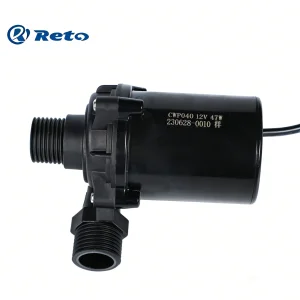
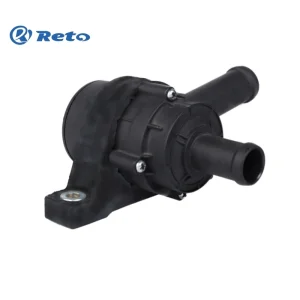
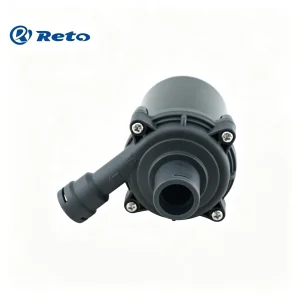
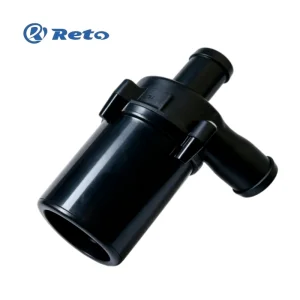
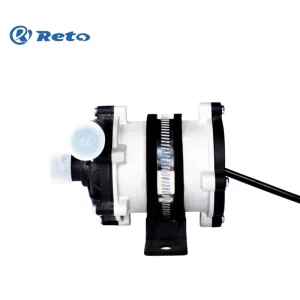
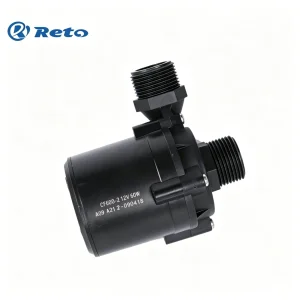
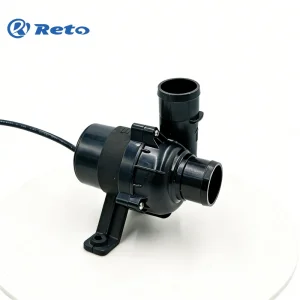
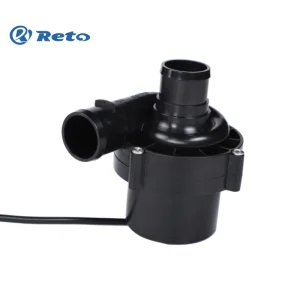
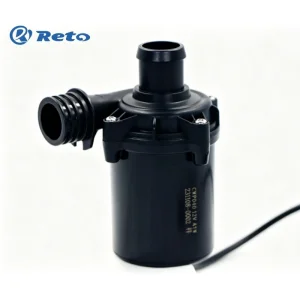
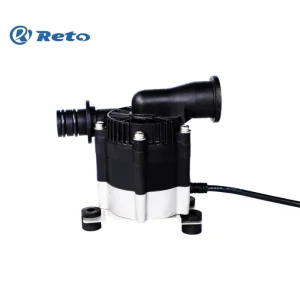
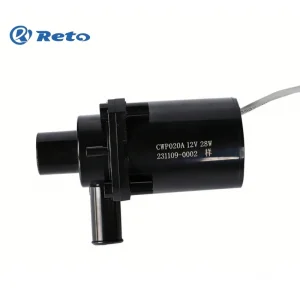
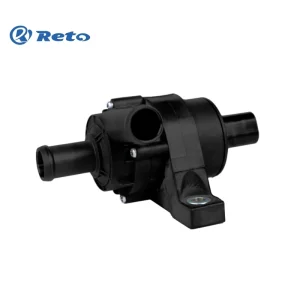
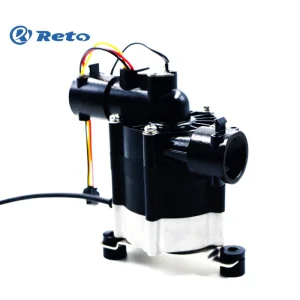
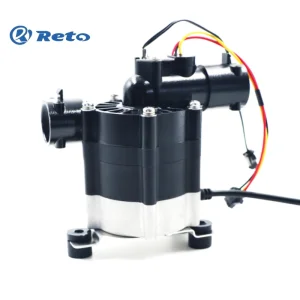
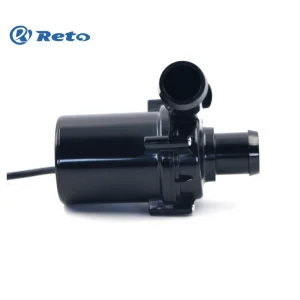
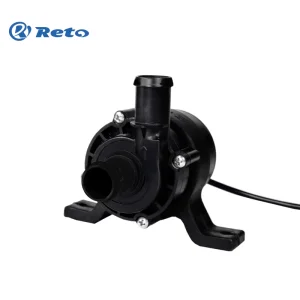
Engineered with electronic brushless commutation, wear-free ceramic bearings, and hermetic resin encapsulation. Explore our precision DC cooler pump platforms built for continuous-duty thermal dissipation and high-pressure fluid transfer.
In high-density power electronics, rapid energy conversion, and enclosed thermodynamic loops, forced air cooling has reached its absolute physical boundary. Modern industrial and commercial systems demand closed-loop liquid circulation powered by brushless DC submersible cooler pumps capable of continuous operation in aggressive dielectric fluids, water-glycol mixtures, and deionized water.
Next-generation EV fast chargers, battery packs, and edge computing nodes dissipate extreme heat over microscopic surface areas. Submersible cooler pumps eliminate mechanical shaft seals, isolating high-voltage electronics while maintaining steady thermodynamic exchange with minimal volumetric footprint.
Traditional brushed motors suffer mechanical friction and carbon dust erosion, leading to catastrophic coolant contamination and early motor seizure. Modern BLDC submersible cooler pumps utilize sensorless Field Oriented Control (FOC) and dynamic magnetic drives, exceeding 35,000 hours of uninterrupted MTBF.
From smart sanitary bidets and home tankless water heaters to precision medical diagnostic equipment, acoustic discretion is a decisive user experience metric. Hydraulic impeller profiling and anti-resonance stator winding isolate fluid pulsation, achieving whisper-quiet operational profiles.
Unlike external inline pumps prone to micro-leakages around dynamic elastomers, submersible wet-rotor pumps immerse the magnetic rotor assembly inside the cooling medium. Static O-rings and ultrasonic weld seals separate the stator chamber, eliminating shaft-seal replacement requirements, reducing hydraulic friction, and utilizing the pumped liquid as a natural heat sink for the copper stator windings.
China's specialized coastal manufacturing clusters—particularly within the Fujian and Guangdong industrial corridors—provide an integrated fluid engineering ecosystem unmatched in vertical density, automated tooling agility, and automotive-grade quality control.
Tier-1 automotive certification dictates full traceability from magnet composition to potting resin curing temperatures. Automated optical inspection (AOI) and computerized end-of-line testing verify pressure-flow curves at 100% volume.
Direct proximity to rare-earth sintered neodymium (NdFeB) magnet suppliers, precision injection tooling shops, and surface-mount device (SMD) PCB assembly lines compresses OEM prototyping cycles from months to under 14 days.
With multi-million unit annualized factory capacities, high-speed automated stator winding, ultrasonic welding, and vacuum potting guarantee consistent air-gap tolerances down to ±0.03mm, minimizing electromagnetic hum.
China's leading pump factories design directly for international market clearance: UL, CE, RoHS, REACH, WRAS, and FDA food-grade compliance are pre-engineered into polymer housing grades and hydraulic elastomer seals.
The versatility of DC brushless submersible pumps extends far beyond conventional water circulation. Modern industrial designers implement these high-integrity units across complex thermodynamic, sanitary, and automotive platforms.
Lithium-ion cells require a strict temperature envelope (20°C–35°C) to prevent thermal runaway and maintain rapid charge intake. Automotive BLDC cooler pumps provide on-demand PWM-regulated coolant flow through cold plates, enduring road vibration and wide ambient ranges (-40°C to +125°C).
Megawatt charging stations (MCS) transferring 500A+ generate massive ohmic heat in the charging gun and umbilical cable. Submersible cooler pumps circulate coolant directly through flexible coaxial conduits, keeping handle temperatures compliant with ergonomic safety thresholds.
Fiber laser cutting heads and CNC milling spindles require closed-loop chillers that prevent optical distortion. Our pumps deliver laminar, non-pulsing fluid streams at constant pressures up to 2.5 bar, protecting delicate laser crystals from localized hot spots.
Modern luxury toilets demand instantaneous water delivery with high kinetic impulse despite low municipal supply pressures. Miniature 12V/24V submersible booster pumps deliver instantaneous cleansing spray and quiet tank-filling cycles directly within compact ceramic cavities.
Hyper-scale AI GPU compute blades are increasingly submerged in non-conductive dielectric engineered fluids. Submersible pumps mounted directly inside fluid reservoirs offer zero external leak points, maintaining uniform fluid turnover across dense computational matrices.
Food-grade certified submersible pumps circulate glycol baths in multi-tap draft beer dispensers and high-precision espresso heat exchangers, preventing thermal stratification without imparting plasticizing flavors to food contact loops.
The transition from legacy asynchronous AC pumps to digitally controlled BLDC platforms is accelerating. Procurement directors and system architects are aligning specifications with four dominant engineering trends.
With automotive 48V mild-hybrid systems and 800V BEV architectures becoming dominant, cooler pumps are migrating from 12V to 24V/48V platforms. This voltage doubling slashes current draw by 50%, reducing internal wire harness weight and thermal loss.
Modern cooler pumps are no longer simple open-loop motors. Integrated microcontroller units (MCUs) transmit real-time RPM feedback, current consumption, winding temperatures, and stall detection via LIN 2.1 or CAN bus protocols directly to central host controllers.
Embedded firmware detects dry-run cavitation within 300 milliseconds through sudden phase current drops, automatically reducing RPM or executing periodic retry sequences to prevent thermal destruction of ceramic thrust bearings.
To resist glycol degradation at 120°C, injection molds utilize polyphenylene sulfide (PPS) reinforced with 30-40% glass fiber, or virgin PEEK. This maintains dimensional stability under pressure and prevents micro-swelling of the impeller shroud.
Before issuing an RFQ, engineering procurement teams must evaluate pump architectures against system duty cycles, fluid properties, and installation envelopes. The table below outlines key differentiation factors.
| Evaluation Parameter | Brushless DC (BLDC) Submersible | Traditional Brushed DC Pump | AC Synchronous Submersible |
|---|---|---|---|
| Operating Lifespan (MTBF) | 30,000 to 50,000 Hours (Wear-free) | 1,500 to 3,500 Hours (Brush wear limit) | 8,000 to 15,000 Hours |
| Acoustic Emission | ≤ 25 to 32 dB(A) at 1 meter | 42 to 55 dB(A) (Mechanical arcing) | 38 to 48 dB(A) (50/60Hz line hum) |
| Hermetic Seal Method | Static O-Ring & Epoxy Potting (IP68) | Dynamic Mechanical Carbon Lip Seal | Molded Plastic Resin Barrier |
| Speed Modulation | PWM (0-100%) / 0-5V Analog / LIN Bus | Resistive Voltage Dropping Only | Fixed Frequency (Requires VFD) |
| Electrical Efficiency | 75% to 88% Dynamic Hydraulic Eff. | 45% to 60% (Friction losses) | 35% to 50% (High rotor slip) |
| Thermal Rise in Coolant | Extremely Low (High motor efficiency) | High (Parasitic brush heat) | Moderate to High Induction Heat |
| Electromagnetic Interference | Low (CISPR 25 Class 3/5 Compliant) | High (Continuous spark arcing) | Negligible at line frequency |
When requesting customized pump quotes from our Chinese engineering factory, providing the following baseline variables guarantees an accurate hydraulic proposal within 24 hours: (1) Target Head vs. Flow Rate (Q/H dynamic curve), (2) Medium Chemistry & Viscosity (e.g., 50/50 ethylene glycol/water), (3) Operating Temperature Range (fluid & ambient ambient), (4) Input Voltage & Allowable Current Budget, (5) Target Ingress & Submersion Depth (IP68 bar rating), and (6) Preferred Control Protocol (PWM frequency band, FG tachometer output, or CAN bus).
From high-head wastewater lift to sanitary potable water boosting and high-temperature water heater recirculation, explore the full breadth of our certified manufacturing output.
Direct technical answers addressing hydraulic limitations, material compatibility, electronic modulation, and volume manufacturing quality safeguards.