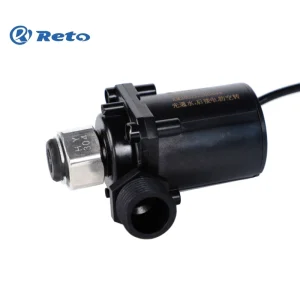
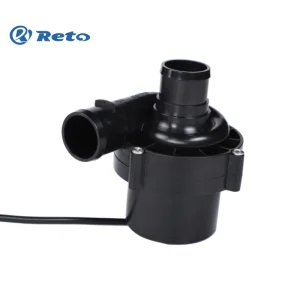
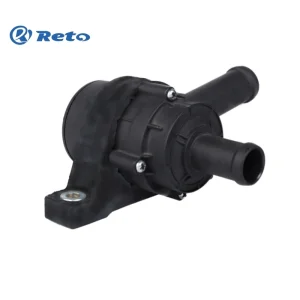
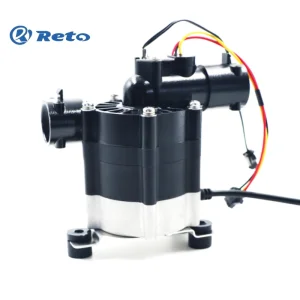
Explore custom brushless DC configurations built with static magnetic isolation, FOC sine-wave micro-controllers, and heavy-duty wet-rotor architecture tailored for international equipment manufacturers.
Decarbonization, smart appliance miniaturization, and electromobility are transforming custom micro-hydraulic booster pumps from simple commodity components into precision-controlled mechanical heartbeats.
Global regulatory frameworks such as EU Ecodesign (ErP), US DOE standards, and China GB mandates have tightened hydraulic efficiency indices. Conventional shaded-pole AC induction pumps, which consume substantial idle wattage and deliver less than 25% electrical-to-hydraulic efficiency, are rapidly being replaced by electronically commutated Brushless DC (BLDC) booster pumps operating at over 75% system efficiency.
In electric vehicles (BEVs, PHEVs) and mega-watt fast charging stations, thermal loads have surged past 100 kW per powertrain unit. Maintaining battery cells within the narrow thermal envelope of 20°C to 35°C requires continuous high-pressure, zero-pulsation coolant circulation across high-resistance micro-channel cold plates, driving exponential OEM procurement of automotive-grade 12V, 24V, and 48V booster pumps.
High-density multi-story architecture across Southeast Asia, North America, and Europe frequently suffers from municipal pressure drops below 0.1 MPa (14.5 PSI). Smart sanitary fixtures and instant water heaters require dedicated, whisper-quiet booster pumps capable of elevating delivery head to 15-25 meters while maintaining acoustic emissions below 35 dB(A) for uncompromised luxury living.
Tier-1 sourcing directors require quantifiable performance metrics. Here is an empirical technical audit comparing conventional brushed motors, shaded-pole AC pumps, and RETO's intelligent brushless DC high-pressure technology.
| Evaluation Parameter | RETO Intelligent BLDC Booster | Traditional Brushed DC Pump | Shaded-Pole AC Booster Pump |
|---|---|---|---|
| Operating Lifespan (L10) | 25,000 – 40,000 Hours (Continuous) | 1,500 – 3,000 Hours (Brush degradation) | 8,000 – 15,000 Hours (Bearing thermal failure) |
| Acoustic Signature (1 Meter) | ≤ 28 dB(A) to 38 dB(A) Smooth Sine Wave | ≥ 52 dB(A) Mechanical brush friction | ≥ 48 dB(A) 50/60 Hz electromagnetic hum |
| Hydraulic Energy Efficiency | 72% – 85% Motor-to-Fluid Efficiency | 40% – 50% High internal resistance | 22% – 32% Substantial rotor slip losses |
| Commutation & Maintenance | Electronic FOC Vector Commutation (Zero Contact) | Mechanical Carbon Brush / Copper Commutator | Rotational Stator Induction Field |
| Sealing & Leakage Hazard | Hermetic Static Magnetic Drive (Zero Leakage) | Dynamic Mechanical Shaft Seal (Wear-prone) | Canned Rotor or Dynamic O-Ring Seal |
| Electromagnetic Interference (EMI) | CISPR 25 Class 5 / EN 55014-1 Compliant | High arc discharge sparking; EMI filters required | Low EMI, but causes harmonic line distortion |
| Dynamic Speed & Flow Control | Closed-Loop PWM (0-100%) / CAN 2.0B / LIN Bus | Crude voltage step-down (inefficient) | Triac phase cutting or single fixed speed |
| Intelligent Protections | Integrated Dry-Run, Locked-Rotor, Over-Voltage, Temp | Thermal fuse only (external controller needed) | Thermal cut-off bi-metal switch |
From luxury residences in high-rise towers to automotive battery packs navigating extreme climates, custom high-pressure booster pumps eliminate fluid resistance bottlenecks and optimize operational uptime.
Overcoming zero-inlet residential water pressure. Delivers 20 kPa – 40 kPa instantaneous head for high-velocity rim flushing, multi-cyclonic vortex clearing, and therapeutic, multi-mode bidet nozzle atomization without structural reservoir bulk.
Maintains thermal uniformity (ΔT < 2°C across cells) within 400V/800V prismatic and cylindrical lithium-ion packs. Withstands -40°C ethylene glycol mixtures to +125°C engine compartment heat, certified under rigorous IATF 16949 standards.
Zero cold-water wait loops for residential and hospitality applications. Generates targeted high-pressure flow rates across finned copper heat exchangers to prevent mineral scale crystallization and eliminate scald spikes during simultaneous faucet draws.
Continuous closed-circuit circulation for fiber laser diodes, medical imaging MRI gradient coils, and commercial food & beverage machinery requiring steady hydrodynamic delivery without metallic ion contamination or micro-pulsations.
As semiconductor cooling and architectural efficiency demand smaller footprints and higher heads, RETO's advanced engineering team in Xiamen is executing a four-tier technological evolution roadmap.
Migrating silicon MOSFET inverters to wide bandgap Gallium Nitride (GaN) and Silicon Carbide (SiC) semiconductors, decreasing PCB thermal waste by 40% and shrinking pump controller envelope sizes by over 35%.
Embedding high-frequency vibration and current-ripple analytic micro-chips to detect micro-cavitation and impeller scaling before hardware degradation occurs, transmitting predictive maintenance data via CAN / IoT telemetry.
Replacing static ceramic thrust bushings with contactless active magnetic bearing (AMB) arrays for ultra-pure biomedical and semiconductor liquid cooling, achieving infinite bearing life and zero acoustic signature.
Deploying 100% recyclable, high-rigidity bio-composite polyphenylene sulfide (PPS) casings capable of withstanding 2.5 MPa burst pressures while trimming the product lifecycle carbon footprint by over 50%.
RETO operates high-automation assembly facilities managed under certified IATF 16949 and ISO 9001 frameworks, delivering more than 2 million high-precision pump units annually with 100% traceability.
Automated PCB surface-mount technology ensures strict component placement accuracy, followed by dual-component vacuum polyurethane or epoxy resin encapsulation. This delivers true IP68 submersible protection, exceptional thermal dissipation, and resistance to automotive vibration shock.
Every single high-pressure booster pump undergoes an automated 5-step test sequence prior to packaging: helium mass spectrometer leak detection, high-potential dielectric voltage withstand (Hi-Pot), pneumatic burst pressure verification, acoustic chamber decibel measurement, and full H-Q curve hydrodynamic flow profiling.
RETO products are tested and verified by international notified bodies including TÜV Rheinland, carrying CE, RoHS, REACH, FDA, and NSF certifications. Recognized as a National High-Tech Enterprise, SRDI ("Little Giant") Enterprise, and high-growth Gazelle Enterprise in China.
Custom hydraulic architectures optimized for ultra-low noise, high head pressure, and resilient thermal-cycle circulation across sanitary fixtures, instant heating appliances, and EV powertrains.
Avoid costly validation redesigns and field warranty liabilities. Sourcing engineers and procurement teams should evaluate eight critical technical pillars during initial pump specification:
Density, kinematic viscosity, and glycol mix percentage dictate hydraulic power and stator heat dissipation. Solutions must be calibrated for -40°C antifreeze to +100°C potable water without cavitation.
Never size solely by peak flow rate or static zero-flow shut-off head. Analyze system flow resistance to locate the exact duty point within the pump's highest hydraulic efficiency sweet-spot (65-80%).
Select 12V, 24V, 36V, or 48V DC nominal bus inputs. Ensure the onboard electronic control unit features transient suppression, reverse-polarity clamping, and over/under voltage protection circuits.
Determine interface protocol: simple 2-wire on/off, 0-5V analog voltage, frequency modulated PWM, or automotive LIN / CAN 2.0B buses providing RPM feedback (FG signal) and real-time fault diagnostics.
Verify bearing material pairing. Precision ceramic (ZrO2 / SiC) shafts with carbon-graphite or high-grade PTFE bushings deliver wear-free hydrodynamic lubrication exceeding 30,000 operational hours.
Acoustic targets below 30 dB(A) demand FOC (Field-Oriented Control) sine-wave motor commutation rather than block commutation, alongside anti-vibration EPDM soft-mount isolation brackets.
For sanitary, beverage, and medical systems, the wet-end chamber, rotor, and impeller require FDA, WRAS, or NSF/ANSI 61 compliant food-grade PPS/PPO plastics and high-purity EPDM or FKM elastomeric seals.
Municipal water spikes and closed automotive cooling circuits generate hydrostatic shocks. RETO pumps are designed for maximum static pressures exceeding 1.2 MPa (174 PSI) without weld failure.
Direct answers from our senior R&D engineering department on custom booster pump design, durability validation, and international manufacturing logistics.
RETO utilizes a sealless canned-motor static magnetic drive architecture. The pump chamber and stator are isolated by an injection-molded, high-strength polyphenylene sulfide (PPS) containment shell sealed with static O-rings. There are zero dynamic mechanical shaft seals to wear or fail, eliminating fluid egress throughout the lifetime of the pump.
Yes. Our in-house R&D team leverages 3D Computational Fluid Dynamics (CFD) impeller modeling and Finite Element Analysis (FEA) to sculpt volute geometries, inlet/outlet orientations, and impeller blade angles. We can tune pressure head, flow rate, port diameter (e.g., G1/2, NPT, quick-connect barbed fittings), and mounting brackets to your chassis constraints.
RETO pumps integrate a proprietary intelligent MCU featuring dry-run protection (automatically shutting off after sensing no liquid load to prevent bearing thermal seizure), locked-rotor auto-recovery, reverse-polarity defense, soft-start ramp-up (< 2 seconds to full torque), over-voltage clamping, and ambient thermal cut-off.
RETO operates under certified IATF 16949 (the global benchmark for automotive quality management) and ISO 9001 systems. Our products undergo rigorous third-party auditing and testing by TÜV Rheinland, maintaining CE, RoHS, and REACH material safety compliance, with specialized drinking water food-contact compliance available upon request.
Low noise is engineered across three fronts: (1) Vector-controlled 3-phase Field-Oriented Control (FOC) eliminates sharp square-wave electromagnetic cogging torque; (2) High-precision dynamic balancing of the one-piece magnetic rotor prevents eccentric vibration; (3) Self-lubricating zirconia ceramic shafts and carbon graphite bushings buffer rotational vibration.
For custom hydraulic engineering, preliminary 3D CAD models and CFD simulation reports are delivered within 5-7 business days. 3D-printed or rapid CNC prototypes are ready within 15-20 days. Following tooling validation and sample approval, standard mass production batches (10,000+ units) ship within 25 to 35 calendar days from our Xiamen facility.