
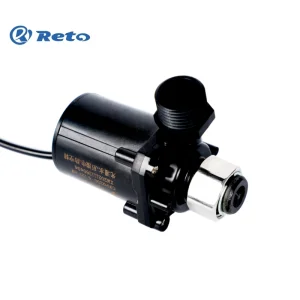
Standardized and custom OEM brushless DC (BLDC) solutions built under IATF 16949 & ISO 9001 frameworks, featuring low-cavitation hydraulics, magnetic drive decoupling, and high thermal resistance.
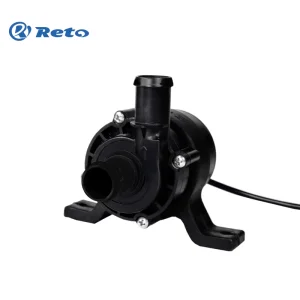
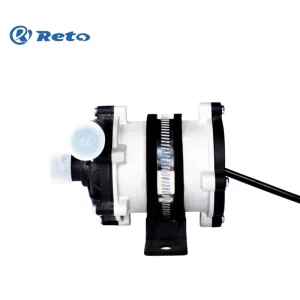
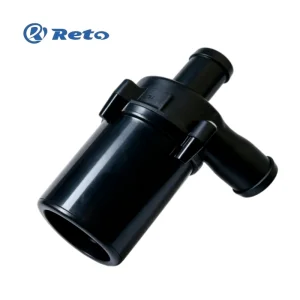
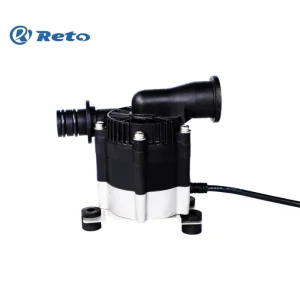
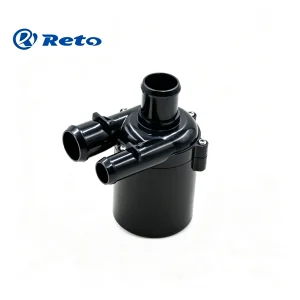
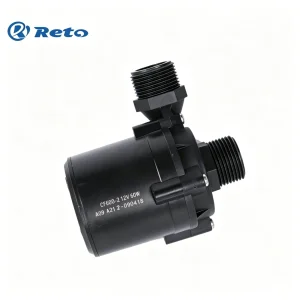
The international plumbing and mechanical engineering landscape is undergoing a structural transition toward decarbonized hydronic loops, stringent municipal water conservation mandates, and smart residential flow balancing.
Traditional non-circulated plumbing drops up to 35-45 liters of potable water down the drain every morning while waiting for temperature rise at terminal fixtures. Recirculating booster systems eradicate this loss immediately.
Compliance with the Energy-related Products (ErP) directive demands circulators with an Energy Efficiency Index (EEI) below 0.20, accelerating the global phase-out of legacy asynchronous shaded-pole motors in favor of smart BLDC/ECM drives.
OEM boiler integrators, heat pump manufacturers, and MEP modular prefabricated bathroom contractors across North America, Europe, and Asia-Pacific require custom form factor pumps to satisfy strict regional building codes.
Historically, domestic hot water delivery relied on gravity convection or oversized, continuously humming alternating current (AC) pumps that consumed between 60W and 120W of constant electrical power. This parasitic energy draw frequently exceeded the standby energy losses of the thermal water tank itself. Modern procurement specifications established by mechanical, electrical, and plumbing (MEP) engineers insist on electronically commutated permanent-magnet synchronous motors (PMSM/BLDC) paired with on-demand intelligent firmware.
Original Equipment Manufacturers (OEMs) of tankless condensing water heaters, hybrid air-source heat pump (ASHP) water heaters, and hydronic radiant subfloor heating panels have integrated compact micro-circulation units directly within appliance chassis. As custom home construction expands globally, developers are designing dedicated return circuits or retrofitting thermostatic bypass valves under the furthest lavatory basin. Consequently, the commercial supply chain requires tier-1 direct factory manufacturers capable of delivering customized stator windings, application-specific impeller trims, and proprietary digital communication protocols like pulse-width modulation (PWM) and LIN-bus monitoring.
Analyzing wet-rotor canned architectures, hydrodynamic ceramic bearing tribology, cavitation thresholds, and fluid performance across variable domestic operating conditions.
| Design Parameter | Legacy AC Asynchronous Canned Rotor | Next-Gen Reto Brushless DC (BLDC/ECM) | Procurement & System Advantage |
|---|---|---|---|
| Motor Electrical Efficiency | 15% – 35% (High rotor copper/eddy losses) | 65% – 82% (Neodymium permanent magnet rotor) | 70% Energy Reduction Meets EU Ecodesign ErP guidelines |
| Acoustic Emission Level | 38 – 46 dBA (Mains frequency 50/60Hz hum) | ≤ 24 – 28 dBA (Field Oriented Control FOC sine-drive) | Acoustic isolation suited for luxury master en-suites |
| Rotor & Stator Isolation | Deep-drawn 304 Stainless steel can (0.3mm eddy loss) | Ultra-thin precision PPS / Carbon composite can | Eliminates parasitic eddy heating; zero magnetic drag |
| Shaft & Bearing Tribology | Carbon graphite sleeve with hardened steel shaft | High-purity Alumina Ceramic / Silicon Carbide (SiC) | Resists aggressive limescale (CaCO3) scaling up to 110°C |
| Duty Cycle & Lifespan | 15,000 – 20,000 Operating Hours | > 50,000 Operating Hours (MTBF) | Drastically lowers warranty reserve rates for OEMs |
| Smart Speed & Flow Control | Fixed 3-speed manual rotary toggle | Continuous PWM, 0-10V, or Intelligent self-modulating | Matches dynamic hydraulic impedance in complex loops |
Comparison of primary distribution layouts configured for OEM pump integration.
Independent return pipe installed directly from the farthest branch back to the water heater. Provides highest thermal responsiveness with zero cold-line thermal pollution. Requires a non-return check valve and intelligent timing circulator.
Under-sink thermal bypass valve bridges hot and cold lines at terminal fixture. When water temperature drops below 38°C, valve opens and allows pump to return cool water back through cold supply pipe without requiring secondary plumbing runs.
Activated via flow sensor, wireless tactile momentary switch, or motion trigger. Circulator operates at maximum RPM for 40-75 seconds to charge the line before bathing, conserving 95% of standby piping thermal dissipation.
High-differential pressure inline circulation transferring stratified hot water between rooftop solar collectors, primary heat exchangers, and primary thermal buffer tanks, operating against line pressures up to 1.0 MPa (10 Bar).
Cavitation presents the primary mechanical failure mechanism in high-temperature domestic circulation. As water temperature climbs toward 65°C – 85°C, vapor pressure escalates exponentially. If suction pressure at the pump inlet drops below the liquid's saturation vapor pressure, vapor bubbles spontaneously nucleate and subsequently implode violently against the impeller blade trailing edge, causing catastrophic pitting, acoustic rattling, and premature bearing destruction.
Reto's custom centrifugal hydraulics integrate computational fluid dynamics (CFD)-optimized shroud geometry and enlarged suction eye designs. By driving Net Positive Suction Head required (NPSHr) down below 0.8 meters at maximum continuous flow, our pumps guarantee smooth, laminar boundary layer adhesion even in low-pressure gravity-fed attic hot water cisterns.
Domestic potable water varies wildly across municipal grids—ranging from soft, aggressive acidic water that leaches inferior brass, to ultra-hard mineralized aquifers saturated with dissolved calcium and magnesium carbonates. Reto utilizes lead-free CW617N / CW510L forged brass or engineering-grade PPS composites for pump housings, satisfying strict NSF/ANSI/CAN 61 and 372 drinking water safety criteria.
The rotating wet assembly relies on precision-ground Al2O3 ceramic shafts paired with ultra-smooth graphite or silicon carbide axial bearings. The self-lubricating boundary layer formed by the fluid completely eliminates traditional shaft mechanical seals—eliminating 100% of fluid leakage risks and preventing lime precipitation lock-up during prolonged seasonal system idle periods.
Collaborating directly with Reto's senior motor and hydraulics engineering group gives commercial procurement teams complete parametric control over all mechanical, electrical, and firmware dimensions.
1/2" NPT, 3/4" G-thread, Quick-connect push-fit brass nipples, sanitary tri-clamp fittings, or integral manifold press-fit housings tailored to your heater housing envelope.
12V DC, 24V DC, 36V DC, 48V DC, or integrated wide-range switch-mode AC-DC converters (85V-265V AC 50/60Hz) with integrated active power factor correction (PFC > 0.95).
Configurable PWM speed input, frequency generator (FG) tachometer output, auto-run dry-run protection, locked-rotor auto-recovery, and thermistor (NTC) closed-loop sensing.
IP65 to IP68 immersion potting using aerospace epoxy resins. Class H insulation rating up to 180°C winding resistance with continuous fluid handling rated from -20°C up to 105°C.
Developing an application-specific water circulation pump requires tight integration between hydraulic mapping and mechanical CAD envelopes. Our factory engineers manage the complete development arc in-house:
As residential structures transition into zero-energy buildings (ZEB) and smart home ecosystems, hot water recirculation systems are evolving past rudimentary mechanical clock timers and passive aquastats:
Procurement security built on transparent tier-1 manufacturing, comprehensive end-of-line verification, and global potable water certifications.
Non-metallic wet components formulated with polyphenylene sulfide (PPS) and ethylene propylene diene monomer (EPDM) tested and compliant with WRAS (UK), ACS (France), KTW-BWGL (Germany), and NSF/ANSI 61/372 (North America).
Manufactured strictly under certified IATF 16949 and ISO 9001 quality management systems. Every manufacturing cell utilizes automated statistical process control (SPC) with Pokayoke error-proofing on stator assembly lines.
Every single unit off the serial production conveyor undergoes 100% hydrostatic pressure testing at 1.2 MPa, dielectric breakdown isolation testing (1500V/5mA), real-time Q/H flow curve calibration, and acoustic decibel screening.
Headquartered in Xiamen, Fujian—one of the world's most advanced electronics and precision sanitary hardware manufacturing clusters—Reto Electric Appliances maintains dedicated account engineering teams for North America, Western Europe, Southeast Asia, and Australasia.
We facilitate seamless supply chain continuity with complete OEM documentation packs: PPAP Level 3 documentation, IMDS submissions, third-party TÜV Rheinland safety reports, CAD step models for chassis drop-in validation, and flexible commercial incoterms (FOB, CIF, DDP) supported by sea freight, air courier, and bonded warehousing networks.
In-depth technical answers addressing system integration, motor dynamics, acoustic targets, and commercial manufacturing terms.
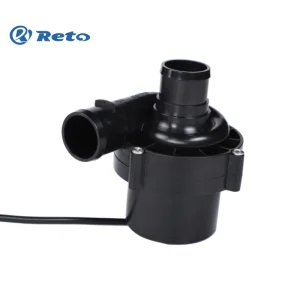
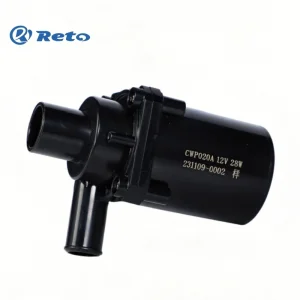
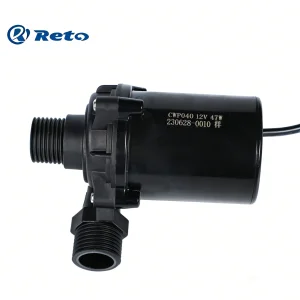
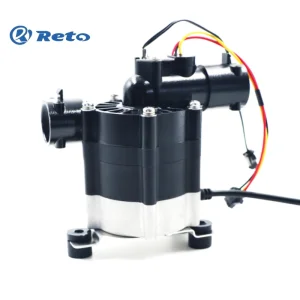
Discover our extended line of precision brushless DC boosting and fluid transfer solutions designed for smart sanitary ware, solar thermal loops, and demanding automotive applications.
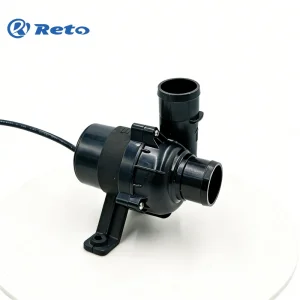
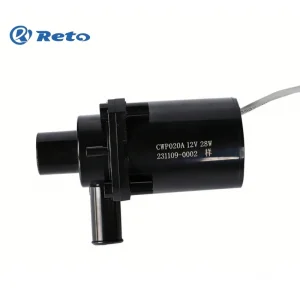
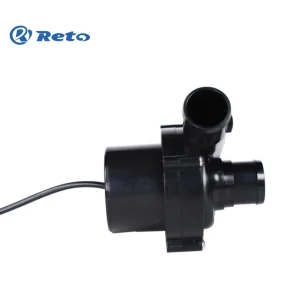
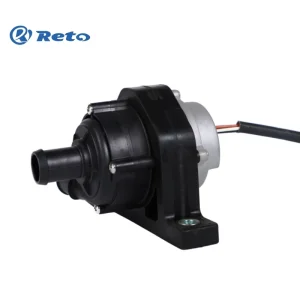
Submit your application's hydraulic profile (Target Flow, Dynamic Head, Liquid Temperature, Voltage Envelope, and Dimensional Envelope) to receive a fully validated technical proposal, 3D CAD step model, and quotation within 24 hours.