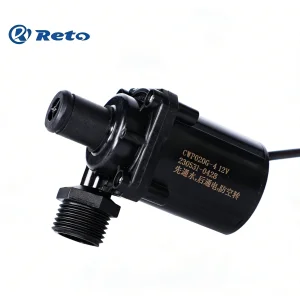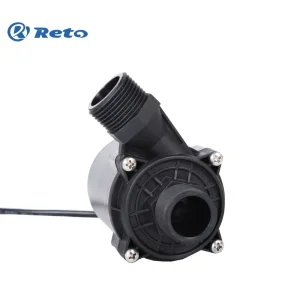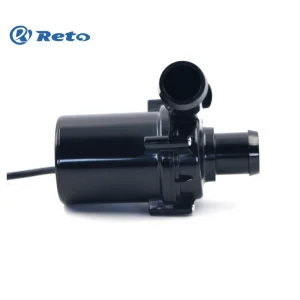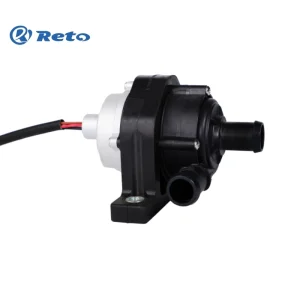
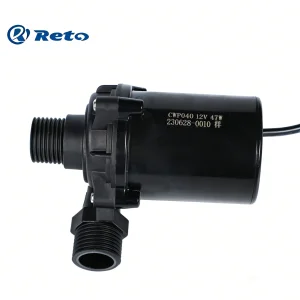
12V DC Low Noise
Bidet Sanitary
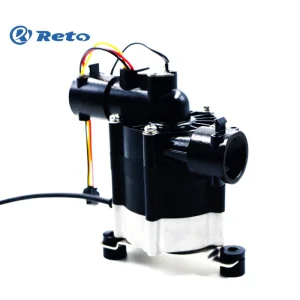
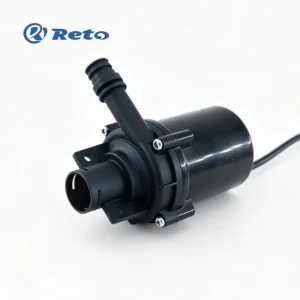
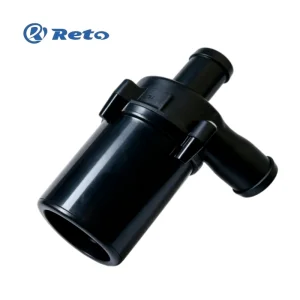
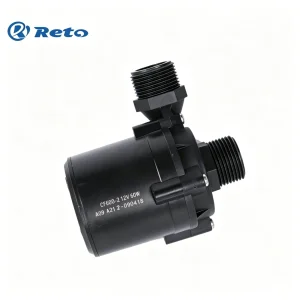
Custom 12V Compact Pressure Pump for Bidet Toilet Suppliers, Factory
Explore our field-proven 12V and 24V brushless micro submersible and inline centrifugal architectures, engineered for continuous duty, sub-30dB silent commutation, and extreme hydraulic efficiency.
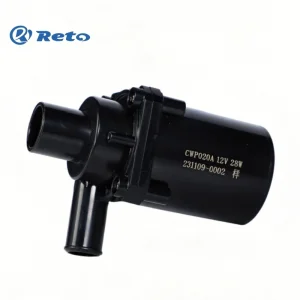
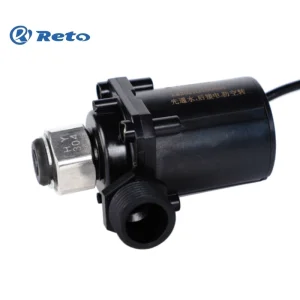
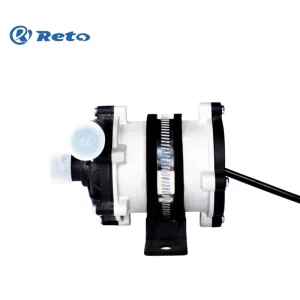
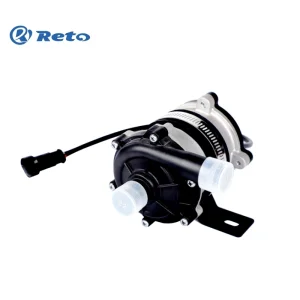
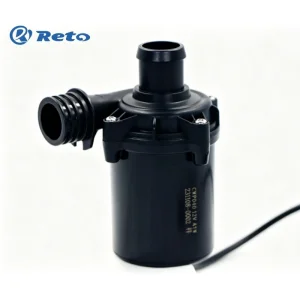
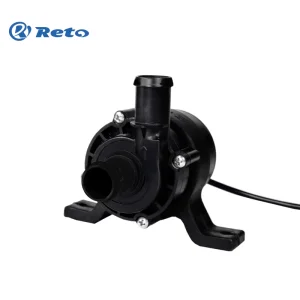
The worldwide micro submersible and brushless DC fluidics ecosystem is experiencing an unprecedented structural shift. Moving away from legacy AC shaded-pole and mechanical brushed DC pumps, high-reliability tier-1 OEMs demand intelligent, compact, magnetically coupled centrifugal units capable of delivering predictable MTBF over 30,000 hours in aggressive environments.
Stringent regional energy efficiency mandates (such as EU Ecodesign Directive, US DOE standards, and China Energy Labeling) have accelerated the phase-out of inefficient brushed motors. Mini BLDC pumps cut power consumption by 50% to 65% compared to shaded-pole AC counterparts while shedding 70% of physical volume.
The worldwide expansion of smart bidet toilets and intelligent bathrooms requires micro submersible pumps to withstand sudden backpressure spikes, instantaneous on/off cycles, and hot potable water temperatures up to 85°C without acoustic resonance penetrating living quarters.
Electrification extends far beyond propulsion. Autonomous driving compute modules, fast-charging liquid cables, portable power stations, and precision chillers require high-head mini submersible pumps capable of circulating 50/50 ethylene glycol solutions across wide automotive-grade operating bands (-40°C to +105°C).
System engineers must balance hydraulic head, volumetric discharge, MTBF, ingress protection, and thermal runaway limits. The benchmark data below explains why RETO’s canned-rotor brushless submersible platform outperforms legacy architectures across tier-1 OEM installations.
| Evaluation Parameter | RETO Custom BLDC Submersible | Conventional Brushed DC Pump | AC Shaded-Pole Submersible |
|---|---|---|---|
| Motor Commutation | Electronic 3-Phase Sensorless / FOC | Mechanical Carbon Brushes & Commutator | Induction Stator Magnetic Slip |
| Hermetic Seal Structure | Static O-Ring Canned Rotor (No shaft seal) | Dynamic Lip/Mechanical Seal (Wear-prone) | Epoxy Encapsulated Stator |
| Operational Lifespan | 25,000 – 40,000+ Continuous Hours | 1,200 – 3,500 Hours (Brush Burnout) | 5,000 – 10,000 Hours (Thermal Degradation) |
| Acoustic Emission | < 25 to 30 dBA (Smooth Sine Commutation) | 45 to 60 dBA (Sparking & Mechanical Friction) | 40 to 52 dBA (50/60 Hz Low Mains Hum) |
| Speed & Pressure Modulation | Closed-loop PWM, 0–5V Analog, or LIN/CAN Bus | Voltage Throttling Only (Poor Low-End Torque) | Non-adjustable Fixed Speed |
| Electrical Safety Ingress | IP68 Continuous Submersion (Potting Class F) | IP54 to IP65 (Submersion Risk on Seal Wear) | IP68 (Risk of AC High-Voltage Leakage) |
| Overall Efficiency | 65% – 82% Efficiency | 35% – 50% Efficiency | 18% – 30% Efficiency |
Traditional pumps rely on rotating shaft seals that inevitably deteriorate from abrasive particles and thermal cycling. RETO isolates the dry stator winding in a hermetically ultrasonic-welded chamber, allowing the ceramic rotor to spin in the fluid itself, lubricated by the pumped medium. This design provides:
Equipped with an integrated 32-bit automotive-grade MCU, our pumps implement advanced Field-Oriented Control (FOC) or 6-step commutation algorithms. This delivers smooth torque without cogging ripple, alongside built-in protective telemetry:
Shaft runout and bearing eccentricities are the primary culprits behind pump noise and premature degradation. RETO employs precision ground 99.5% Zirconia (ZrO2) ceramic shafts matched with graphite or carbon-impregnated PTFE bushings:
Mini submersible and inline micro booster pumps must adapt to precise fluid dynamic challenges across varied environments. We examine five core integration scenarios where custom engineering resolves specific mechanical bottlenecks.
Modern low-profile rimless toilets lack tall gravity cisterns, requiring internal booster pumps that draw from an auxiliary buffer tank or direct mains supply to achieve a dynamic flush velocity of 3.8 L/s.
The Engineering Challenge: In dense residential buildings, flush noise exceeding 35 dB causes tenant dissatisfaction. Furthermore, incoming municipal supply pressures vary from 0.05 MPa to 0.7 MPa.
The RETO Solution: Our custom 12V/24V submersible booster provides an adaptive dual-stage impellor design. Soft-start ramping dampens hydraulic water-hammer shockwaves, maintaining an acoustic signature below 28 dBA while guaranteeing full rim scouring performance.
Consumer demand for instant zero-wait hot water has made compact recirculation pumps standard in gas and electric tankless wall-hung units, particularly in North American and Southeast Asian markets.
The Engineering Challenge: Continuous contact with 65°C–85°C chlorinated domestic hot water can induce polymer degradation, scale precipitation, and thermal drift in drive electronics.
The RETO Solution: Utilizing medical-grade polyphenylene sulfide (PPS) volutes, food-grade EPDM seals, and externalized surface-mount motor drivers, RETO pumps deliver continuous high-temperature recirculation with integrated temperature sensor ports.
High-power DC fast chargers (350kW+) generate intense resistive heat in liquid-cooled charging cables and connector pins, while vehicle battery packs require strict isothermal conditions between 20°C and 35°C.
The Engineering Challenge: Space is severely constrained inside the dispenser base or vehicle thermal harness. Pumps must withstand heavy automotive vibration and harsh winter antifreeze viscosities.
The RETO Solution: Miniature canned BLDC pumps certified under IATF 16949 deliver up to 35 LPM flow rates against 1.2 bar head pressures, using PWM duty-cycle modulation to match heat-exchange demands with minimum parasitic power drain.
Automatic espresso bars, commercial wort recirculation rigs, and automated flake ice machines require precise, food-safe volumetric fluid displacement under continuous cycling.
The Engineering Challenge: Strict sanitation mandates (NSF 169 / FDA / LFGB) prohibit lubricants, metal leaching, or volute recesses that trap organic matter and encourage microbial growth.
The RETO Solution: Completely oil-free, food-grade thermoplastic wet ends with clean-in-place (CIP) geometry. High starting torque ensures reliable startup even when fluids contain small suspended particulates or sugars.
Fiber laser cutting heads, MRI gradient coils, and edge-computing server racks require closed-loop deionized water or coolant circulation without electrical conductivity risks.
The Engineering Challenge: Ions stripped from metallic components can short high-voltage laser power sources. Any fluid flow pulsation causes beam jitter or uneven cooling.
The RETO Solution: Non-metallic wetting surfaces featuring high-purity ceramic shafts and PEEK thrust washers. 3-phase sine wave motor drives provide ripple-free flow curves, protecting sensitive laser and medical sensors.
As smart ecosystems mature, fluidic components are evolving from passive mechanical movers into smart, diagnostic-rich edge nodes. RETO's multi-year R&D roadmap targets four key frontiers in micro pump design.
By analyzing motor back-EMF harmonics and current signatures, our next-generation DSPs calculate downstream line pressure, flow rate, and fluid viscosity without external physical sensors.
Predictive MaintenanceIntegrating wide-bandgap GaN power switches into the internal PCB shrinks controller footprints by 40% while operating at high switching frequencies, reducing electromagnetic interference (EMI).
90%+ EfficiencyHydrophobic and anti-fouling DLC (Diamond-Like Carbon) coatings applied to the ceramic shaft and impellor volute prevent calcium carbonate scaling in hard-water plumbing systems.
Anti-CalcificationDirect integration of automotive network protocols enables unified thermal harness diagnostics, real-time error logging, over-the-air (OTA) calibration, and synchronized multi-pump balancing.
Automotive ProtocolSourcing a custom micro submersible pump involves balancing system curves with motor characteristics. Review this eight-point parameter checklist before finalizing your engineering RFQ.
Never specify a pump solely by free-discharge (Qmax). Calculate true system operating head—accounting for tube friction, elevation lift, check valves, and heater exchange resistances. Our engineering team supplies H-Q (Head vs Flow) curves matched to your system resistance points.
When pumping hot water (e.g., in domestic hot water recirculation or solar loops), vapor pressure rises sharply. If available suction pressure (NPSHa) falls below required suction pressure (NPSHr), destructive cavitation occurs. Submersible configurations maximize NPSHa by keeping the inlet flooded.
Pumping ethylene glycol-water mixtures (in EV chillers) or acidic RO permeate requires adjustment of motor torque curves. Increased viscosity drags on the centrifugal impellor, requiring optimized blade rake angles and upgraded magnetic couplings to prevent decoupling.
Battery-fed systems (12V automotive or solar arrays) operate from 9V during cold cranking up to 16V during equalization charging. RETO micro BLDC controllers feature wide-input buck-boost regulation to maintain steady output across unstable supply lines.
Pump noise rarely originates from the motor itself; it often travels as structure-borne vibration transferred into appliance sheet metal or hollow toilet porcelain. We provide custom molded EPDM vibration dampening cradles and flexible silicone decoupling boots to isolate the fluid line.
Exporting to North America, the European Union, Japan, or Australasia requires certified proof of compliance. RETO maintains full third-party test reports (TÜV, CE, RoHS, REACH) and food-grade safety declarations, backed by lot-traceable laser serial marking on every unit.
Clear, engineering-backed answers to the most common questions our technical sales group receives regarding custom mini submersible and booster pump programs.
Review our specialized heating, automotive, potable water, and compact booster platforms engineered for drop-in replacement or brand-new modular OEM developments.