Engineered with zero-leakage magnetic canned drives, intelligent CAN/LIN bus telemetry, and AEC-Q automotive electronic architecture to withstand extreme operating conditions.
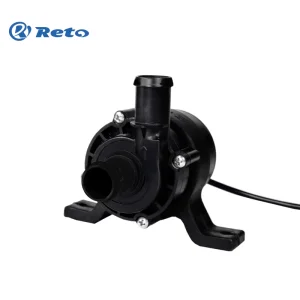
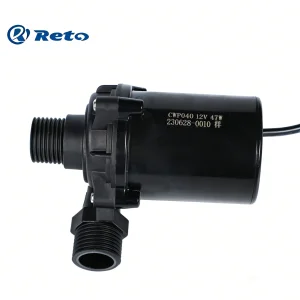
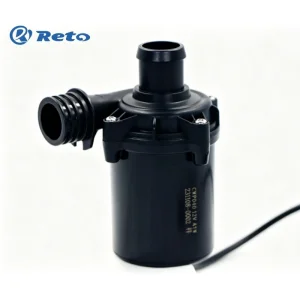
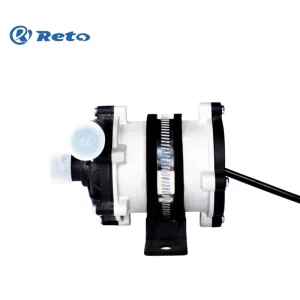
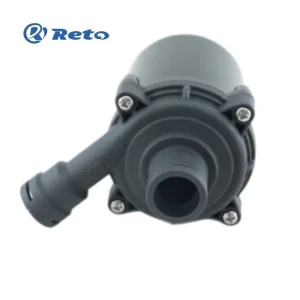
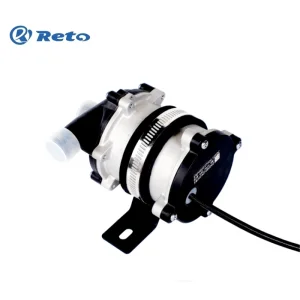
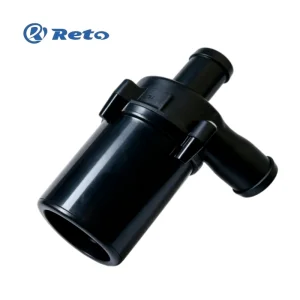
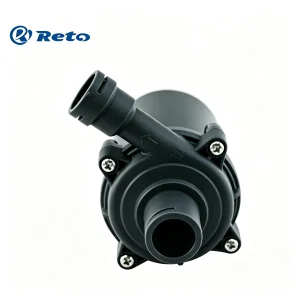
From mechanical belt-driven impellers to intelligent, decoupled BLDC thermal management: How Chinese manufacturing clusters are setting new benchmarks for electrification efficiency and cost resilience.
The global automotive industry is traversing a generational metamorphosis. The rapid transition from internal combustion engines (ICE) toward battery electric vehicles (BEVs), plug-in hybrid electric vehicles (PHEVs), and hydrogen fuel cell electric vehicles (FCEVs) has fundamentally rewritten the specifications for automotive fluid transfer. In traditional internal combustion powertrains, mechanical water pumps operated parasitically off the engine crankshaft via timing belts. This paradigm resulted in continuous hydrodynamic drag, severe overcooling during cold starts, insufficient flow at low idle, and zero thermal autonomy when the vehicle was stationary.
Today, the powertrain is decentralized, operating on intricate multi-loop thermal management architectures. Traction battery packs must remain within a narrow isothermal operating window between 20°C and 35°C to avoid premature lithium plating, capacity degradation, or catastrophic thermal runaway. Concurrently, silicon carbide (SiC) traction inverters and permanent magnet synchronous motors generate severe thermal flux spikes that demand instantaneous volumetric flow response. Consequently, the automotive pump has evolved from a passive mechanical fluid shifter into an active, intelligent mechatronic node driven by sensored or sensorless Field Oriented Controlled (FOC) brushless DC (BLDC) motors communicating seamlessly via LIN 2.1 or automotive CAN-FD networks.
As international Tier-1 automotive integrators, commercial fleet OEMs, and specialized industrial equipment builders seek to mitigate volatile overheads and navigate supply-chain bottlenecks, China has emerged as the definitive global powerhouse for automotive electric water pumps. Backed by end-to-end integration across rare-earth neodymium-iron-boron (NdFeB) sintering, automated magnetic wire coil winding, precision electronic potting, and robotic cleanroom SMT assembly lines, Chinese manufacturers deliver unrivaled supply security, agile DFM (Design for Manufacturability) prototyping, and aggressive unit cost parity without compromising mission-critical automotive reliability.
Unlike brushed DC or mechanical pump iterations, modern automotive BLDC centrifugal pumps utilize a static canned containment sleeve separating the wet hydraulic chamber from the dry stator winding. By doing away with mechanical dynamic face seals, friction-induced seal weeping is fundamentally eliminated, delivering an MTTF (Mean Time To Failure) exceeding 35,000 hours in ethylene glycol/water coolant mixtures ranging from -40°C to +125°C.
Analyzing thermal dissipation dynamics, pressure duty cycles, and environmental envelope criteria across core vehicular and mobile deployment arenas.
Traction batteries undergo aggressive electrochemical heat generation during Level 3 DC fast charging (350kW+) and steep regenerative braking downhill descents. Our 12V and 24V BLDC automotive pumps deliver instantaneous, high-flow hydraulic throughput across micro-channel cold plates.
Next-generation 800V SiC (Silicon Carbide) power modules achieve switching frequencies beyond 20kHz, concentrating immense heat flux within micro-footprints. The liquid cooling pump must offer relentless continuous flow with zero cavitation.
Modern BEV HVAC setups rely on multi-way valve heat pump architectures to scavenge ambient heat and powertrain waste thermal energy for cabin climate control, replacing battery-draining resistive heaters.
High-power charging cables carrying 500A to 800A generate critical resistive heating in both the transmission copper and the charging connector terminal pins. Specialized cooling pumps circulate dielectric fluid or glycol.
Beyond powertrain cooling, specialized 12V and 24V DC booster pumps support mobile residential comfort, delivering pressurized freshwater delivery, greywater lift, and macerating plumbing inside caravans and marine vessels.
Proton-exchange membrane fuel cell (PEMFC) stacks require ultra-pure, non-conductive deionized water cooling loops. Any leaching of metallic ions will poison the platinum catalyst membranes.
A technical blueprint breaking down motor topology, electronic commutation algorithms, fluid dynamics, and integrated thermal manifold trends.
| Subsystem Dimension | Legacy Automotive Pumps (Brushed / Mechanical) | Current Generation BLDC (Industry Standard) | RETO Advanced Automotive BLDC Architecture |
|---|---|---|---|
| Motor & Commutation Topology | Mechanical copper commutators & carbon friction brushes; severe spark generation and wear. | Hall-effect sensored 3-phase BLDC; 6-step trapezoidal commutation. | Sensorless 3-Phase FOC (Field-Oriented Control); sinusoidal vector drive; ultra-low torque ripple. |
| Hydraulic Chamber Sealing | Dynamic mechanical carbon-ceramic spring face seals; susceptible to thermal dry wear and leakage. | Static O-ring sealed canned rotor; standard PPS plastic containment can. | Hermetic Ultrasonic/Laser Canned Isolation; carbon-fiber reinforced PPS/PPA; zero dynamic seals; zero leakage. |
| Shaft & Bearing Tribology | Carbon steel shaft with sintered bronze bushings; vulnerable to acidic coolant oxidation. | Alumina ceramic (Al2O3) shaft with carbon graphite sleeve bushings. | Silicon Carbide (SiC) or Zirconia (ZrO2) shaft with diamond-like carbon (DLC) dry-run protection. |
| Control Interface & Diagnostics | On/Off relay switching or voltage throttling; zero diagnostic feedback to vehicle ECU. | Standard open-loop PWM (Pulse Width Modulation) 100Hz-1kHz frequency input. | LIN 2.1 / CAN-FD Smart Telemetry; real-time feedback on RPM, temperature, voltage, stall, and dry-run faults. |
| Acoustic NVH Level | 52 - 65 dB(A) with audible motor whine and mechanical brush chatter. | 42 - 48 dB(A) at rated flow velocity. | <36 dB(A) at 1 meter; fluid dynamics optimized via computational CFD to cancel acoustic blade-pass tones. |
| EMC / EMI Compliance | Severe RF emissions caused by brush sparking; fails modern infotainment standards. | CISPR 25 Class 3 compliance; basic LC filter board. | CISPR 25 Class 5 Full Compliance; integrated multi-stage common mode choke, shielding, and transient clamping. |
The contemporary automotive engineering horizon is moving rapidly toward "Integrated Thermal Management Modules" (ITMM) where multi-way directional valves, expansion tanks, plate heat exchangers, and multiple BLDC coolant pumps are consolidated into a single monolithic die-cast or engineered-polymer manifold. This architectural pivot eliminates up to 60% of external rubber hoses, quick-connectors, and bracket fasteners, drastically slashing assembly cycle time on the OEM vehicle assembly line while neutralizing external coolant leakage failure modes.
RETO's forward engineering programs are currently validating native 800V high-voltage direct-input micro-inverters. By accepting traction battery voltage directly without requiring an intermediate DC-DC buck converter down to 12V or 24V, harness weight across the vehicle chassis is dramatically curtailed while overall system thermal efficiency gains an additional 3-5 percentage points.
Deconstructing the ecosystem dynamics, vertical manufacturing integration, and raw material mastery that empower our Xiamen manufacturing operations.
High-flux permanent magnets are the beating heart of BLDC pump efficiency. Located at the nexus of China's upstream metallurgical supply chain, our direct access to high-grade Neodymium-Iron-Boron (NdFeB) with high Curie temperature thresholds (N38UH, N42EH) ensures continuous supply security immune to global export volatility.
From multi-cavity hot-runner tooling and injection molding of high-temperature polyphenylene sulfide (PPS + 40% GF), to robotic stator wire winding and Class 100,000 automated SMT cleanroom operations, 92% of critical sub-assemblies are fabricated in-house to protect proprietary engineering tolerances.
Where Western legacy suppliers often require 14 to 22 months for automotive pump re-engineering, our agile R&D engineering structure compresses the timeline from initial CFD/FEA design freeze, rapid SLA tooling, and functional prototype testing down to PPAP Level 3 signoff in under 16 weeks.
Built strictly on IATF 16949 processes to guarantee flawless mass-production consistency for Tier-1 OEMs worldwide.
Automotive fluid components must operate reliably under brutal operational environments: wide ambient temperature thermal shocks (-40°C to +125°C), corrosive glycol water blends, continuous vibration spectra, continuous electrical voltage transients, and high-pressure steam-jet washdowns. We enforce a zero-defect mindset underpinned by Advanced Product Quality Planning (APQP), Failure Mode and Effects Analysis (DFMEA/PFMEA), and full Production Part Approval Process (PPAP Level 3) documentation packages.
Every automotive pump model undergoes 1,000 continuous hours of rapid thermal shock testing between -40°C and +125°C with fluid dwell transitions <30 seconds to confirm weld seam structural integrity and winding wire insulation vitality.
Motor driver electronics are hermetically isolated via automated vacuum two-component polyurethane or silicone potting, followed by 100% downstream pressurized helium differential air-decay leak testing to prevent moisture ingress.
Certified to CISPR 25 Class 5 radio disturbance limits. The internal controller withstands ISO 7637-2 pulse transients, load dump surges, and reverse polarity hookups without gate breakdown or microprocessor memory corruption.
Ensure rapid DFM turnaround by supplying these critical hydraulic, electrical, and physical boundary parameters to our application engineering team.
| Engineering Parameter | Typical Value Range | Critical Sourcing Considerations |
|---|---|---|
| Operating Fluid Media | 50/50 Water-Ethylene Glycol, Propylene Glycol, Pure DI Water, Dielectric Coolant | Determines elastomer selection (EPDM vs FKM vs HNBR) and plastic resin resistance. |
| Target Volumetric Flow Rate (Q) | 10 L/min to 180 L/min (0.6 - 10.8 m³/h) | Matches specific heat capacity dissipation requirements of the battery or motor cooling loop. |
| Target Hydraulic Dynamic Head (H) | 2.5 meters to 18 meters of head pressure (0.25 - 1.8 bar) | Overcomes internal piping, valve manifolds, micro-channel cold plate restriction, and radiator core drop. |
| Nominal Supply Voltage | 12V DC (9-16V range), 24V DC (18-32V range), 48V Mild Hybrid, 400V/800V High-Voltage | Dictates copper winding gauge, power MOSFET RDS(on) ratings, and capacitor breakdown voltages. |
| Control Interface & Signaling | On/Off, Variable Voltage, PWM Speed Control (0-100%), LIN Bus 2.1, CAN 2.0B / CAN-FD | Enables closed-loop electronic thermal management coordination with the vehicular VCU/BMS. |
| Inlet / Outlet Port Configuration | 16mm, 20mm, 25mm, 32mm Barb or Quick-Connector (VDA / SAE standard) | Ensures mechanical drop-in compatibility with automotive quick-disconnect coolant lines. |
| Ambient & Fluid Temp Envelope | Fluid: -40°C to +125°C; Ambient: -40°C to +105°C | Establishes automotive grade ratings for internal electronic ICs (AEC-Q100 Grade 1 or 2). |
In-depth technical answers addressing hydrodynamic reliability, electronic integration, and manufacturing quality compliance.
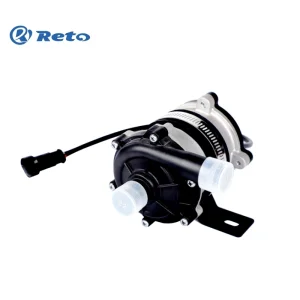
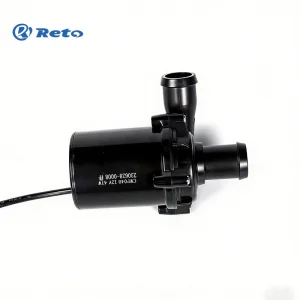
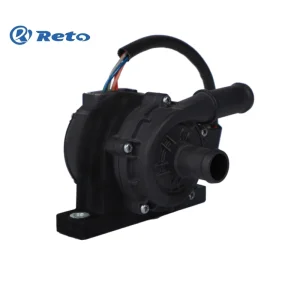
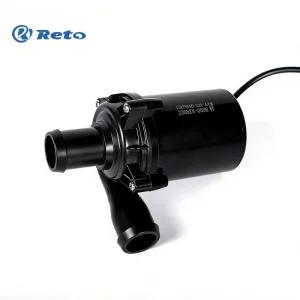
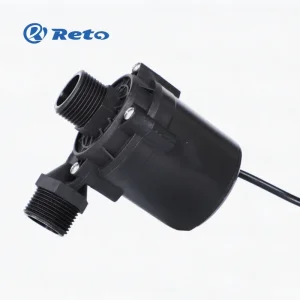
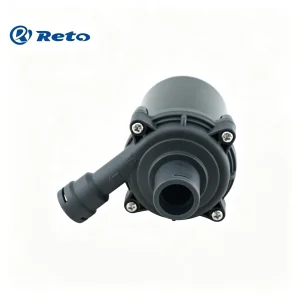
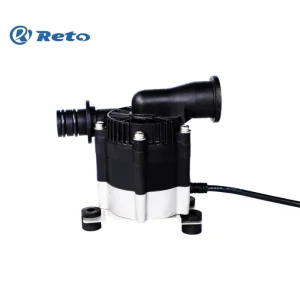
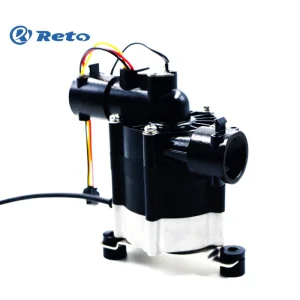
Explore our extended lineup of micro-pumps, high-head recirculation units, and heavy-duty DC boosting systems for commercial and residential implementations.
Connect directly with our chief fluid system engineers in Xiamen, China. Request detailed 3D STEP models, customized hydraulic curve validations, or a full PPAP Level 3 engineering audit today.