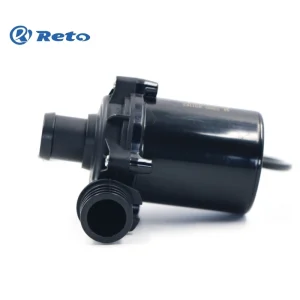
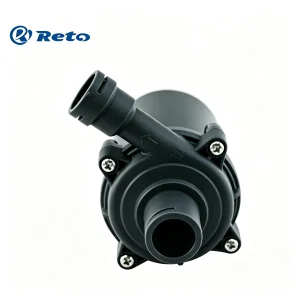
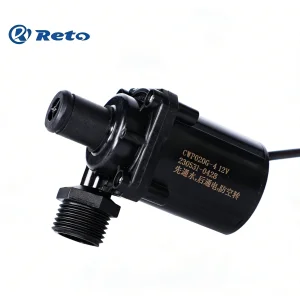
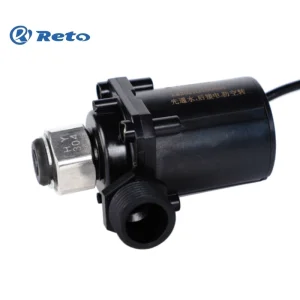
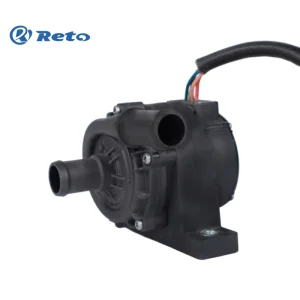
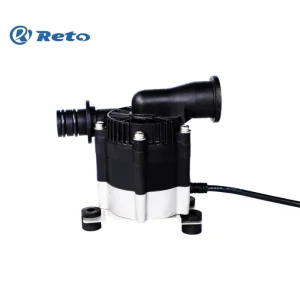
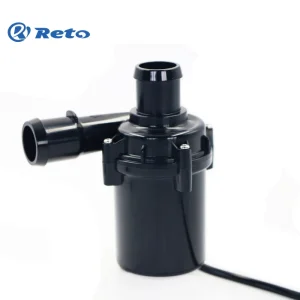
Direct from our precision manufacturing center in Xiamen: magnetically coupled BLDC circulation systems designed to eliminate dynamic shaft failure.
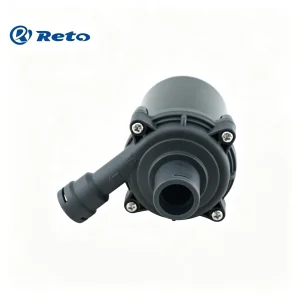
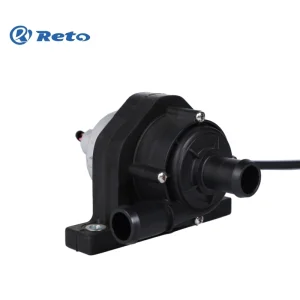
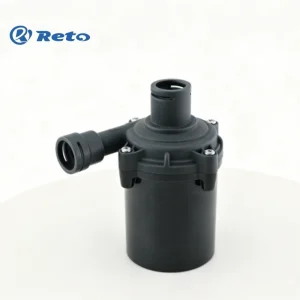
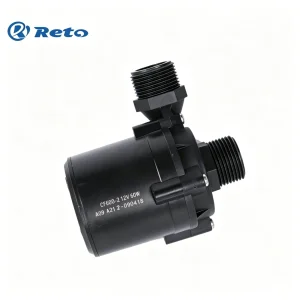
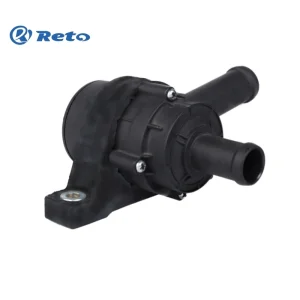
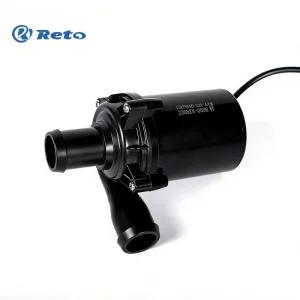
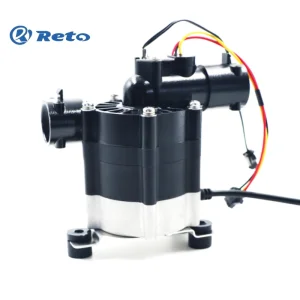
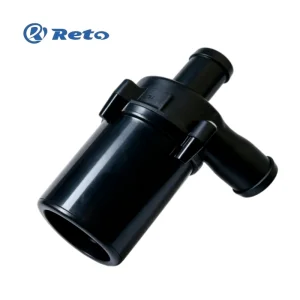
In hydronic heating, domestic booster systems, and vehicle thermal loops, fluid escape compromises system integrity. Our metallurgists and hydraulic engineers break down the primary physical mechanisms.
Traditional wet rotor and packed-gland assemblies depend on mechanical face seals. Dry running or particulate abrasives score ceramic/carbon mating faces, resulting in progressive weeping that escalates to volumetric fluid egress.
Extreme temperature fluctuation between -40°C and +125°C induces differential coefficient of thermal expansion (CTE) mismatches. Low-grade EPDM or NBR O-rings suffer compression set, losing resilience and triggering joint leakage.
Insufficient Net Positive Suction Head available (NPSHa) creates localized micro-implosions near impeller vanes. Continuous cavitation erodes casing walls and weakens structural sonic welds under hydraulic water hammer shocks.
Impure dielectric coolants or aggressive glycol concentrations degrade low-spec housing alloys. Our material route integrates PPS + 40% GF injection molding with high-purity ceramic shafts to ensure zero electrochemical corrosion.
Imbalanced rotating impellers inflict severe radial and axial runout on structural bearings. Eccentric vibration degrades internal isolation barriers, loosening joint threading and generating fluid leakage through microscopic housing fatigue fissures.
RETO completely discards dynamic rotary seals. Our pumps employ a Hermetically Sealed Static Isolation Canister that separates the electrical stator chamber from the hydraulic fluid stream, providing absolute structural containment.
Operating from our high-tech manufacturing center in Xiamen, RETO leverages automated SMT motor drive assembly, automated epoxy-resin potting, and real-time vacuum pressure decay testing to eliminate field failures.
Every motor chamber undergoes double-stage vacuum potting with automotive-grade epoxy resin. This encapsulates all electrical windings and internal driver PCBs, ensuring absolute IP68 submersion protection and structural isolation from external fluid intrusion.
We do not rely on spot audits. 100% of finished pumps undergo automated pneumatic leak-testing at 3.5 MPa test pressures using dry air and helium mass spectrometry detectors, instantly flagging housing microporosity before logistics packaging.
Situated within Fujian’s advanced electromechanical corridor, our Tier-1 engineering materials—engineering polymers, precision sintered ceramics, NdFeB magnets, and automotive chips—are sourced within a 50km radius, ensuring complete BOM predictability.
From smart residential sanitary fixtures to megawatt EV fast-charging stations, our pump solutions are engineered for zero-maintenance fluid handling.
Combats urban hard-water scaling and micro-vibration using wear-resistant ceramic bearings. Eliminates internal toilet cabinet leakage risks under municipal high-pressure water surges.
Features PPS + 40% glass fiber bodies rated for continuous 100°C fluid loops. Eliminates cyclic expansion leaks in high-demand recirculation loops across Europe and Southeast Asia.
Certified to IATF 16949 standards with liquid-cooled brushless commutation. Delivers glycol-water containment engineered to withstand severe road shock and vibration without seal failure.
Seal-less magnetic drive models engineered for non-stop 24/7 duty cycles. Eliminates expensive coolant loss in critical server racks, industrial lasers, and pharmaceutical cooling loops.
Meeting global OEM procurement requirements with advanced digital health monitoring and resilient self-healing flow architectures.
Integrated intelligent micro-controllers analyze motor back-EMF, winding resistance, and current draw in real time. Anomalies such as dry-run cavitation or rotor lock are flagged to the central ECU before seal-degrading heat spikes occur.
Adhering to European CBAM and circular carbon directives, our R&D center is transitioning to renewable polyphenylene sulfides (PPS) and closed-loop recyclable composites that maintain high burst pressure ratings under reduced environmental footprints.
Eliminating mechanical flange fasteners entirely: our automated robotic lines employ multi-axis ultrasonic friction welding to fuse fluid chambers into a singular, monolithic plastic envelope capable of surviving 50+ bar burst pressure tests.
Meeting the procurement criteria of Tier-1 OEMs across North America, the European Union, and Asia-Pacific.
All wet-end components—including o-rings, impellers, and pump housings—comply with international potable water guidelines, ensuring zero toxic leaching, no chemical taste alteration, and stable resistance to chlorinated municipal sanitizers.
We provide full PPAP documentation packages including Process FMEA, Control Plans, IMDS submissions, Gauge R&R, and 8D root-cause corrective reporting, satisfying the strict risk mitigation procedures demanded by automotive tier-1 buyers.
Our multilingual engineering teams collaborate closely with OEM design departments worldwide. We supply native 3D CAD models, computational fluid dynamics (CFD) analysis reports, and rapid functional 3D prototype samples in 7 working days.
Direct technical answers from our Xiamen engineering specialists to help your team prevent catastrophic fluid leakage.
Conventional pumps rely on a rotating drive shaft passing through a mechanical face seal to drive the liquid impeller. Over time, seal faces score, wear, and leak. In RETO's magnetic drive design, a static hermetic containment shroud isolates the liquid chamber completely. Torque is transferred through the plastic canister wall via magnetic flux coupling, removing dynamic seals and their inherent leak pathways entirely.
Joint leakage is predominantly driven by three factors: thermal compression set of standard EPDM O-rings under rapid heating/cooling cycles; housing flange warping caused by uneven bolt torque during assembly; or hydraulic pressure spikes (water hammer) exceeding the housing yield point. RETO combats this using precision-molded O-ring retention grooves, high-temperature fluoropolymer gaskets, and automated robotic torque fastening.
Yes. Many standard mini-pumps utilize PA66 or ABS plastics that soften at temperatures above 70°C, lowering thread retention torque and deforming seal geometries. RETO hot water circulation models utilize engineering polyphenylene sulfide (PPS) reinforced with 40% glass fiber, certified for dimensional stability under continuous 100°C fluid loops and temporary excursions to 125°C.
Every single RETO pump undergoes automated two-stage End-of-Line (EOL) testing. Stage one uses dry compressed air differential pressure decay to verify zero microscopic casting porosity. Stage two executes a high-pressure dynamic operational run under fluid conditions to test internal containment barriers at up to 3.5 MPa, ensuring zero micro-leakage prior to dispatch.
Because there are no wearable carbon brushes or mechanical face seals to degrade, our BLDC pumps feature continuous design lifespans ranging from 20,000 to over 40,000 hours (depending on liquid operating temperature and duty profile). The only moving contacts are precision micro-machined ceramic shafts spinning against self-lubricating carbon or ceramic bushings.
Yes. We offer extensive ODM tooling customizability. Whether your system requires male G-thread, NPT threads, barbed hose push-fit couplings, quick-connect automotive spigots, or manifold O-ring face ports, our internal tooling division can configure matched housing geometries within 3 to 4 weeks.
Explore specialized BLDC pump platforms: quiet submersible units, high-temperature car engine cooling, and low-noise residential boosting modules.