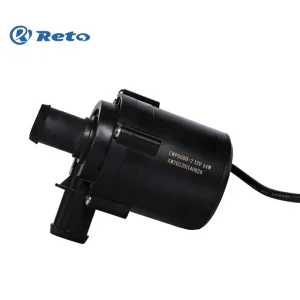
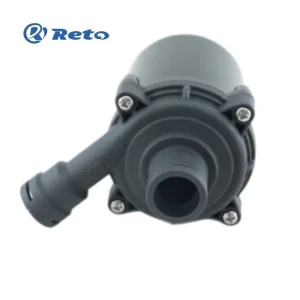
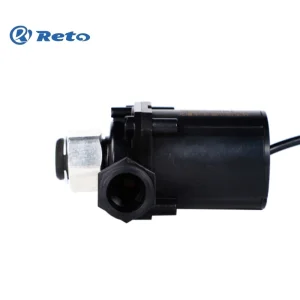
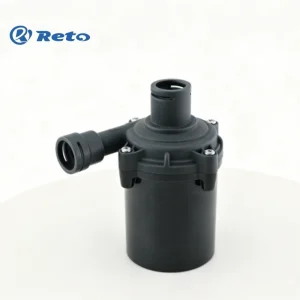
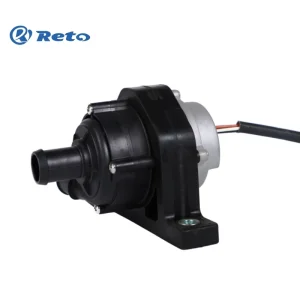
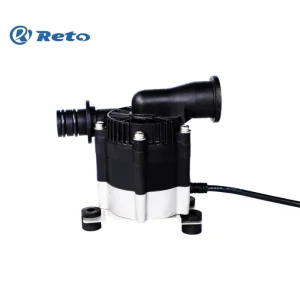
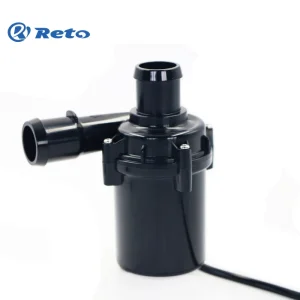
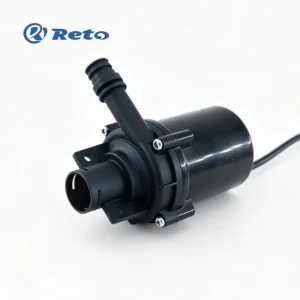
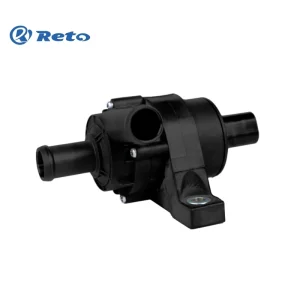
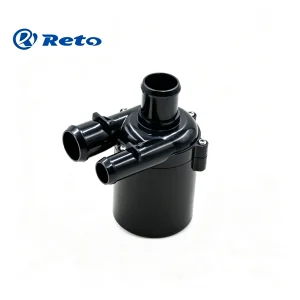
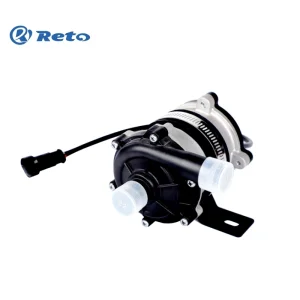
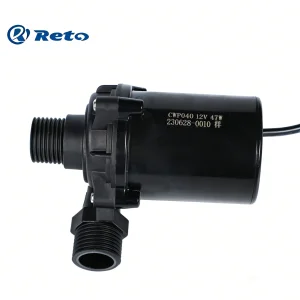
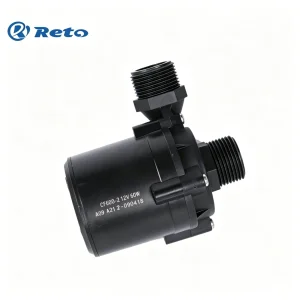
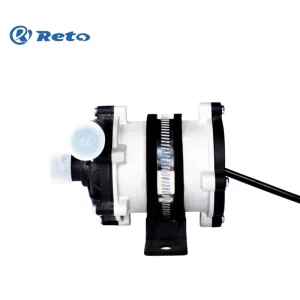
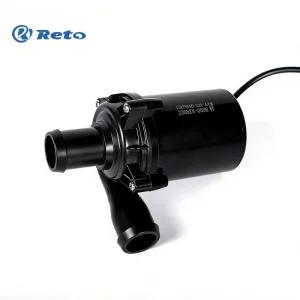
Direct from certified manufacturing lines: fully encapsulated, non-submersible, and inline booster units precision-engineered for zero-cavitation fluid transfer in critical municipal and closed loops.
Why conventional boosting architectures fail in micro-gravity and low-head utility networks, and how China's precision BLDC manufacturing ecosystem solves the fluid cavitation bottleneck.
Modern architectural and municipal realities—such as rooftop gravity feeds, high-rise peak hours, and off-grid cistern systems—frequently experience hydraulic heads dropping below 0.02 MPa (0.2 bar). Traditional centrifugal impellers experience severe cavitation and air locking under these starve-feed conditions. Our low-pressure booster architecture incorporates inducer-assisted impellers that create dynamic pre-compression, guaranteeing reliable primer delivery down to zero bar static inlet.
Dynamic mechanical shaft seals are the single most common failure point in micro-booster pumps, producing friction drag, leakage, and micro-vibration noise. As an established China manufacturing leader, RETO isolates motor stators using carbon-fiber or stainless steel containment shields. The permanent neodymium magnetic rotor rotates directly within the pumped medium on zirconia ceramic bearings, ensuring frictionless, seal-free hermetic isolation rated for over 35,000 hours continuous service.
Sanitary, hospitality, and residential consumer equipment require imperceptible operating sound. Field-Oriented Sensorless vector control (FOC) eliminates electromagnetic torque ripple and high-frequency commutation whine. Paired with fluid-cushioned ceramic bearings, our pumps deliver dynamic volumetric boost with sound emissions falling under 28 dB(A)—significantly quieter than traditional brushed AC or diaphragm pumps.
Examining macroeconomic adoption triggers across primary regional markets and why equipment OEMs are aggressively moving away from legacy AC shaded-pole and brushed DC platforms.
Throughout ASEAN markets (Malaysia, Thailand, Vietnam, Philippines), urban infrastructure relies on gravity tanks mounted on low roofs. The resulting static pressure at bathroom fittings regularly hovers below 0.03 MPa, failing to trigger traditional gas or electric tankless heater switches. OEM integration of our dedicated 24V/36V low-pressure inline BLDC boosters guarantees consistent micro-flow ignition and prevents boiling scalding spikes through Closed-Loop Flow Control.
Regulatory water-efficiency mandates (such as US EPA WaterSense and European EN 997 Class 1/2) restrict total flush volumes to 4.5L or 3.0L. However, tankless smart toilets installed in older residential buildings frequently lack the instantaneous dynamic flow rate needed for strong siphon evacuation. Custom 12V/24V booster pumps provide a concentrated 18–32 L/min burst during the 4-second flush cycle without requiring oversized ceramic reservoir tanks.
Beyond traditional plumbing, fast-growing clean-tech applications demand reliable low-pressure coolant delivery. Ultra-fast EV charging cables (350kW–600kW liquid-cooled CCS/NACS guns) and automotive battery packs utilize our IATF 16949-certified BLDC centrifugal pumps to circulate glycol-water blends with zero leakage, mitigating cavitation risk in dense cold-plate micro-channels.
Detailed fluidic schemes and hydraulic specifications for four primary OEM application groups.
Operational Hurdle: Static city pressure fluctuating between 0.04 and 0.45 MPa causes erratic rear spray wash force and incomplete bowl siphonage.
Factory Architecture: Integrated 12V/24V BLDC centrifugal booster with integrated flow-meter feedback. Software-controlled PID loops maintain spray volume at precisely 0.65 L/min ± 3% regardless of inlet fluctuation, providing complete flushing assist even when line pressure drops to absolute zero.
Operational Hurdle: Minimum Activation Flow (MAF) thresholds not triggered in multi-story houses, leading to cold water spikes and burner lockout.
Factory Architecture: Inline 24V/36V booster with food-grade PPS pump chamber and polyphenylene sulfide volutes rated to 105°C fluid temp. Magnetic reed sensors sense micro-movements of 1.2 L/min, kicking the motor to rated speed within 120 milliseconds to guarantee seamless burner start.
Operational Hurdle: High glycol-mixture viscosity under low ambient conditions combined with high stagnation temperatures reaching 120°C+.
Factory Architecture: High-temperature ceramic bearings paired with Samarium-Cobalt (SmCo) permanent magnets resistant to irreversible thermal demagnetization. PWM 0–10V speed modulating allows variable solar delta-T tracking with energy consumption under 18 Watts.
Operational Hurdle: Cable heat accumulation during 500A+ charging curves requires immediate thermal response without bulky external chillers.
Factory Architecture: IATF 16949 compliant high-head mini DC pump engineered for 50/50 ethylene glycol and deionized water. Features CAN/LIN bus diagnostic telemetry providing real-time RPM, stator temperature, dry-running warnings, and rotor-lock protection.
Standard and customizable engineering baselines for OEM procurement and system design engineers.
| Series Platform | Rated Voltage (V) | Rated Power (W) | Max Flow (L/min) | Max Head (m) | Min Inlet Pr. (MPa) | Noise (dB(A) @1m) | Control Signal |
|---|---|---|---|---|---|---|---|
| RT-LPB12 Smart Toilet Series | 12V DC | 25 - 45 W | 16 - 28 L/min | 6 - 11 m | 0.00 MPa (Self-primer option) | ≤ 30 dB(A) | PWM / FG Feedback |
| RT-WH24 Tankless Heater Series | 24V DC | 35 - 65 W | 14 - 32 L/min | 8 - 14 m | 0.01 MPa | ≤ 32 dB(A) | Constant Speed / PWM |
| RT-SOL36 Solar / Recirc Series | 36V DC | 40 - 85 W | 20 - 45 L/min | 10 - 18 m | 0.015 MPa | ≤ 35 dB(A) | 0-10V Analog / PWM |
| RT-EVC12/24 High-Power EV Series | 12V / 24V DC | 50 - 120 W | 30 - 65 L/min | 9 - 16 m | 0.01 MPa | ≤ 38 dB(A) | CAN 2.0B / LIN Bus |
| RT-MAC48 Macerator & Lift Series | 24V / 48V DC | 80 - 180 W | 40 - 90 L/min | 12 - 22 m | Open Inlet Gravity | ≤ 42 dB(A) | Automatic Level Sensor |
Ensuring total reproducibility and zero-defect consistency across multi-container supply chains from our Xiamen, China facilities.
All production lots comply with verified automotive-grade IATF 16949 and ISO 9001 management systems. Every single pump unit undergoes 100% end-of-line (EOL) automated testing encompassing pneumatic air-tightness leakage checks, hydrostatic pressure testing up to 1.6 MPa, stator dielectric breakdown analysis, and acoustic chamber dB(A) verification.
Every product line is fully certified for Western and Asian target territories: CE, RoHS, and REACH. Wetted materials utilize FDA, WRAS, and NSF-certified food-grade plastics (PPS, PPE, PA66) and EPDM/FKM elastomeric O-rings. Unique laser-etched QR identifiers provide permanent traceability from raw copper wire lots to final customer delivery pallets.
Our Xiamen R&D center comprises over 10 senior hydraulic and motor engineers with more than a decade of experience in BLDC electromagnetic simulations (ANSYS Maxwell), CFD fluid flow modeling, and rapid stereolithography prototyping. We deliver functional validation samples within 14 business days for custom port geometry or electrical harnesses.
Pioneering smart fluid innovations to deliver unprecedented energy efficiency, edge diagnostics, and autonomous cavitation prevention.
By measuring real-time back-EMF variations and phase current signatures within the BLDC driver without external transducers, future RETO booster pumps autonomously identify micro-cavitation, impeller encrustation, and dry-run starvation before physical bearing wear occurs, reporting status over Matter, Zigbee, or CAN bus networks.
Next-generation onboard motor drivers are transitioning from silicon MOSFETs to Gallium Nitride (GaN) power stages. This shrinks internal driver volume by 55%, elevates inverter electrical efficiency beyond 96.5%, and permits continuous ambient operating thresholds up to 105°C without derating pump performance.
Replacing traditional injection-molded impellers with 5-axis algorithmic spiral volutes manufactured from bio-circular PPS resins. These dynamic curves reduce internal fluid shear friction by 18%, substantially lowering NPSHr (Net Positive Suction Head Required) down to true vacuum suction limits.
Essential technical and commercial clarity for OEM procurement teams, sourcing managers, and hydraulic system architects.
Standard circulation pumps are designed solely to overcome pipe friction head within closed, pressurized loops where system static pressure is already substantial (e.g., 0.15 to 0.3 MPa). When installed in zero-head or starved-inlet systems, they rapidly cavitate, create air locks, and fail. A dedicated low-pressure booster incorporates modified low-NPSHr volute channels, enlarged suction eyes, and often an internal inducer stage to actively capture and accelerate low-pressure or gravity-fed fluid without vapor bubble formation.
BLDC motors achieve electrical-to-mechanical conversion efficiencies between 82% and 90%, compared to just 30% to 45% for shaded-pole AC alternatives. This drastically lowers operational heat generation, protecting wetted plastic housings from thermal deformation. Furthermore, BLDC motors operate natively on safe low voltages (12V, 24V, 36V, 48V DC), eliminating shock hazards in wet sanitary environments, while offering direct digital speed control (PWM/0-10V) for dynamic demand balancing.
As an integrated manufacturer in Xiamen, we customize every dimension of the pump assembly: hydraulic volute configuration (inlet/outlet diameters, male/female BSP or NPT threads, quick-connect barb fittings), wetted materials (glass-fiber reinforced PPS, PPE, food-grade POM, ceramic or tungsten shafts), electrical supply parameters (9V through 48V DC ratings), PCB firmware algorithms (custom acceleration slopes, stall auto-recovery, dry-run protection shutoff limits), and specialized automotive wire harnesses with IP68 Deutsch or AMP connectors.
Standard catalog configuration samples are dispatched within 3 to 5 business days. Rapid customization of existing tooling requires approximately 10 to 14 days. For mass production runs under our IATF 16949 lines, standard MOQ starts at 500 units per batch, with a standard factory production lead time of 20 to 25 calendar days, supported by our 2-million-unit annual capacity.
Precision-engineered high-reliability platforms for electric vehicles, charging piles, high-rise smart sanitaries, and continuous hot water circulation.
To accelerate your engineering proposal, supply our technical team with your operating baseline parameters below.
Identify fluid type (potable tap water, deionized coolant, 50/50 ethylene glycol) and minimum/maximum fluid and ambient temperatures (-40°C to +125°C capability).
Specify desired dynamic flow rate (L/min) at specific head pressure (meters/bar), minimum expected inlet hydrostatic pressure, and duty cycle (continuous or intermittent).
Confirm supply voltage rails (12V, 24V, 36V, 48V DC), communication protocol (PWM, FG tachometer, CAN/LIN), acoustic ceiling (e.g. < 30 dB(A)), and dimensional boundaries.