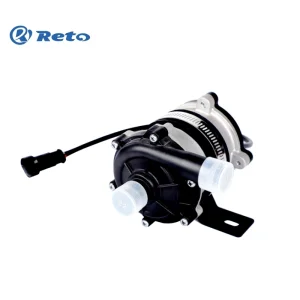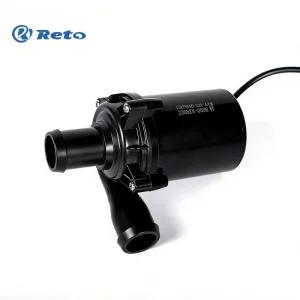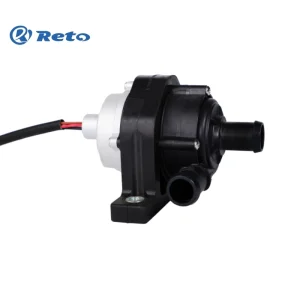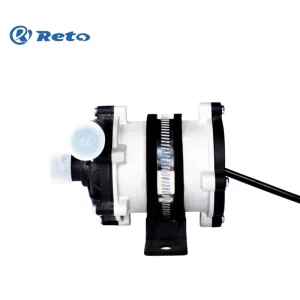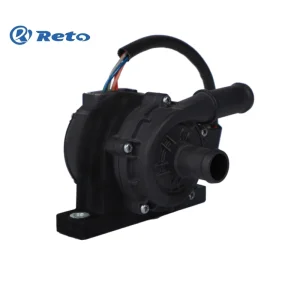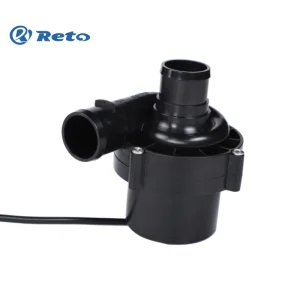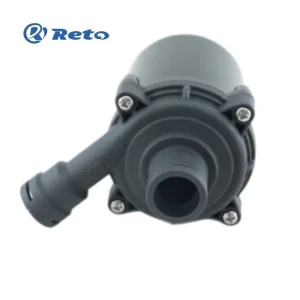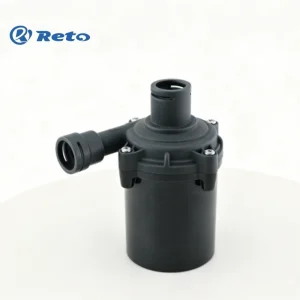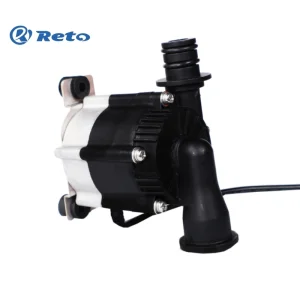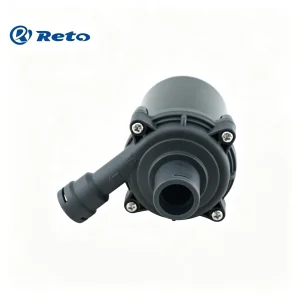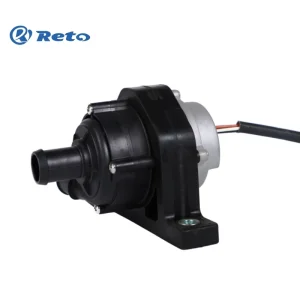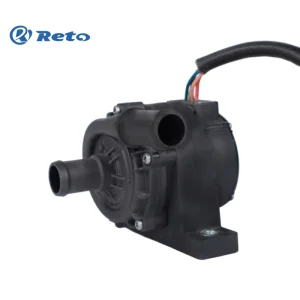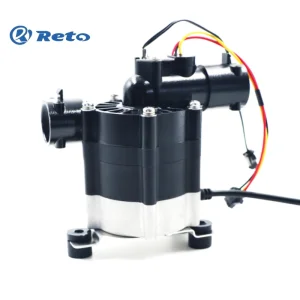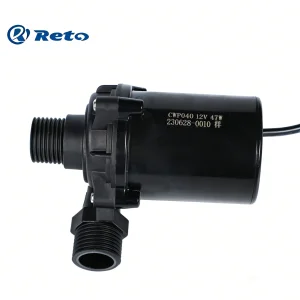
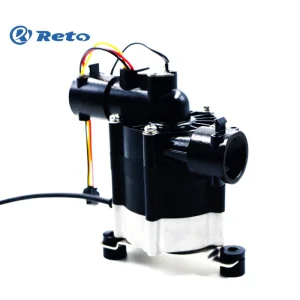
Engineered for high hydraulic efficiency, micro-vibration, zero carbon-brush wear, and IP68 hermetic isolation across residential plumbing, automotive thermal systems, and smart sanitary fixtures.
The global shift toward compact, intelligent, and silent hydronic boosting has redefined pump manufacturing. China's integrated supply clusters combine ultra-precise injection molding, automated micro-motor winding, and rigorous automotive quality standards.
China's fluid equipment corridor (centered in coastal industrial clusters like Xiamen, Zhejiang, and Guangdong) provides complete supply chain localization—from raw PPS/PPO engineering resins and neodymium-iron-boron (NdFeB) magnetic rotors to custom silicone vibration isolation dampers.
Mini booster pumps operate at rotational velocities ranging from 3,500 to 7,500 RPM. China's state-of-the-art pump production utilizes automated laser dynamic balancing, robotic stator coil winding, and full-cavity potting equipment to ensure 100% concentricity.
Top Chinese manufacturers cross-pollinate automotive powertrain QA practices into commercial and domestic appliance booster pumps. Every batch undergoes 100% hydrodynamic testing across flow rate (Q), head (H), efficiency (η), and power draw (P).
Traditional AC booster pumps and mechanically commutated brushed DC pumps are being rapidly replaced. Understanding this technical transition is crucial for system engineers designing contemporary fluid circuits.
| Evaluation Parameter | Legacy AC Booster Pump | Brushed DC Mini Pump | Advanced BLDC Booster Pump (RETO Platform) |
|---|---|---|---|
| Motor Topology | Shaded Pole / Capacitor-Run AC | Mechanical Commutator & Carbon Brushes | Electronically Commutated 3-Phase BLDC |
| Hydraulic Energy Efficiency (η) | 15% – 28% (High inductive loss) | 35% – 48% (Brush friction losses) | 65% – 82% (Neodymium rotor & closed-loop FOC) |
| Acoustic Footprint | 48 – 62 dB(A) + 50/60Hz line hum | 42 – 55 dB(A) + brush arcing hiss | <26 – 32 dB(A) (Sinusoidal vector control) |
| Continuous L10 Lifespan | 3,000 – 8,000 hours | 1,200 – 2,500 hours (Brush burn-out) | >30,000 – 40,000 hours (Limited only by ceramic bearings) |
| Intelligent Control Interface | Fixed speed or triac voltage drop | Variable supply voltage only | PWM Duty Cycle, 0-5V DC, FG Tacho, LIN / CAN Bus |
| Electromagnetic Immunity (EMC) | Moderate harmonic distortion | Severe EMI radiation from electrical arcing | CISPR 25 Class 3/4 & EN 55014 Compliance |
| Thermal Rise & Dry-Run Protection | Prone to stator burnout upon rotor stall | Rapid overheating & spring degradation | Embedded Smart MCU: Auto dry-run cut-off & auto-restart |
By shifting from trapezoidal 6-step block commutation to 180° space vector field-oriented control (FOC), torque ripple is reduced by over 92%. This virtually eliminates hydraulic pulsations and structure-borne chassis resonance.
Mini booster pumps operating in continuous hot water recirculation require impervious bearing materials. Utilizing 99.5% high-purity alumina ceramics (Al2O3) or partially stabilized zirconia (PSZ) shafts provides friction coefficients as low as 0.04 against carbon graphite or carbon-fiber-reinforced PEEK sleeves.
Dynamic mechanical shaft seals represent 85% of premature booster pump failures due to scale buildup and seal drying. The canned static isolation chamber separates the stator entirely from the fluid loop, providing a true 100% hermetic, leak-proof operational envelope.
From micro-volumetric water delivery in luxury automated smart toilets to high-temperature thermal dissipation in electric vehicle fast chargers, mini booster pumps serve as the heartbeat of modern electro-mechanical systems.
Instant heating bidets require precise volumetric micro-boosting (0.4 to 1.8 L/min) against 0.15–0.35 MPa backpressure. For ceramic siphon assist flushing, high-flow booster pumps deliver 12 to 18 L/min under zero head pressure within 3.5 seconds.
In Southeast Asian high-rise condominiums (notably Malaysia, Thailand, and Indonesia) and European compact flats, low mains pressure causes water heaters to fail flame ignition. Mini DC booster pumps boost dynamic head by 0.8–1.2 bar with zero delay.
Ultra-fast DC charging cables (up to 480kW) require continuous synthetic dielectric coolant circulation to avoid conductor degradation. Automotive 12V/24V mini auxiliary cooling pumps guarantee optimal battery and inverter temperatures.
Precision medical chillers, laser cutting optical coolers, commercial espresso boilers, and automated craft beer wort brewing loops rely on food-grade PPS / stainless steel fluid paths to circulate corrosive or sanitary liquids without chemical leaching.
When specifying mini booster pumps for high-volume automated manufacturing lines, international engineering directors must assess the following core parameters to guarantee system reliability and compliance.
A frequent error in procurement is relying solely on maximum static head ($H_{max}$) or zero-head open discharge flow ($Q_{max}$). Factory testing must provide complete dynamic pressure-drop curves under actual operational restriction to establish the optimal operating duty point.
Standard pump volutes degrade quickly when exposed to chlorinated city water, hot ethylene glycol solutions, or acidic cleaning flushes. China's top manufacturers specify polyphenylene sulfide (PPS) fortified with 30% glass fiber (GF) for dimensional stability up to 140°C.
Modern equipment controllers require real-time pump telemetry. China OEM manufacturers customize internal BLDC drivers to support PWM speed regulation (100Hz–10kHz), FG tachometer pulse feedback (providing 2 to 4 pulses per rev), and fault diagnostic signaling.
In-depth technical answers addressing procurement, durability, custom manufacturing, and integration challenges encountered by global B2B procurement teams.
Quiet operation is achieved through four coordinated engineering measures: 1) Sine-wave FOC (Field Oriented Control) electronic commutation that minimizes electromagnetic cogging; 2) Dynamic two-plane laser rotor balancing to G2.5 balance class; 3) Micro-polished ceramic shafts matched with graphite or carbon-fiber sleeves featuring clearances strictly within 0.015–0.025 mm; and 4) Fluid CFD optimization of the volute runner to eliminate internal micro-vortices and cavitation noise.
Our intelligent pump PCBA platforms incorporate: 1) Dry-Run Protection: If zero load/air intake is detected via current drop for 5–10 seconds, the pump safely shuts down and attempts periodic restarts; 2) Locked Rotor Protection: Current is instantly throttled if foreign particles jam the impeller; 3) Over-Voltage & Reverse Polarity Protection; and 4) Over-Temperature Derating: Motor power throttles if internal PCB temperatures exceed 105°C.
High fluid temperatures (>80°C to 100°C) cause mechanical expansion in polymers and magnetic flux degradation in rotors. Premium China manufacturers mitigate this by employing high-coercivity Samarium Cobalt (SmCo) or high-grade Neodymium (NdFeB with 150°C Curie temperature rating) and engineering PPS/PES volutes that resist thermal creep, guaranteeing the pump maintains full hydraulic head without thermal deformation.
Yes. Custom OEM/ODM development represents over 70% of production. We support tailored inlet/outlet configurations (threaded G1/2", NPT, barbed hose stems, or quick-connect push-in ports), custom orientation angles (0°, 90°, 180°), automotive-rated electrical connectors (such as AMP, Delphi, or Deutsch), and specific cable lengths potted directly into the pump casing.
For standard catalog configurations, MOQs start as low as 100 to 500 units. For fully customized volute designs or private-label firmware protocols, prototype tooling and 3D SLA functional samples are provided in 7–14 days. Production mould tooling requires 25–35 days, followed by mass production batch lead times of 15–25 working days.
Production facilities are strictly certified under IATF 16949 (automotive tier-1 quality management) and ISO 9001. Products are fully verified and certified by TÜV, CE (LVD & EMC directives), UL/cUL recognition, RoHS Directive 2011/65/EU, and REACH compliance. Food contact sanitary certifications (NSF-61, FDA, WRAS) can be verified upon material specification.
Explore our complete catalog of ultra-silent, continuous-duty hot water recirculation, automotive-grade EV thermal management, and smart sanitary pressure pumps.