Engineered for continuous-duty sanitary ware, electric vehicle battery cooling loops, and high-temperature water heater boosting.
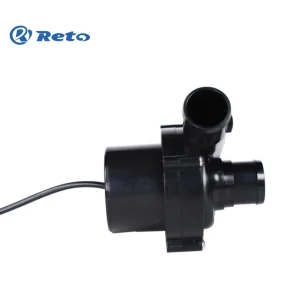
China DC Energy-Saving Circulating Pump for Sanitary Ware Supplier, Suppliers
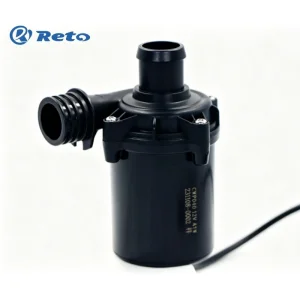
China Quiet Submersible Pump for Toilet Flushing Suppliers, Manufacturer
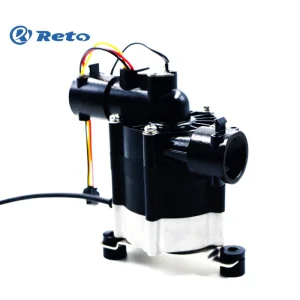
Custom water Heater Booster Pump for Home Use Manufacturers, Manufacturer
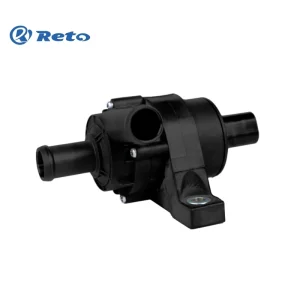
China Cooling Water Pump for EV Battery Supplier, Manufacturer
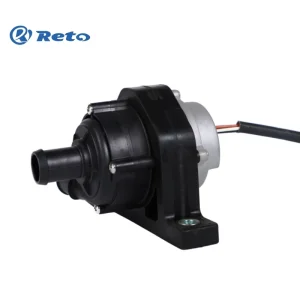
China DC Liquid Cooling Pump for Charging Station Supplier, Manufacturer
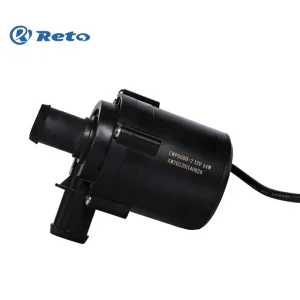
Custom Pressure Pump for Smart Toilet Flushing Manufacturer, Factory
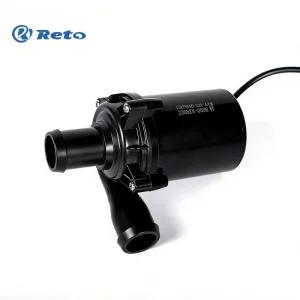
China 12V Smart Toilet Water Pressure Pump Supplier, Factories
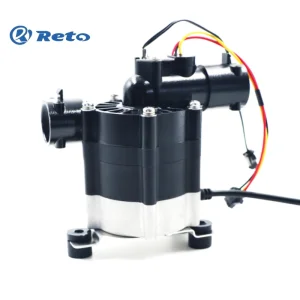
China 36V Hot Water Circulation Pumps For Water Heater Factories, Factory
Transitioning from mechanical shaft seals to sealless brushless magnetic drive pumps across mission-critical commercial and industrial systems.
In thermal management, decentralized sanitary boosting, and closed-loop liquid circulation, the non-submersible transfer pump represents a foundational mechanical building block. Unlike submerged units that rely on surrounding liquid reservoirs for cooling and hydraulic priming, modern non-submersible surface transfer and inline booster pumps operate in ambient chassis environments. This placement demands advanced thermal self-dissipation, minimal acoustic radiation, zero dynamic leakage risks, and superior suction performance under fluctuating inlet pressures.
Today's procurement directors, system architects, and mechanical design engineers evaluating Chinese manufacturing partners require far more than catalog parts. They demand proven hydraulic simulations (CFD), structural resonance analyses (FEA), comprehensive material compliance (FDA, WRAS, RoHS, REACH), and automotive-grade manufacturing certifications (IATF 16949). As operating voltages transition from legacy AC grids to unified 12V, 24V, 36V, and 48V DC architectures, non-submersible transfer pumps are becoming high-efficiency, digitally regulated dynamic fluid devices.
Moving past unit cost: Global sourcing teams evaluate life-cycle cost, electromagnetic compatibility, and micro-cavitation resilience.
Non-submersible pumps operating in dry enclosures cannot tolerate vapor or liquid egress. Static O-ring seals combined with precision PPS/PPE injection pump chambers eliminate dynamic shaft seals, achieving helium mass-spectrometer leak rates under 1.0×10⁻⁶ mbar·L/s.
Electrified systems cannot tolerate switching spikes. BLDC pump controllers integrate onboard choke inductors, high-reliability electrolytic capacitors, and transient voltage suppression diodes (TVS) to comply with CISPR 25 Class 3/5 and EN 55014-1/2 residential appliance standards.
Pumps must handle ethylene glycol mixtures (50/50), aggressive softeners, or potable water from -40°C to +125°C. Ceramic zirconia (ZrO₂) and silicon carbide (SiC) shafts combined with carbon graphite composite bushings ensure chemical resistance and zero swelling.
Modern applications require bi-directional telemetry. Integrated hall-effect sensing and sensorless field-oriented control (FOC) deliver real-time RPM feedback (FG signal), current-spike dry-run warnings, over-temperature cutoff, and stall recovery without physical re-intervention.
Inside Xiamen Reto Electric Appliances: Lean manufacturing, automated winding lines, and end-of-line verification systems.
China's status as the global epicentre for non-submersible transfer pump production is underpinned by high-density industrial clusters. Located in Xiamen, Fujian—an international maritime logistics hub and engineering manufacturing corridor—RETO leverages a deeply integrated tier-2 ecosystem consisting of domestic rare-earth sintered NdFeB magnet suppliers, specialized motor lamination stamping centers, and custom food-grade polymer compounding facilities.
This localized supply density mitigates global logistics disruptions and compresses prototyping lead times. While Western competitors quote 16 to 24 weeks for custom hydraulic casing modifications, RETO executes complete CAD-to-tooling iterations in 4 to 6 weeks. High-precision CNC tooling, automated Japanese stator needle-winding cells, and ultrasonic plastic welding guarantee consistent dimensional tolerances across million-unit production runs.
100% automated needle winding ensures copper wire slot-fill factors exceeding 85%, eliminating human error, minimizing thermal hotspots, and optimizing electromagnetic efficiency.
Every single transfer pump is checked via automated test stands for flow rate, head curve performance, acoustic emission (semi-anechoic sound chambers), and high-potential dielectric breakdown.
High automation coupled with proprietary patent portfolios (100+ patents) enables RETO to achieve 25-35% unit cost savings over North American and European equivalents without compromise.
Analyzing thermal, hydraulic, and environmental demands across five high-growth market segments.
Integrated inside high-end wall-hung and floor-mounted smart toilets. Non-submersible surface mounting keeps the pump isolated from the blackwater/waste chamber. The pump delivers instant high-flow pulsing (12-16 L/min) directly from residential tap lines without requiring an elevated gravity cistern, maintaining quiet wash cycles below 38 dBA.
Electric commercial vehicles and DC fast-charging terminals require 24V or 48V non-submersible coolant transfer pumps. These units circulate deionized water-glycol mixtures through cold plates. They operate in engine bays under intense vibration (up to 4.5G) and ambient temperatures ranging from -40°C to +85°C with IP67 chassis seals.
Continuous hot water on demand demands non-submersible return pumps installed directly onto domestic plumbing lines. Engineered with food-grade PPS pump heads, they resist calcification, withstand continuous 100°C fluid temperatures, and integrate flow sensors to eliminate the cold-water slug during morning showers.
Closed-loop recirculating chillers require non-submersible transfer pumps with non-turbulent laminar fluid delivery. Magnetic drive coupling ensures zero particulate shed into the pure water stream, maintaining precision temperature regulation (±0.1°C) across medical CO₂ lasers and wafer-dicing machines.
Automatic espresso systems and craft beer brewing vessels rely on food-safe (NSF-61 compliant) non-submersible pumps to transfer high-temperature wort or hot brewing water. Sealless magnetic drives prevent flavor taint, tolerate sanitizing CIP solutions, and avoid thermal air-locking during vapor phase changes.
Evaluating mechanical, electrical, and thermal trade-offs between pump formats.
| Performance Parameter | BLDC Magnetic Non-Submersible | Standard Submersible DC Pump | Legacy AC Brushed Surface Pump |
|---|---|---|---|
| Operating Lifespan (MTBF) | 25,000 – 35,000 Hours (Continuous) | 8,000 – 15,000 Hours | 2,000 – 5,000 Hours (Brush Limited) |
| Dynamic Shaft Leakage Risk | Zero Risk (Hermetic Static Seal) | Internal Ingress Risk on Submersion | High (Mechanical Face Seal Wear) |
| Acoustic Level (@ 1 Meter) | 28 – 38 dBA (Whisper Smooth) | 35 – 45 dBA | 55 – 70 dBA (Vibration & Brush Arcing) |
| Fluid Temperature Ceiling | -40°C to +125°C Continuous | Max 40°C – 60°C (Risk of Motor Cook) | Max 70°C – 90°C |
| Speed & Flow Modulation | 0-5V Analog, PWM, LIN, CAN Bus | Fixed or Crude Voltage Throttling | Inverter Required (Bulky & Expensive) |
| Chassis Footprint & Integration | Ultra-Compact, Any Orientation Mount | Requires Tank In-Reservoir Well | Bulky, Heavy Iron Stator Core |
| Dry Run Intelligence | Microprocessor Auto-Cutoff & Retry | None (Thermal Rupture in Minutes) | External Thermal Overload Switch |
Authoritative answers addressing hydraulic sizing, cavitation mitigation, and customized OEM protocols.
Explore specialized micro-submersible, high-head booster, and automotive-grade cooling pump models.
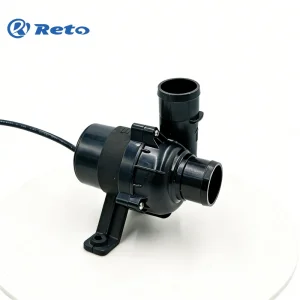
Custom Mini Micro DC Submersible Water Pump Suppliers, Manufacturer
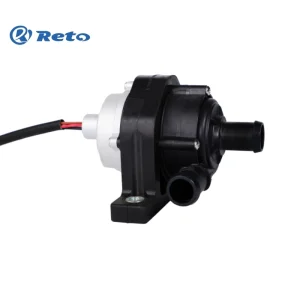
China 12V Compact Liquid Cooling Pump for Car Motor Manufacturers, Factories
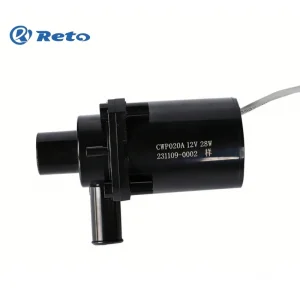
Custom 12V High Flow Pump for Smart Toilet Suppliers, Factories
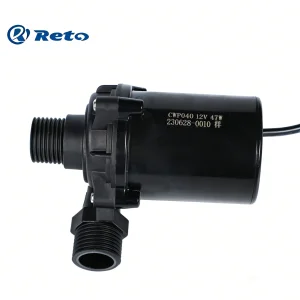
Custom 12V Compact Pressure Pump for Bidet Toilet Suppliers, Factory
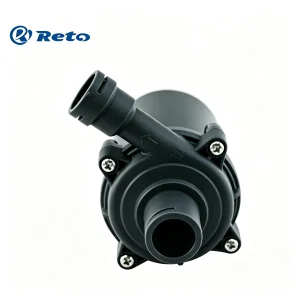
Custom 12 Water Booster Pump For Shower for Water Heater Supplier, Manufacturers
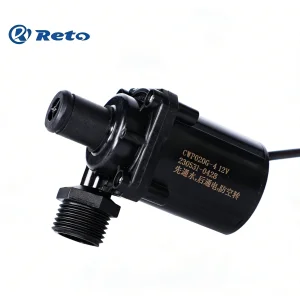
Custom 12V Recirculation Pump for Solar Water Heater Factories, Factory
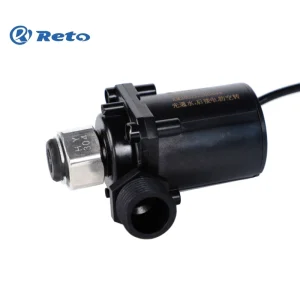
Custom 12V Hot Water Return Pump for Water Heater Supplier, Manufacturers
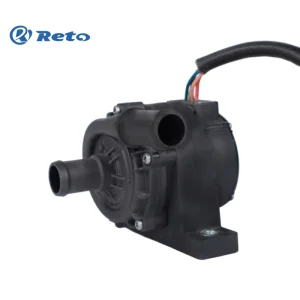
Custom Quiet Mini Coolant Pump for EV Thermal Management Manufacturer, Factories
From preliminary hydraulic modeling to mass validation under IATF 16949 standards, our Xiamen R&D center provides complete direct OEM/ODM engineering integration for global clients.