
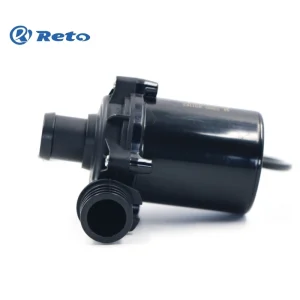
Custom 12V Quiet Submersible Pump for Toilet Flushing Suppliers, Manufacturer
Inquire SpecificationsGlobal Industrial Whitepaper & Strategic OEM/ODM Procurement Guide for High-Efficiency Brushless DC (BLDC) Cooling Circulation Systems
Industrial-grade brushless architectures engineered for thermal management, domestic boosting, and smart appliance integration.
Custom 12V Quiet Submersible Pump for Toilet Flushing Suppliers, Manufacturer
Inquire Specifications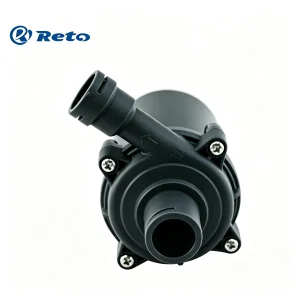
Custom 12 Water Booster Pump For Shower for Water Heater Supplier, Manufacturers
Inquire Specifications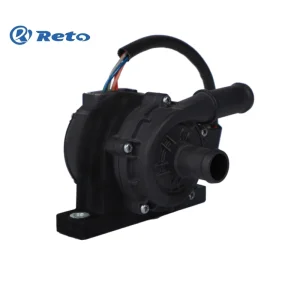
China 12V DC Booster Pump for Car RV Supplier, Suppliers
Inquire Specifications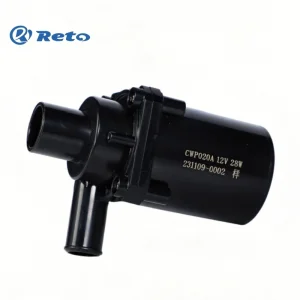
Custom 12V High Pressure Electric Solar Water Pump Manufacturer, Factories
Inquire Specifications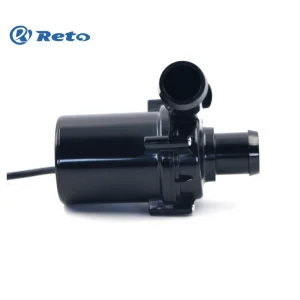
Custom 12V potable water booster pump Pump For Smart Toilet Supplier, Manufacturers
Inquire Specifications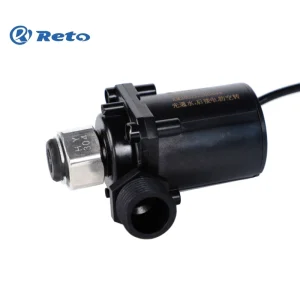
Custom 12V Hot Water Return Pump for Water Heater Supplier, Manufacturers
Inquire Specifications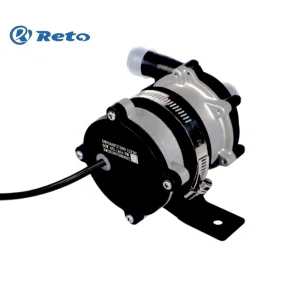
China Brushless DC Cooler Water Pump Motor for EV Charging Stations Manufacturer, Factory
Inquire Specifications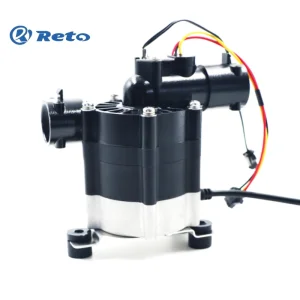
Custom 36V Brushless DC Pump for Water Heater Factories, Factory
Inquire SpecificationsThe transition from legacy AC asynchronous induction motors to smart, electronic-commutated brushless DC (BLDC) solutions across mission-critical cooling loops.
The exponential rise of AI data infrastructure, high-power fiber laser cutters, and EV fast-charging stations has driven cooling system volumetric heat-flux requirements past historical limits. Miniaturized BLDC cooler pumps provide micro-channel continuous flow with zero cavitation risk under intense heat exchange loads.
Global regulatory frameworks—such as the EU Ecodesign Directive and US DOE energy efficiency standards—are compelling industrial chiller OEMs and household thermal system builders to phase out brushed motors in favor of ultra-efficient BLDC magnetic drives that trim parasitic electric draw by 35% to 50%.
Modern consumers and operators demand whisper-quiet operation below 38 dB(A). Whether embedded in luxury smart bidets, residential tankless water heaters, or bedroom water-cooled mattresses, fluid pumps must deliver stable dynamic pressure while dampening resonance via electronic sinusoidal commutations.
Why leading global brands localize their cooler water pump manufacturing and OEM/ODM engineering within China's industrial clusters.
Chinese pump manufacturers benefit from immediate domestic access to high-grade NdFeB permanent magnets, silicon steel laminations, precision ceramic shafts (zirconia/alumina), and automotive-grade polyphenylene sulfide (PPS) polymers. This compressed supply loop reduces raw material lead times by over 40% compared to Western counterparts.
Advanced production lines integrate fully automated Surface Mount Technology (SMT) for motor controller driver boards alongside vacuum-chamber epoxy encapsulation. This ensures an IP68 ingress protection rating, total electrical insulation, and superior heat dissipation from power MOSFETs into circulating fluid streams.
Tier-1 Chinese factories employ dedicated internal tool-making shops, allowing OEM customers to move from initial CFD (Computational Fluid Dynamics) impeller simulations to working functional injection molds within 21 to 30 days. This accelerated cycle minimizes time-to-market for complex device releases.
Evaluating hydraulic heads, fluid dynamics, and operational parameters across diverse industrial and consumer cooler pump installations.
| Application Vector | Operating Voltage | Typical Medium | Hydraulic Head / Flow | Key Engineering Consideration |
|---|---|---|---|---|
| EV Battery Thermal Systems | 12V / 24V DC | 50/50 Water-Ethylene Glycol | 4.5m – 12m / 20–60 L/min | IATF 16949 compliance, anti-freezing viscosity handling, PWM control |
| EV DC Ultra-Fast Chargers | 24V DC / 48V DC | Deionized Water / Coolant | 8m – 16m / 25–80 L/min | Continuous 24/7 duty cycle, heavy thermal cycling resistance (-40°C to 105°C) |
| Laser & Industrial Chillers | 24V / 36V / 48V DC | Pure Distilled Water / Glycol | 6m – 18m / 15–50 L/min | Zero metallic ion contamination, ceramic bearing durability, steady laminar flow |
| Tankless Water Heaters | 12V / 24V / 36V DC | Potable Domestic Water | 3m – 9m / 8–28 L/min | Food-grade material certification (WRAS/FDA/RoHS), scale resistance up to 95°C |
| Smart Sanitary & Bidets | 12V DC | Filtered Municipal Water | 2m – 6m / 3–12 L/min | Sub-35 dB(A) acoustic damping, rapid pressure ramping, compact footprint |
| Solar Hot Water Recirculation | 12V DC (Solar direct) | Potable Water / Glycol Mix | 3m – 8m / 5–20 L/min | Wide input voltage tolerance (8–18V DC), dry-run protection, thermal cut-off |
Key procurement requirements international supply chain managers and system architects must verify before factory audit sign-off.
Global procurement teams now require pumps that go beyond simple analog PWM speed input. Next-generation systems demand two-way communication via LIN or CAN protocols to report real-time rotor speed, coil temperature, dry-running faults, and locked-rotor events back to the primary ECU controller.
Cooler pumps within industrial and telecom environments are expected to operate continuously for over 5 to 7 years. Sourcing teams prioritize brushless pumps featuring high-purity ceramic or silicon carbide bearings with graphite bushings that eliminate mechanical friction degradation.
International buyers seek manufacturing partners capable of tailoring volute orientations, barb fittings, threaded ports (G or NPT), automotive waterproof connectors (e.g., Amphenol, Deutsch, Delphi), and specialized vibration-isolating mounting brackets directly during the injection molding phase.
Specialized recirculating, solar-powered, and high-flow BLDC platforms for mission-critical installations.
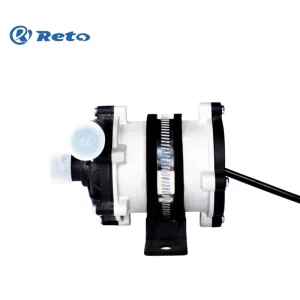
China 12V Brushless Coolant Pump for EV Battery Suppliers, Factories
Inquire Specifications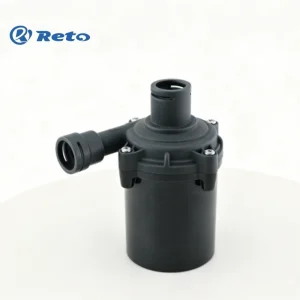
China Silent DC Mini Hot Water Recirculating Pump Supplier, Factory
Inquire Specifications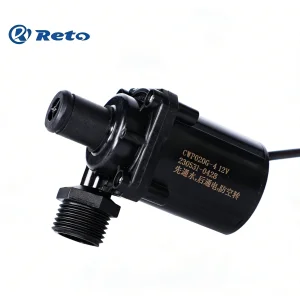
Custom 12V Recirculation Pump for Solar Water Heater Factories, Factory
Inquire Specifications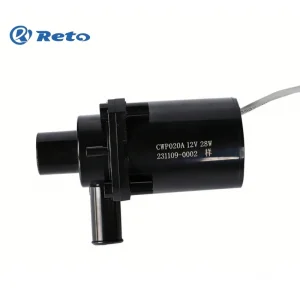
Custom 12V High Flow Pump for Smart Toilet Suppliers, Factories
Inquire Specifications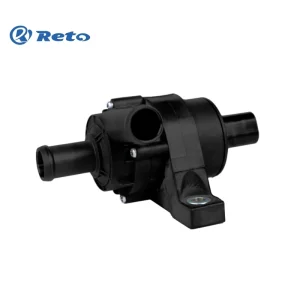
China Cooling Water Pump for EV Battery Supplier, Manufacturer
Inquire Specifications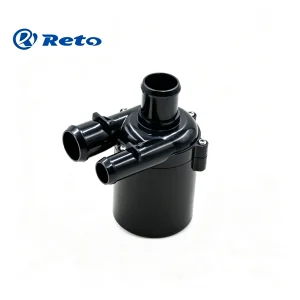
China DC brushless water pump for smart toilet Supplier, Factory
Inquire Specifications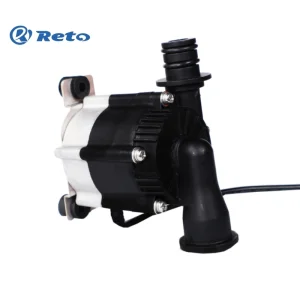
Custom 36V Instant Hot Water Recirc Pump For Water Heater Factories, Factory
Inquire Specifications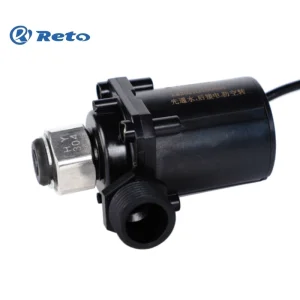
Custom 12V High Pressure Solar Submersible Water Pump Supplier, Manufacturer
Inquire SpecificationsIn-depth responses to key engineering, regulatory, and quality control inquiries.
BLDC pumps leverage electronic commutation driven by permanent neodymium magnets rather than physical carbon brushes or slip-induced AC poles. This eliminates mechanical friction, sparking, and brush dust, while increasing electrical-to-mechanical conversion efficiency to 80–90% (vs. 35–50% in shaded-pole AC pumps). Furthermore, BLDC units operate under safe low-voltage DC (12V/24V/36V/48V), provide microsecond PWM speed regulation, and feature a much smaller envelope footprint.
In high-grade BLDC cooler pumps, the stator coil and drive electronics are fully isolated from the fluid flow via a non-magnetic PPS or PPE containment isolation chamber. The electronics bay is filled with high-thermal-conductivity epoxy potting compound (typically >1.2 W/m-K). This transfers internal heat from motor windings and driving MOSFETs directly through the casing into the passing fluid, enabling continuous duty without air cooling fans.
For EV battery cooling, motor circuit loops, and charging station heat exchangers, manufacturing must be audited and certified under IATF 16949. Component qualifications include thermal shock testing (-40°C to 125°C), high-frequency mechanical vibration resistance (ISO 16750-3), salt spray corrosion endurance (ASTM B117), electromagnetic compatibility (CISPR 25 Class 3 or 5), and IP6K9K high-pressure washdown testing.
Yes. Chinese OEM manufacturers utilize computational fluid dynamics (CFD) modeling to recalculate impeller vane angles, shroud geometry, and volute spiral clearance. If your application involves dense liquid cold plates with steep fluid friction resistance, engineers can shift the performance curve to generate higher static pressures (>1.5 bar) while maintaining compact dimensions and controlled current draw.
For standard modifications (custom wire harnesses, terminal blocks, brackets, or modified port threading), samples are dispatched within 5 to 7 working days. For full turnkey ground-up designs requiring new injection tooling for pump casings and magnetic impellers, prototype tooling typically takes 25 to 35 calendar days, followed by PPAP (Production Part Approval Process) submission before scaling to volume production.