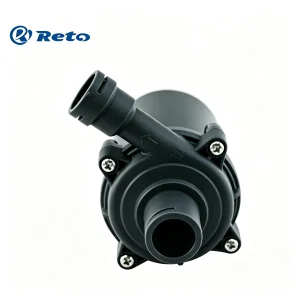
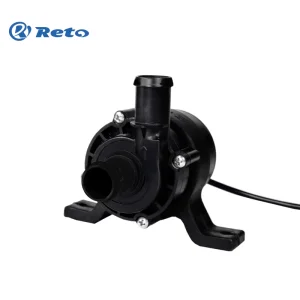
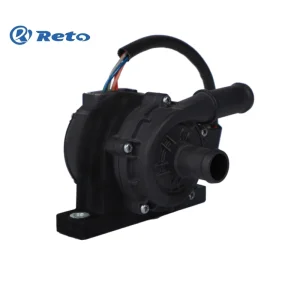
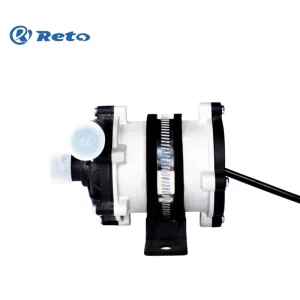
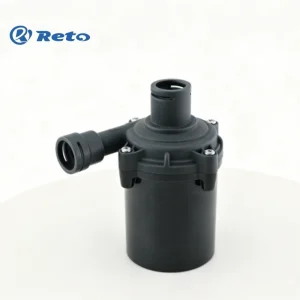
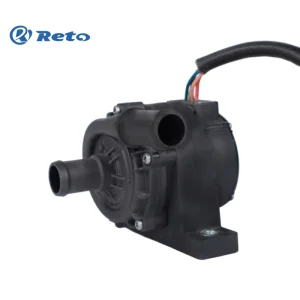
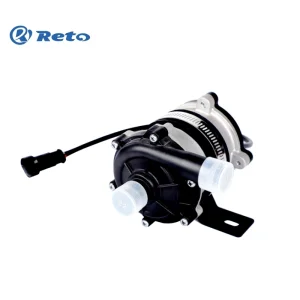
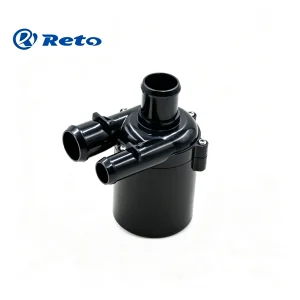
Direct from our Xiamen manufacturing base: precision-engineered booster, hot water return, and automotive cooling circulation units built to exacting international standards.
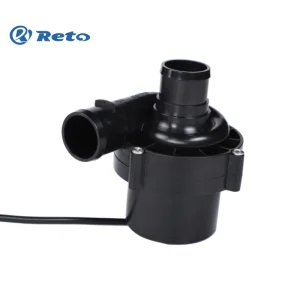
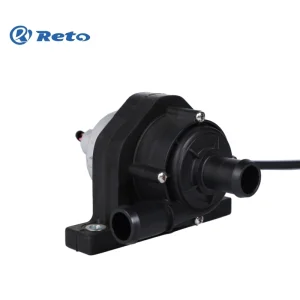
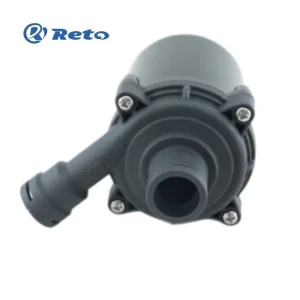
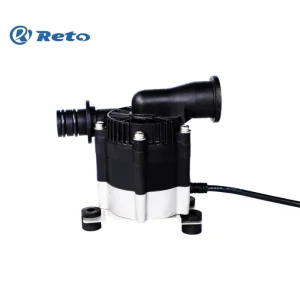
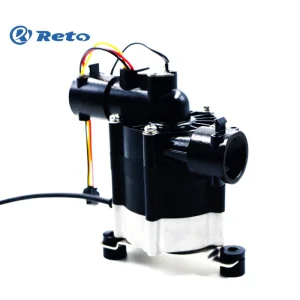
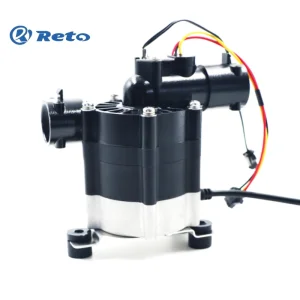
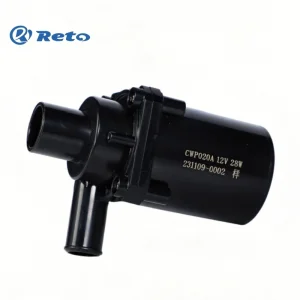
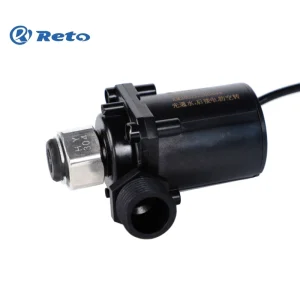
An authoritative evaluation of evolving hydro-thermal demands, zero-carbon building directives, smart automotive electromobility, and the transition toward brushless DC architecture.
The global water recirculation pump market has transitioned from a standard domestic plumbing subsegment into a high-precision multi-billion-dollar discipline. Driven by strict water preservation mandates, such as the EU Energy-related Products (ErP) Directive and North American Title 24, commercial building operators and smart residential developers require instantaneous domestic hot water delivery without hydraulic waste.
The ongoing electric vehicle (EV) revolution has redefined pump engineering. Modern electric drivetrains require auxiliary and main liquid cooling pumps that maintain the battery pack within a narrow operating window (20°C to 35°C). Water recirculation pumps are no longer merely water-movers; they serve as critical safety components operating under continuous PWM/CAN bus signal modulation.
Decarbonizing heating and cooling systems in high-density urban areas demands micro-hydraulic circulation loops that operate at optimal efficiency. Traditional AC shaded-pole or permanent split capacitor motors suffer from mechanical friction and low electrical efficiency (often below 25%). Modern electronic commutation (BLDC) pushes overall efficiency past 70%, slashing continuous-duty kilowatt consumption.
Understanding why Tier-1 appliance OEMs and automotive powertrain designers specify electronically commutated brushless DC water recirculation pumps over legacy brushed DC and AC induction systems.
| Evaluation Parameter | RETO Brushless DC (BLDC) Platform | Brushed DC Pump System | Traditional AC Induction Pump |
|---|---|---|---|
| Commutation Mechanism | Electronic sensorless / Hall-effect commutation; zero contact wear | Mechanical carbon brush / copper commutator bar assembly | Electromagnetic slip frequency (50Hz / 60Hz rotating field) |
| Continuous Service Life (MTBF) | > 30,000 to 50,000 hours (governed solely by ceramic bearing limits) | 1,500 to 3,000 hours (brush wear and particulate contamination) | 10,000 to 20,000 hours (capacitor degradation & bearing dry-out) |
| Energy Conversion Efficiency | 65% – 82% system efficiency across wide speed ranges | 35% – 50% (severe friction and thermal arcing dissipation) | 20% – 45% (high iron core loss, rotor slip current losses) |
| Operating Noise Signature | ≤ 28 – 38 dB(A) via smooth sinusoidal Field-Oriented Control (FOC) | 48 – 62 dB(A) (high-frequency mechanical brush clatter) | 42 – 55 dB(A) (low-frequency mains hum and magnetic vibration) |
| Electromagnetic Interference (EMI) | Compliant with CISPR 25 Class 5; ultra-low RF radiative signature | Extremely high EMI from contact arcing; triggers system fault codes | Moderate; inductive load harmonics require PFC circuitry |
| Intelligent Control & Telemetry | Stepless PWM duty control, 0–10V analog input, LIN / CAN-bus telemetry | Crude voltage modulation; prone to stall under low input voltages | Requires bulky, expensive external Variable Frequency Drives (VFD) |
| Sealing & Fluid Isolation | Magnetic drive canned separation; static O-ring seal; 100% zero-leakage | Dynamic mechanical shaft lip seal; inevitable fluid seepage | Mechanical face seal or wet-rotor casing prone to calcification |
Engineered for the rigorous duty cycles demanded by international appliance brands, commercial facility contractors, and electric mobility pioneers.
High-end residential bathrooms and modern hospitality facilities require automated flushing assistance, warm-water bidet spray modulation, and instantaneous water heating circuits. In low-pressure multi-story dwellings, municipal pressure is often insufficient for powerful cleansing cycles.
Widely adopted across Southeast Asia, Europe, and North America, tankless instant water heaters depend on micro-circulation booster pumps to guarantee rapid ignition and eliminate cold-water bursts during start-up. RETO pumps deliver precise pressure differentials even in low-gravity feed installations.
Electric vehicle battery modules, silicon carbide (SiC) inverters, and high-torque traction motors generate substantial localized heat flux. Our automotive-certified pumps cycle glycol-water mixtures through complex cooling jackets to ensure balanced temperature distribution across drive cycles.
Precision manufacturing equipment, including CNC laser cutters, UV semiconductor curing lines, and medical MRI equipment, requires vibration-free coolant circulation. Pressure pulses or micro-vibrations can disrupt beam precision, making our magnetically balanced impellers essential.
Closed-loop roof solar collectors and ground-source heat pumps demand circulation hardware capable of handling high stagnation temperatures and broad ambient weather swings. DC solar pumps interface directly with photovoltaic panels or residential storage inverters.
Megawatt-level ultrafast charging piles (350kW to 600kW+) generate extreme resistive heat within liquid-cooled cables and charging guns. Compact BLDC recirculation pumps run continuously during peak charging sessions to maintain safe cable handling temperatures.
Inside RETO’s automated production facilities: combining aerospace-grade design tolerances, automated motor winding, cleanroom assembly, and multi-tier quality certification.
Staffed by over 10 senior hydraulic, electrical, and materials engineers each holding 10+ years of domain experience. We utilize computational fluid dynamics (CFD) simulation to maximize hydraulic efficiency and reduce cavitation.
Our high-speed CNC multi-axis copper winding lines deliver uniform slot fill factors and balanced magnetic fluxes. Surface mount technology (SMT) lines produce in-house PCB motor drivers with automated optical inspection (AOI).
Production operations follow rigorous automotive Advanced Product Quality Planning (APQP) and Production Part Approval Processes (PPAP). Audited and certified by TÜV, fulfilling international market entry criteria.
Every single pump undergoes automated testing for flow vs. head curve compliance, dielectric withstand voltage, helium mass spectrometer leak detection, and anechoic acoustic profiling before packaging.
Anticipating evolving environmental mandates, smart AI building control integration, edge computing telemetry, and novel sustainable polymeric composites.
Comprehensive answers addressing mechanical tolerances, electrical control integration, qualification testing, and OEM custom configuration protocols.
Explore our full engineering line of smart toilet boosters, EV charging pile chillers, high-temperature automotive pumps, and multi-voltage DC submersible recirculation systems.