Explore our industrial-grade, certified DC and BLDC pump platforms engineered for instant hot water delivery, pressure boost, and high-duty hydraulic performance.
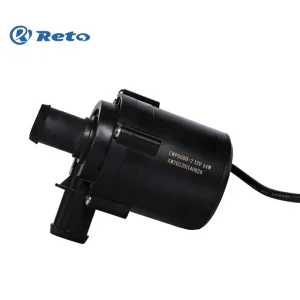
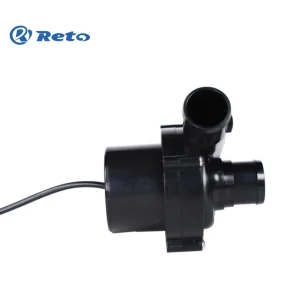
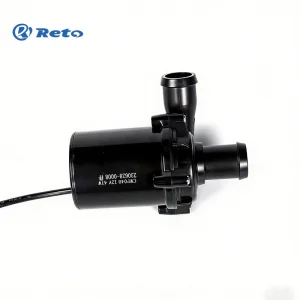
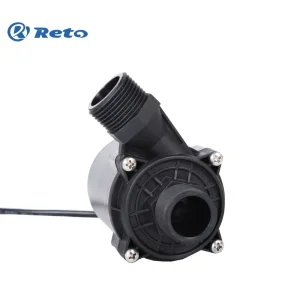
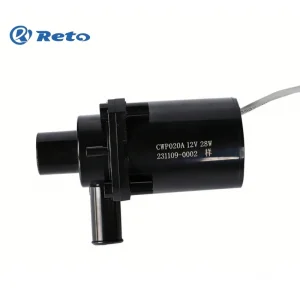
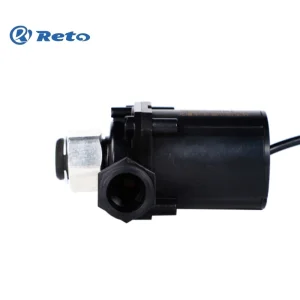
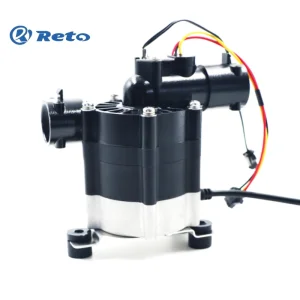
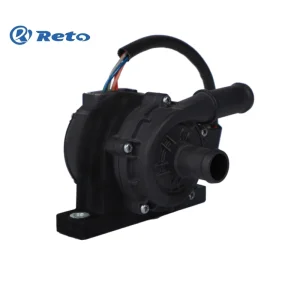
Analyzing structural shifts, global energy transitions, and the transformation from passive thermal storage to active, intelligent Domestic Hot Water (DHW) loops.
In modern thermodynamic infrastructure, the domestic hot water (DHW) sector is experiencing a paradigm shift driven by stringent decarbonization mandates, rising urban water scarcity, and the global push toward Net Zero buildings. Across North America, Europe, and the Asia-Pacific region, hot water tank recirculating pumps have evolved from luxury residential convenience amenities into mandatory components of commercial, institutional, and high-efficiency residential plumbing codes. Traditionally, static hot water tanks stored large volumes of heated water while the distribution pipes remained cold between draw-offs. This passive architecture results in astronomical losses: an estimated 12,000 to 18,000 gallons of potable water per household annually is discarded down municipal drains while users wait for hot water to travel from the central storage tank to terminal fixtures.
From an industrial and commercial standpoint—encompassing hotels, multi-family housing complexes, hospitals, and central hydronic heating hubs—the demand for continuous, pressurized hot water circulation is further compounded by biological sanitization imperatives. Stagnant, tepid water within uncirculated storage tank dead-legs creates prime incubation conditions for Legionella pneumophila bacteria. As a consequence, regulatory bodies worldwide enforce continuous or temperature-triggered thermal looping, demanding recirculating pumps capable of continuous-duty operation under high fluid temperatures ranging from 65°C to over 95°C.
As an established National High-Tech Enterprise and SRDI (Specialized, Refined, Distinctive, and Innovative) manufacturer based in Xiamen, China, RETO integrates automotive-grade quality standards (certified under IATF 16949 and ISO 9001) into fluid machinery design. Operating with an annual capacity exceeding 2,000,000 units and supported by more than 100 proprietary utility and invention patents, RETO engineers custom BLDC recirculating pumps tailored to eliminate standby thermal cycling losses while delivering near-instant hot water across global plumbing topologies.
Examining the convergence of permanent magnet BLDC motors, smart digital sensing, and heat-pump hybrid integration.
Traditional AC shaded-pole and PSC induction motors dissipate excessive heat, suffer electrical efficiency drops below 25%, and degrade rapidly in continuous-duty hot water environments. The industry has decisively pivoted to Brushless DC electronically commutated motors (ECM) achieving electrical-to-hydraulic conversion efficiencies exceeding 68% while reducing parasitic electrical draw to a mere 5W–35W.
Static timer-based circulators unnecessarily bleed thermal energy through distribution piping during unpopulated hours. Modern custom pump solutions incorporate integrated microcontroller units (MCUs) supporting PWM modulation, LIN/CAN-bus networks, and algorithmic usage-pattern recognition to circulate tank water strictly minutes before anticipated peak consumption.
Thermal stratification inside large hot water storage cylinders often creates bottom-layer temperatures between 35°C and 46°C—the hazardous zone for microbiological growth. Next-gen tank recirculating pumps facilitate automated destratification and synchronized periodic pasteurization loops at 60°C–70°C without triggering scale-induced rotor lockup.
Customizing hydraulic head, chemical compatibility, and voltage architectures across continental water distribution infrastructures.
Subject to California Title 24 and ASHRAE 90.1 energy standards, North American installations utilize dedicated return lines with demand-activated or aquastat controls. Pumps must feature lead-free brass or NSF-61 certified composite wet ends, operating at 12V/24V DC or 115V AC with built-in spring check valves to prevent backflow siphonage.
European hydronic loops are governed by the Ecodesign ErP directive, requiring an Energy Efficiency Index (EEI) ≤ 0.20. Compact canned-rotor designs with stainless steel or PPS impellers operate within pressurized closed unvented cylinder systems, adhering strictly to WRAS (UK), KTW (Germany), and ACS (France) drinking water regulations.
Rapid urbanization in East and Southeast Asia necessitates high-pressure boosting coupled with circulation. In urban multi-story residential towers, city municipal pressures fluctuate drastically. Here, our compact 24V/36V high-head BLDC pumps integrate into decentralized tankless water heaters and localized buffer tanks to counter frictional pipe resistance.
In high-insolation regions (Southern Europe, Australia, Latin America), recirculating pumps operate in solar thermal collector loops and air-to-water heat pump tanks. Pumps face extreme cyclical thermal expansion up to 110°C stagnation states, necessitating precision alumina-ceramic shafts and carbon graphite bearings.
Comparative hydraulic topologies: Resolving head loss, preventing thermal crossover, and maintaining acoustic isolation.
| System Architecture | Hydraulic Configuration | Key Operational Benefits | Common Engineering Pain Points | Recommended RETO Pump Configuration |
|---|---|---|---|---|
| Dedicated Return Line System | Closed-loop piping routed from furthest fixture directly back to hot water tank bottom inlet. | Zero Cross-Contamination Instant hot delivery without mixing cold supply. | Higher upfront copper/PEX piping cost; high friction loss across elongated loops. | High-head 24V BLDC series with integrated non-return valve and ceramic bearing core. |
| Under-Sink Thermostatic Bypass | Thermal crossover valve placed at cold/hot angle stops under furthest sink fixtures. | Easy Retrofit Ideal for existing structures lacking return infrastructure. | Lukewarm water bleed into cold line; premature valve failure due to lime scale buildup. | Compact 12V DC micro booster pump with pulse-width speed regulation and dry-run safety. |
| Demand-Controlled Circulation | Activated by flow switch, motion sensor, or push-button signal; shuts off when aquastat detects 38°C. | Maximum Efficiency Minimal standby line radiation loss; ErP compliant. | Requires low-latency electronic commutation and instant motor torque response. | Smart-signal BLDC pump with onboard MCU, PWM input, and FG rpm feedback diagnostics. |
| Thermal Destratification Tank Loop | Direct circulation across tank top hot exit and lower cold mixing manifold. | Eliminates Bacteria Uniform cylinder temperature; maximizes heat pump COP. | Continuous hot fluid contact (85°C–95°C); cavitation risk under low inlet suction head. | PPS/PES engineering plastic hydraulic end with magnetic drive and zero mechanical shaft seal. |
How RETO's advanced R&D team is pioneering smart thermal hydraulics for the next decade of Net Zero heating appliances.
Traditional dynamic mechanical shaft seals remain the single most common failure point in hot water circulators, prone to weeping, mineral crystallization, and frictional dry-burn. RETO's design roadmap eliminates mechanical seals entirely via a static isolation canister, magnetically coupling the neodymium-iron-boron (NdFeB) rotor to the stator. This yields an expected maintenance-free operating lifespan exceeding 30,000 to 50,000 continuous hours.
In residential indoor installations, acoustic resonance through structural plumbing studs is a major source of end-user complaints. RETO's fluid dynamicists utilize computational fluid dynamics (CFD) optimization to reshape the volute and backward-curved impeller vanes, mitigating turbulence eddies and vortex shredding. Coupled with field-oriented vector control (FOC) electrical commutation, noise profiles stay whisper-quiet below 28–32 dB(A).
Hot water approaching 90°C experiences dramatic decreases in Net Positive Suction Head Available (NPSHA). Our cutting-edge motor firmware monitors rotor back-EMF phase current discrepancies in real time to detect early micro-cavitation vapor bubbles or mineral scale deposition. The pump automatically executes micro-torque clearing cycles or throttles RPM to restore laminar hydraulic boundary conditions.
Backed by IATF 16949 automotive certification, 100+ patents, and over a decade of high-precision brushless DC fluid machinery manufacturing.
Every single pump platform manufactured in our Tong'an, Xiamen production complex undergoes strict automotive PPAP, APQP, and FMEA protocols. High-precision balancing, 100% computerized helium leak detection, and automated end-of-line electrical characteristic verification guarantee defect rates below 50 PPM across multimillion-unit production runs.
Our internal technical team brings together over 10 seasoned motor and hydraulic engineers, each holding 10+ years of dedicated BLDC domain experience. We collaborate closely with global tier-1 boiler, water heater, and sanitary ware OEMs to customize hydraulic envelopes, connection port orientations (G, NPT, Push-fit), operating voltages (12V, 24V, 36V, 48V, or rectified universal mains), and bespoke software logic.
All wetted components utilize food-safe, non-toxic, hydrolytically stable polymers (PPS, PPE, PVDF) and medical-grade alumina ceramics complying fully with international potable water guidelines: NSF/ANSI 61, WRAS, CE, RoHS, and REACH. Ingress protection ratings up to IP68 ensure total protection in humid utility rooms, damp basement pits, and outdoor solar collector enclosures.
Clear, engineering-backed answers addressing the most crucial sourcing, installation, and performance inquiries.
A hot water tank recirculating pump is engineered primarily to circulate water through a closed continuous or aquastat-regulated distribution loop back into a thermal storage cylinder. It operates against relatively low frictional head losses (typically 1.5 to 6 meters of head) at steady flow rates (5 to 15 L/min). In contrast, tankless booster pumps operate intermittently to overcome high dynamic restrictions through heat exchanger coils under city mains pressure, demanding higher static pressure handling and immediate flow-switch activation.
Traditional AC shaded-pole pumps convert roughly 70% of electrical energy directly into waste heat, consuming 45W–90W continuously while remaining susceptible to rotor winding burnout. BLDC pumps utilize permanent neodymium magnetic rotors and electronic commutation, reducing energy consumption to 5W–25W (over 75% energy savings). Furthermore, BLDC motors generate zero carbon dust, run ≤28 dB(A) quieter, and support granular PWM speed governance to match variable plumbing pipe lengths.
At water temperatures of 85°C–95°C, vapor pressure rises significantly, heightening cavitation risk if the pump suction head drops. RETO addresses this through optimized low-NPSHr CFD impeller profiles, ultra-smooth liquid channels, and high-purity (99.5%) ceramic shafts paired with self-lubricating graphite or carbon-impregnated ceramic sleeve bearings. Our wetted bodies utilize polyphenylene sulfide (PPS) containing 40% glass fiber reinforcement, preventing structural thermal warping up to 120°C.
RETO provides versatile control interfaces: 1) Integrated analog temperature sensor (aquastat) with automated on/off hysteresis (e.g., ON below 38°C, OFF above 45°C); 2) External pulse-width modulation (PWM) or 0–10V analog speed regulation; 3) LIN-bus and CAN-bus protocols for industrial smart HVAC and BMS integration; and 4) FG frequency pulse generator output for closed-loop RPM and dry-run feedback telemetry.
Yes. In regions with heavy calcium carbonate (CaCO3) concentrations, traditional mechanical seals bind and seize. RETO's canned-rotor magnetic drive isolates the electrical windings completely. The smooth ceramic rotor shaft and generous fluid bypass clearances prevent lime crystal deposits from locking the rotor assembly. Additionally, our microcontrollers can feature programmed "anti-seize" kick-start pulses that briefly jog the rotor every 24 hours during extended standby periods.
To provide an accurate engineering proposal and rapid prototype sampling, please supply: 1) Target rated voltage and voltage tolerance range; 2) Flow rate versus head curve requirements (operating duty point); 3) Fluid medium characteristics and minimum/maximum fluid and ambient temperatures; 4) Hydraulic port dimensions and threading standards (e.g., G 1/2", 3/4" NPT); 5) Control interface requirements (PWM, on/off, sensor); 6) Target acoustic threshold (dB at 1 meter); and 7) Target market certifications (CE, UL, WRAS, NSF).
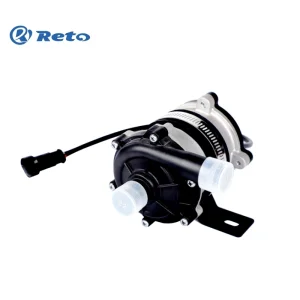
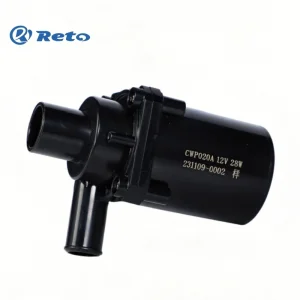
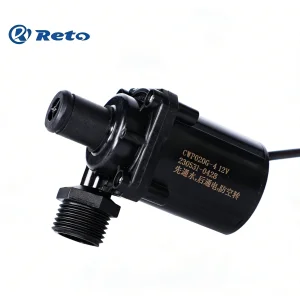
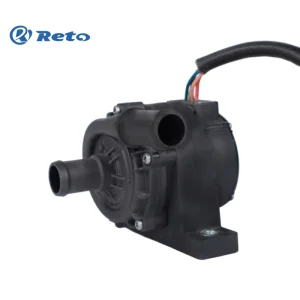
Explore our specialized portfolio encompassing EV cooling systems, solar water heater circulators, and high-pressure sanitary pumping units.
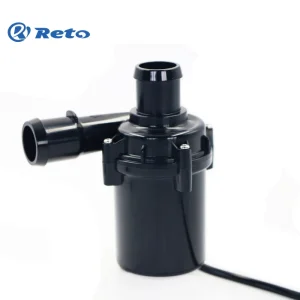
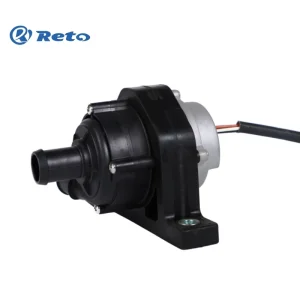
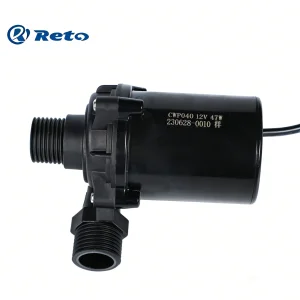
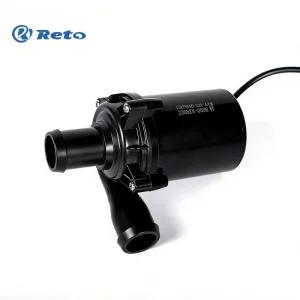
Connect directly with RETO's technical R&D engineering center in Xiamen, Fujian. Submit your hydraulic targets, operating temperature parameters, and electrical envelope to receive comprehensive DFM feedback, 3D CAD step files, and validated performance curves within 24 hours.