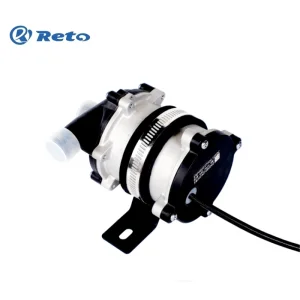
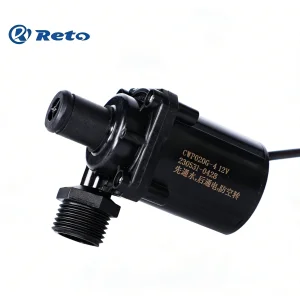
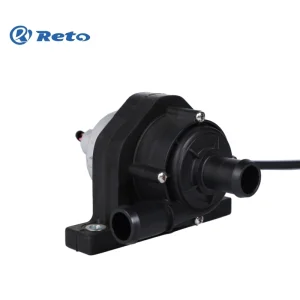
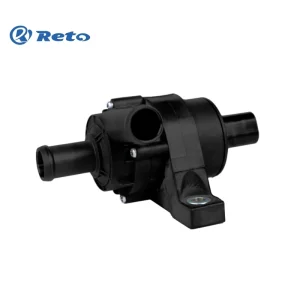
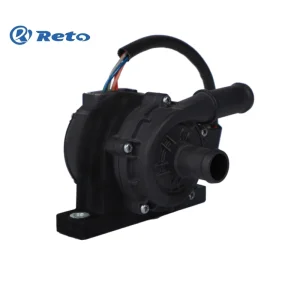
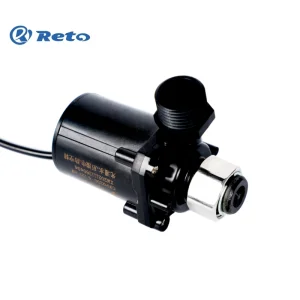
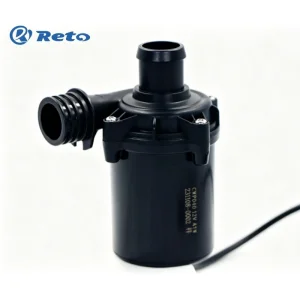
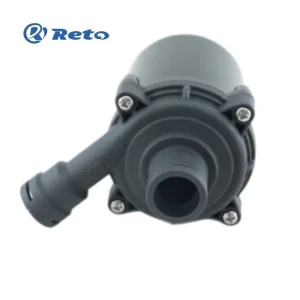
Factory-engineered hydraulic components built for extreme duty cycles, ultra-silent thermal management, and precision volumetric dosing.
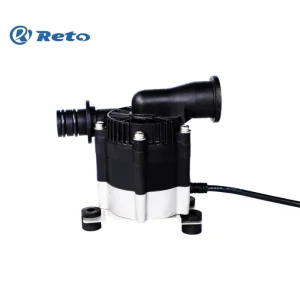
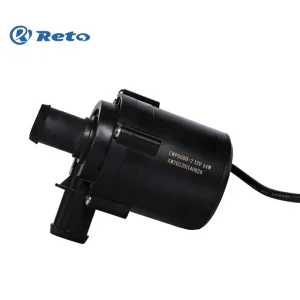
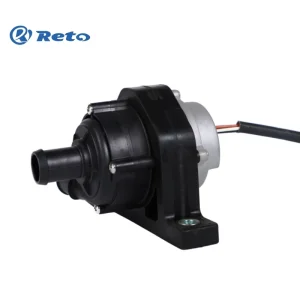
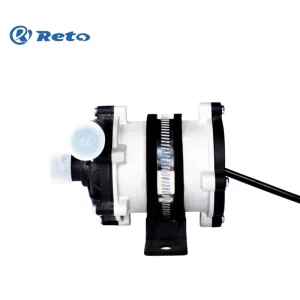
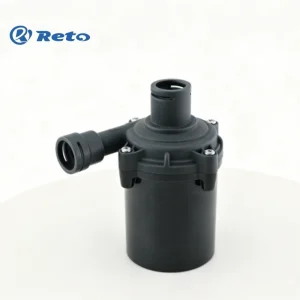
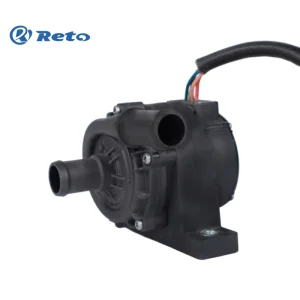
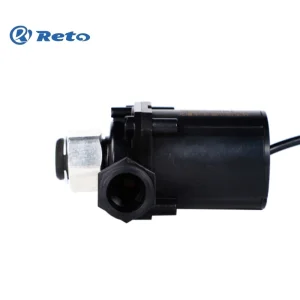
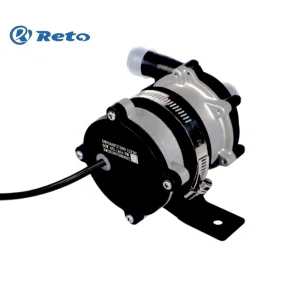
Understanding the transition from mechanical brush commutation to sensorless magnetic brushless direct current (BLDC) fluid transfer systems.
In precision fluid engineering, selecting a custom micro DC water pump factory requires an evaluation beyond basic static head and maximum volume flow metrics. Modern commercial and industrial applications—ranging from automotive thermal loops in electric vehicles (EVs) to high-pressure sanitary flushing units in smart homes—demand strict adherence to acoustic minimization, electromagnetic compatibility (EMC), thermal resilience, and thermodynamic efficiency.
Leading manufacturing bases like Xiamen Reto Electric Appliances Co., Ltd. (RETO) have eliminated the intrinsic vulnerabilities of legacy brushed pumps. Conventional brushed motors suffer from mechanical friction, carbon brush degradation, commutator sparking, and premature motor failure typically observed between 1,500 and 3,000 operational hours. By contrast, specialized Chinese factories utilizing electronically commutated, magnetically driven BLDC pump architectures achieve maintenance-free operating lifespans exceeding 20,000 to 35,000 hours. The absence of shaft friction through magnetic canned rotors also guarantees complete fluidic isolation, mitigating risk of rotor chamber leakage in mission-critical applications.
How localized manufacturing ecosystems in Fujian and Guangdong drive competitive pricing, rapid engineering prototyping, and scalability.
China hosts the world's most concentrated cluster for rare-earth neodymium (NdFeB) magnets, PPS engineering plastics, ceramic shafts, and automated copper winding. This density shortens product cycle stages—from raw resin tooling to final assembly—into a single operational perimeter.
Tier-1 manufacturing operations conform to strict automotive and international compliance standards. With certifications such as IATF 16949, ISO 9001, and TÜV, factory floors enforce 100% inline automated testing for stator winding resistance, dynamic rotor balancing, and hydraulic leakage.
Experienced R&D engineering divisions adapt hydraulic impellers, volute chamber profiles, port angles, and PCB microcode (PWM modulation, FG frequency feedback, RS485 communication) in weeks, accelerating client time-to-market.
Key engineering performance indicators evaluating hydraulic longevity, acoustic signature, and operating efficiency.
| Evaluation Parameter | Canned-Rotor Brushless DC (RETO Factory Standard) | Conventional Brushed DC Motor Pump | Strategic Advantage for Sourcing Teams |
|---|---|---|---|
| Mean Time Between Failure (MTBF) | 20,000 – 40,000 Hours (Bearing dependent) | 1,200 – 3,000 Hours (Brush degradation limit) | Eliminates warranty exposure in sealed consumer appliances. |
| Operational Noise Level | < 25 – 35 dB(A) at 1 Meter distance | 45 – 60 dB(A) due to commutator contact friction | Meets acoustic standards for medical, bedroom, and luxury sanitary products. |
| Electrical Commutation & Sparks | Zero electrical arcing; pure electronic commutation | Continuous brush arcing; high carbon particulate generation | Prevents ignition in volatile cooling or closed internal equipment chassis. |
| Electromagnetic Interference (EMI) | Ultra-low; simplified CISPR 25 Class 3-5 compliance | Severe EMI spikes requiring bulky external LC filters | Protects sensitive microcontrollers and wireless telemetry modules. |
| Digital Control Capability | Closed-loop PWM speed regulation, FG RPM feedback, Dry-run safety | Crude analog voltage attenuation only; no RPM feedback | Enables IoT integration, predictive maintenance, and energy management. |
Tailored hydraulic engineering deployed across automotive electrification, intelligent HVAC, and commercial automation.
High-voltage liquid cooling circuits for EV lithium-ion battery packs, SiC traction inverters, and ultra-fast DC supercharger cables (up to 480kW). Regulates thermal limits via ethylene glycol loops under ambient temperatures from -40°C to 125°C.
Integrated high-flow booster pumps and macerator extraction systems for intelligent bidets and water closets. Delivers instant water pressure boosting (0.1MPa to 0.45MPa) independent of domestic municipal supply fluctuations.
Recirculation booster assemblies for high-demand tankless instantaneous gas/electric heaters and solar heating circuits. Operates continuously with hot fluid media up to 100°C without risk of cavitation or mechanical distortion.
Compact centrifugal closed-loop fluid delivery for semiconductor manufacturing tools, medical aesthetic cryo-lasers, and enterprise edge computing immersion cooling racks demanding continuous 24/7 duty cycles.
Key technology shifts transforming modern micro DC pump manufacturing standards worldwide.
Micro pump drives are shifting from standard six-step square-wave commutation to Field-Oriented Control (FOC). FOC algorithms reduce acoustic resonance, deliver higher hydraulic efficiency at fractional speeds, and support digital telemetry over LIN/CAN/RS485 networks for predictive failure detection.
Modern pump design incorporates injection-molded Polyphenylene Sulfide (PPS) reinforced with glass fibers and high-purity Zirconia (ZrO2) or Silicon Carbide ceramic shafts. This material balance resists aggressive coolants, hot water calcification, and dynamic operational wear.
With fluid circulation moving into personal environments—such as water-heated mattresses, medical home dialysis machines, and office beverage automation—pumps require advanced impeller hydro-balancing and sound-dampening decoupling mounts that minimize noise.
A step-by-step technical framework to qualify suppliers and mitigate operational risk in global supply contracts.
Define specific fluid viscosity, chemical composition (e.g., glycol-water ratio, mineral concentration), operating media temperature range (-40°C to +105°C), and ambient system pressure requirements.
Evaluate H-Q curves rather than relying solely on zero-pressure max flow or shut-off head ratings. Ensure the operating duty point sits within the peak hydraulic efficiency band of the impeller profile.
Review third-party documentation for IATF 16949 (for automotive thermal applications) or ISO 9001, combined with CE, RoHS, and REACH compliance to maintain smooth clearance through customs and market-entry regimes.
Practical answers addressing technical design trade-offs, factory production thresholds, and testing protocols.
Certified fluid circulation solutions engineered for extreme duty cycles, solar systems, and quiet sanitary flushing.