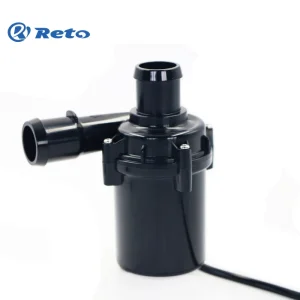
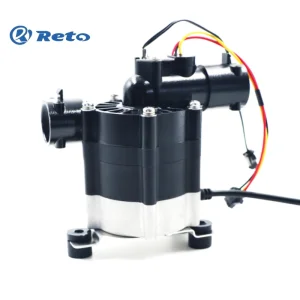
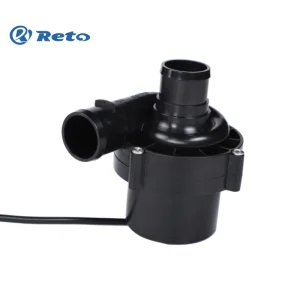
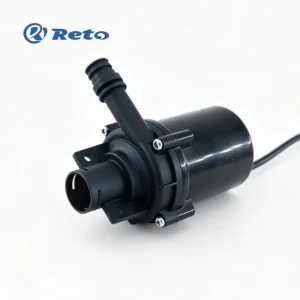
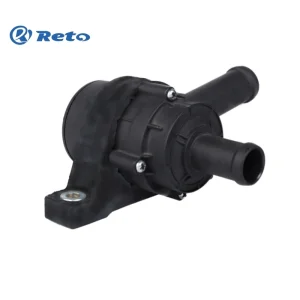
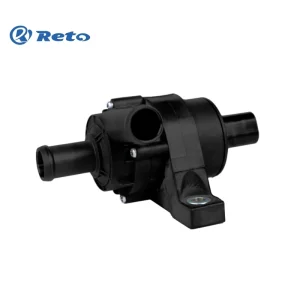
Direct manufacturer deployment of brushless DC fluidic pumps designed for instantaneous water heating, advanced sanitary fixtures, and next-generation mobility thermal control.
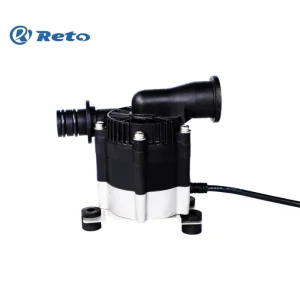
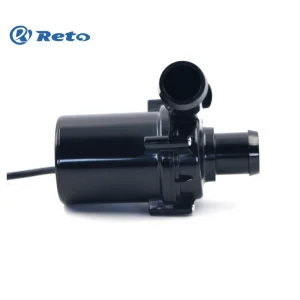
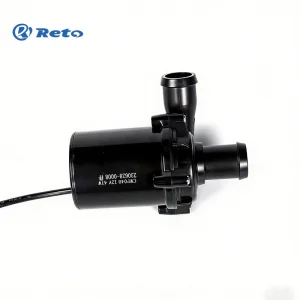
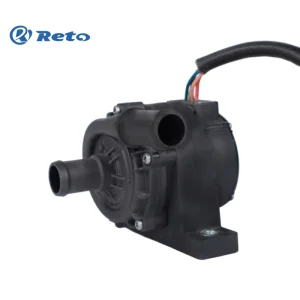
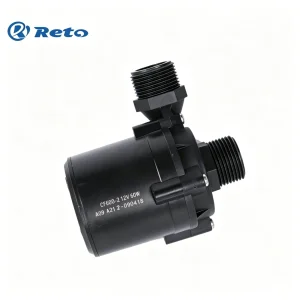
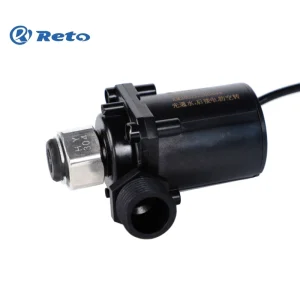
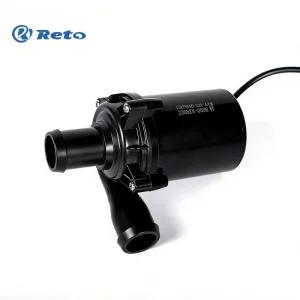
An authoritative analysis of micro-fluidic dynamics, shifting electrification standards, and OEM supply chain integration.
The industrial landscape is witnessing an aggressive structural departure from legacy AC shaded-pole and mechanical induction motors toward high-efficiency Brushless DC (BLDC) platforms. Small DC water pumps operating at 12V, 24V, and 36V are universally favored across distributed heating, intelligent sanitary appliances, and transport thermal loops due to their lower direct current energy overhead, low EMI profile, and compliance with zero-carbon mandates globally.
Modern commercial infrastructure demands compact fluidic propulsion units capable of direct logic-board communication. Micro DC pumps have evolved from standalone mechanical components into intelligent nodes within automated systems. By incorporating Closed-Loop Hall Sensors, Pulse Width Modulation (PWM) speed regulation, and real-time FG speed signal feedback, engineers can dynamically modulate hydraulic output to track precise localized heat dissipation.
As micro-fluid systems penetrate high-reliability ecosystems—including automotive battery systems and premium continuous-duty sanitary devices—procurement teams now demand certified quality systems. Suppliers must deliver beyond standard commercial criteria, requiring full implementation of IATF 16949, ISO 9001, and extensive third-party testing (TÜV, CE, RoHS, REACH) to mitigate lifecycle failure risks.
How state-of-the-art materials, computational fluid dynamics (CFD), and magnetic rotor drive technology are rewriting micro-pump performance thresholds.
Traditional dynamic mechanical shaft seals are prone to wear, leakage, and friction degradation over sustained operation. The industry benchmark has decisively pivoted toward canned motor magnetic drive pump configurations. By completely isolating the wet rotor cavity via a stationary isolation sleeve, fluids are contained without traditional friction seals, eliminating shaft leakage and substantially elevating MTBF (Mean Time Between Failures) past 30,000 continuous hours.
In residential and clinical applications—such as water-heated mattresses, medical cooling packs, and ultra-quiet smart toilets—fluid acoustic emissions are critical design drivers. Next-generation BLDC pumps leverage high-precision ceramic shafts (Zirconia or Silicon Carbide), carbon-graphite self-lubricating bushings, and mathematically optimized sinusoidal FOC (Field Oriented Control) electronic drivers to minimize electromagnetic resonance and suppress noise below ambient thresholds.
Expanding from clean water circulation to aggressive vehicle coolants and thermal sanitization loops demands superior polymer engineering. Modern pump housings utilize glass-fiber-reinforced polyphenylene sulfide (PPS) or polyphthalamide (PPA). These food-grade, chemically inert thermoplastics maintain dimensional stability, burst-pressure integrity, and hydraulic efficiency when conveying 50/50 ethylene-glycol mixtures from -40°C up to +125°C continuously.
| Evaluation Parameter | Brushless DC (BLDC) Pumping Architecture | Conventional Brushed DC Pump | System Impact & Life Cycle Benefit |
|---|---|---|---|
| Operating Service Lifespan | 25,000 – 40,000+ Continuous Hours | 1,500 – 3,000 Hours (Brush Depletion) | Eliminates warranty exposure and field service overhead. |
| Acoustic & Vibration Decibels | Ultra-Silent (Smooth electronic commutation < 30dB) | Substantial mechanical buzzing & brush chatter | Directly enhances consumer product perception and comfort. |
| Electromagnetic Interference (EMI) | Virtually Zero Sparking; EMC Standards Compliant | Severe carbon sparking causing micro-controller reset | Protects sensitive electronic circuits, IoT microchips & CAN-bus. |
| Dynamic Speed Modulation | Direct closed-loop PWM, 0-5V analog, FG output | Crudely manipulated via unstable external voltage drops | Delivers precision thermoregulation and energy optimization. |
| Thermal Efficiency Ratio | 85% – 92% Motor Efficiency | 50% – 65% (Frictional loss at commutator) | Low self-heating; ideal for cold loops and battery power. |
Engineered fluid delivery platforms designed to solve systemic operating challenges across consumer, automotive, and industrial domains.
Low residential municipal water pressure leads to weak bidet wash cycles and incomplete toilet flushing. Our custom 12V DC miniature booster pumps supply instantaneous, regulated hydraulic pressure directly to the ceramic nozzle and vortex flushing chamber. Featuring food-safe, potable-grade materials and an anti-vibration rubber isolation bracket, they guarantee sustained pressure without user-perceptible hum or pressure surges.
Electric vehicle powertrain reliability depends on strict thermal boundaries between 25°C and 35°C for lithium-ion packs and silicon-carbide inverters. RETO's automotive mini electric coolant pumps deliver pulse-less liquid circulation under high vibration profiles. Built in accordance with IATF 16949 automotive standards, these IP68 fully encapsulated submersible/in-line units resist engine-bay thermal shocks and harsh road salt environments.
Waiting for hot water wastes millions of liters of municipal water annually. Integrated 24V and 36V brushless DC recirculation return pumps create a smart domestic circulation loop. These pumps overcome strict European and North American plumbing friction losses, withstanding continuous hot-water contact up to 100°C while preventing mineral calcification and impeller seizure.
Precision manufacturing lasers and semiconductor process chillers require non-pulsating coolant delivery with zero particulate contamination. Our magnetic-drive centrifugal DC pumps deploy wear-resistant ceramic thrust bearings and food/medical-grade PPS polymer chambers, ensuring that no metal shavings, oil lubricants, or debris compromise sensitive optical paths or cooling blocks.
From clean-sheet hydraulic simulation to high-volume automated manufacturing, RETO fulfills critical client specifications.
We tailor impeller geometries, volute expansion curves, inlet/outlet orientations (inline, axial, radial, or threaded quick-connect fittings), and structural mounting dampers to integrate seamlessly into restricted appliance or chassis envelopes.
Voltages configured across 12V, 24V, 36V, or 48V DC. Our proprietary PCBA firmware supports PWM frequency-matched modulation, FG speed output monitoring, stall protection, dry-run cut-off, reverse polarity defense, and custom CAN-bus integration.
Choose from medical-grade ceramics, carbon graphite, Viton/EPDM elastomeric seals, and FDA/NSF/WRAS-grade engineered polymers capable of conveying aggressive chemicals, boiling potable water, or sub-zero automotive coolants without deterioration.
Our Xiamen R&D testing centers evaluate hydrostatic burst pressures, high-temperature boiling exposure, acoustic anechoic chamber profiles, multi-axis harmonic vibration, and continuous salt-spray corrosion to guarantee long-term field stability.
In-depth technical answers addressing operational mechanics, custom configuration, and procurement parameters for OEM design teams.
Unlike brushed motors that rely on mechanical carbon contacts to invert stator polarities, a BLDC pump utilizes internal Hall-effect sensors or sensorless back-EMF circuitry combined with an intelligent microcontroller (MCU). The MCU drives solid-state MOSFET switches to alternate magnetic fields across the stator poles smoothly. This brushless commutation eliminates mechanical friction, carbon dust accumulation, and spark emissions while delivering continuous efficiency exceeding 85%.
Submersible models are sealed in epoxy resin with IP68 ratings, enabling permanent submerged placement inside water reservoirs, summing basins, or storage urns, where surrounding fluid dampens acoustic sound. Non-submersible (in-line) configurations feature reinforced suction/discharge ports engineered for high ambient temperatures and dry equipment enclosures, making them ideal for water heater recirculation loops, automotive cooling lines, and external chillers.
Cavitation occurs when fluid static pressure drops below vapor pressure, causing vapor pockets that erode impellers. We design high-efficiency volutes with low Net Positive Suction Head Required (NPSHR). For dry-run hazards, our intelligent PCBA monitors current draw: if an absence of liquid creates a load drop below preset parameters, the pump activates a dry-run sleep routine, restarting intermittently to prevent thermal bearing damage.
To deliver an optimized hydraulic proposal, share: 1) Target media composition and temperature limits; 2) Rated operating flow rate (L/min) and dynamic head pressure (m); 3) Power voltage envelope (12V, 24V, 36V, 48V DC) and current constraints; 4) Signal control logic (Constant speed, PWM, 0-5V analog, FG speed wire); 5) In/Out port geometries; 6) Installation envelope and continuous duty lifespan targets.
IATF 16949 extends beyond basic ISO 9001 frameworks by mandating strict defect prevention, statistical process control, and mitigation of variation across the entire production chain. In vehicle thermal systems or automated household appliances, a premature pump breakdown can trigger costly recalls or equipment failures. RETO applies IATF 16949 automotive standards to all product lines, validating every production batch through rigorous quality gates.
Yes. Our fluid contact paths are engineered using FDA, NSF, and WRAS-compliant raw polymers for clean drinking water, high-grade medical circuits, and food processing lines. For cooling applications in electric transport or industrial chillers, our pumps employ specialized PPS/PPA compounds and chemically resilient fluororubber (FKM) O-rings, providing continuous resilience against 50% ethylene/propylene glycol mixtures.
Explore our targeted industrial platforms engineered for water heater boosting, EV power cooling, and precision plumbing automation.