OEM & Tier-1 Technical Whitepaper

China EV Overheating Water Pump Issue: Suppliers, Root Causes & High-Reliability BLDC Solutions

Comprehensive engineering analysis, failure-mode diagnostics, IATF 16949 compliant manufacturing, and global procurement guide for electric vehicle thermal management systems.

Featured Product Showcase · Part 1

High-Efficiency Electric Water Pumps & Circulation Systems

Direct factory supply of certified brushless DC (BLDC) booster, solar, EV coolant, and hot water recirculation pumps designed for continuous-duty thermal stability.
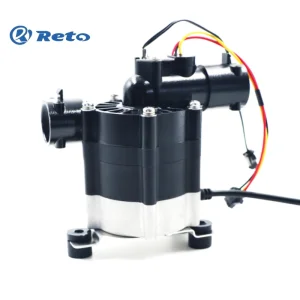
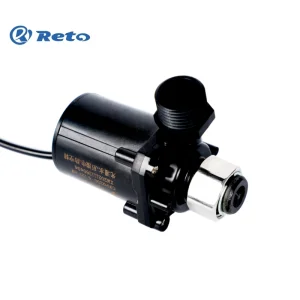
China 36V Hot Water Circulation Pumps For Water Heater Factories, Factory
Explore Specs
Custom Customized 12V High Pressure Solar Water Heater Pump Supplier, Factory
Explore Specs
Custom 12V potable water booster pump Pump For Smart Toilet Supplier, Manufacturers
Explore Specs
Custom Hot Water Circulation Pump for Water Heater Supplier, Factories
Explore Specs
Custom water Heater Booster Pump for Home Use Manufacturers, Manufacturer
Explore Specs
Custom Small Hot Water Heater Recirculating pump Suppliers, Manufacturer
Explore Specs
China 12V Brushless Coolant Pump for EV Battery Suppliers, Factories
Explore Specs
China 12V Inline Centrifugal Water Booster Pump Suppliers, Manufacturers
Explore Specs
Technical Deep-Dive · Failure Mode Analysis

Dissecting the "EV Overheating Water Pump Issue": Root Causes & Mechanics

In electric vehicle thermal management architectures, auxiliary coolant pump malfunctions can trigger catastrophic battery thermal runaway, inverter de-rating, and complete motor stall. Here is the forensic breakdown of pump thermal failures.

1. Hydraulic Cavitation & Air Trapping

When an EV thermal loop operates at high ambient temperatures or during fast DC charging, severe pressure drops at the pump inlet induce vapor bubble formation. Cavitation implosions erode impeller geometry, causing violent micro-vibrations, loss of prime, and subsequent thermal stall due to lack of heat extraction.

  • Inadequate NPSHa (Net Positive Suction Head available)
  • Entrapped micro-bubbles in 50/50 ethylene glycol mixtures
  • Flow channel turbulence causing local hydrodynamic dry-running

2. Drive MOSFET Thermal Avalanche

Brushless DC (BLDC) motor drivers integrate multi-phase inverter bridge MOSFETs. Low-tier water pumps lacking adequate aluminum heatsink coupling or thermal potting suffer thermal runaway on the switching silicon when operating under high back-pressure or continuous PWM throttling.

  • Junction temperatures ($T_j$) exceeding 150°C limit
  • Lack of closed-loop negative temperature coefficient (NTC) derating
  • Transient high back-EMF spikes during rapid speed step-down

3. Dynamic Shaft Seal Degradation

Traditional brushed or mechanical seal pumps inevitably leak coolant into motor windings. Ethylene glycol decomposes into glycolic and formic acids at elevated temperatures, attacking elastomeric O-rings, oxidizing copper stators, and shorting drive electronics.

  • Loss of elasticity in standard EPDM / FKM seals above 110°C
  • Direct wet-rotor contamination and ceramic shaft seizure
  • Subsequent locked-rotor thermal overload

4. CAN/LIN Bus Synchronization Loss

Electromagnetic interference (EMI) originating from the vehicle's 800V/400V traction inverter can distort low-voltage PWM or LIN bus telemetry. If the pump driver drops comms, it may enter a fail-safe low-speed default, starving the battery pack of coolant during high C-rate discharge.

  • CISPR 25 Class 5 radiation vulnerability
  • DTC trigger codes (e.g., P0A84, P0A85, U0110 coolant pump lost comms)
  • Improper pull-up resistance and ground loops in chassis harness
Critical OEM Reliability Metric: Canned Motor Architecture

Modern automotive tier-1 platforms mandate statistically sealed "canned motor" (magnetic drive) pumps. By isolating the stator windings in a hermetically sealed polyphenylene sulfide (PPS) chamber and allowing the coolant to lubricate the high-purity ceramic rotor shaft, the mean time between failures (MTBF) increases from 4,000 hours to over 30,000 continuous operating hours.

Failure Mode Underlying Physical Mechanism Severity Level China Tier-1 Engineering Solution
Rotor Locking under High Heat Thermal expansion coefficient mismatch between rotor magnet and PPS sleeve Critical (ASIL-B) Finite Element Analysis (FEA) calibrated clearance & PPS-GF40 casing
PCB Driver Thermal Overheating MOSFET $R_{DS(on)}$ thermal escalation during low-voltage high-current boost High Automotive grade AEC-Q101 MOSFETs + integrated structural aluminum baseplate
Dry Running Burnout Coolant depletion or air-pocket formation during fast coolant flushing Severe Microcontroller-driven sensorless current-signature dry-run detection < 3.0s
Acoustic Whine / Cavitation Noise Impeller blade leading edge separation at high rotational velocities (>5500 RPM) Moderate (NVH) CFD-optimized spiral volute chamber & dynamic balancing down to <2.5 mg
Supply Chain Dominance · Smart Manufacturing

Why Leading Global Automakers Source EV Pumps from China

From raw sintered Neodymium-Iron-Boron (NdFeB) magnetic cores to automated cleanroom assembly, Chinese manufacturers provide the world's most robust, cost-optimized, and resilient EV pump supply chains.

Rare Earth Permanent Magnet Integration

China refines over 70% of the world's rare earth minerals. Domestic pump factories enjoy direct, uninterrupted access to high-temperature NdFeB permanent magnets rated up to 180°C (Grade SH, UH, EH), completely eliminating demagnetization under severe engine-bay thermal stresses.

Precision In-House Tooling & Mold Engineering

Rapid mold iteration is executed in 15–20 days using multi-axis CNC machines and Sodick wire EDM. Tight volute hydraulic tolerances (±0.01mm) reduce internal bypass losses, allowing higher pressure heads (up to 15m) with minimal electrical input consumption.

Automated SMT & Dual-Component Vacuum Potting

PCBA manufacturing utilizes Yamaha and Panasonic high-speed SMT lines with 3D AOI (Automated Optical Inspection). Drive electronics are encapsulated in thermal conductive epoxy under vacuum, guaranteeing IP67 and IP6K9K immersion/washdown protection.

2,000,000+
Annual Pump Unit Output
100+
Proprietary Engineering Patents
100%
End-of-Line Automated QA Testing
< 30 D
Rapid OEM Customization Cycle
Automotive Standards · Procurement Guidelines

Compliance Assurance & Global Enterprise Procurement Demands

Procuring EV water pumps requires stringent adherence to automotive quality standards. Sub-standard components jeopardize homologation across North America, the European Union, and Asia-Pacific.

IATF 16949:2016 Systemic Certification

Automotive thermal systems demand zero-defect quality culture. Our production processes enforce APQP (Advanced Product Quality Planning), PPAP (Production Part Approval Process) Level 3 documentation, and DFMEA/PFMEA risk mitigation matrices.

EMC & Electrical Immunity (CISPR 25 Class 5)

High-voltage battery packs generate heavy RF noise. Our integrated BLDC pumps feature multi-stage common-mode chokes, transient TVS protection diodes, and aluminum ground shielding, passing CISPR 25 Class 5 conductive and radiated emission tests without interfering with CAN transceivers.

Extreme Environmental & Thermal Shock Validation

Every design variation undergoes rigorous DVP&R (Design Verification Plan and Report) testing:

  • Thermal cycling: -40°C to +125°C for 1,000 cycles
  • High-pressure hot water spray test: ISO 20653 IP6K9K
  • Random 3-axis mechanical vibration: ISO 16750-3 automotive profile
Application Engineering · Systems Integration

Target Thermal Loop Architectures for EV Water Pumps

Modern Electric Vehicles utilize multi-loop thermal architectures where coolant pumps perform dedicated fluid dynamics for distinct operational temperature windows.

1. Traction Battery Pack Thermal Loop (25°C - 35°C)

Lithium-ion cells require a strict 20°C–35°C thermal equilibrium. During 4C fast charging or cold-weather preconditioning, our BLDC pumps circulate coolant through bottom chill-plates with continuous flow uniformity (±3% distribution), mitigating localized dendritic hotspots.

2. SiC Inverter & E-Motor High-Heat Loop (< 65°C)

Silicon Carbide (SiC) power modules produce high flux heat density. Dedicated high-head centrifugal pumps overcome dense pin-fin cooler flow resistances, ensuring rapid heat dissipation to external front radiators and preventing inverter thermal shutdown.

3. Cabin Heat Pump & Waste-Heat Recovery

Integrated Thermal Management Systems (ITMS) utilize multi-way octovalves to reclaim waste heat from the motor and inverter to warm passenger cabins in freezing climates. Our pumps deliver continuous proportional variable flow via 0-100% PWM speed regulation.

4. Megawatt Fast-Charging Cable Liquid Cooling

Ultra-fast DC dispensers (350kW - 600kW) utilize liquid-cooled charging cables to keep cable diameters ergonomic. Our compact 12V/24V brushless pumps provide non-pulsing continuous circulation inside charging station dispensers under continuous 24/7 duty cycles.

Future Roadmaps · Thermal Innovation

Emerging Trends: Next-Generation EV Thermal Pump Technology

How Chinese pump manufacturers and global tier-1 automotive suppliers are revolutionizing thermal fluid control for high-voltage e-mobility.

800V Architecture Direct-Drive Integration

As vehicle architectures migrate from 400V to 800V for ultrafast charging, cooling pump subsystems are transitioning from discrete 12V DCDC step-down feeds to direct high-voltage or isolated smart-bus architectures with integrated high-voltage galvano-isolation.

Predictive Telemetry & AI Vibration Monitoring

Next-gen BLDC water pumps embed smart LIN 2.2 / CAN-FD microcontrollers capable of real-time current signature analysis. By reporting minute cavitation ripple frequencies or bearing wear signatures back to the vehicle domain controller, repairs occur before breakdown.

Dielectric Fluid Immersion Cooling Compatibility

Direct immersion cooling of battery cells is emerging as the ultimate high-discharge solution. Our pump platforms are already being engineered and chemically qualified for low-viscosity synthetic hydrocarbon and fluorochemical dielectric cooling fluids.

Featured Product Showcase · Part 2

Specialty Mini DC Submersible, RV & Automotive Pumps

Precision-engineered miniature brushless DC water booster pumps, sanitary circulation units, and compact automotive thermal management components.
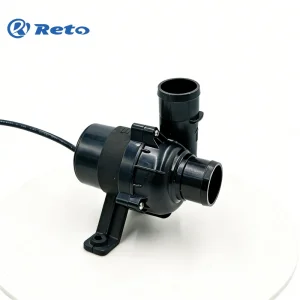
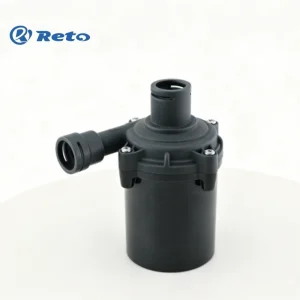
Custom Mini Micro DC Submersible Water Pump Suppliers, Manufacturer
Explore Specs
China Silent DC Mini Hot Water Recirculating Pump Supplier, Factory
Explore Specs
China 12V DC Booster Pump for Car RV Supplier, Suppliers
Explore Specs
China DC Energy-Saving Circulating Pump for Sanitary Ware Supplier, Suppliers
Explore Specs
Custom 12V DC Small Water Booster Pump For Smart Toilet Suppliers, Factory
Explore Specs
Custom Pressure Pump for Smart Toilet Flushing Manufacturer, Factory
Explore Specs
China Small DC Booster Water Submersible Pump Manufacturers, Factories
Explore Specs
Custom Quiet Mini Coolant Pump for EV Thermal Management Manufacturer, Factories
Explore Specs
Technical Q&A · Procurement Intelligence

Frequently Asked Questions: EV Overheating Water Pump Solutions

Direct technical answers addressing engineering risk factors, diagnostic trouble codes, supplier qualification, and production validation.

What diagnostic trouble codes (DTCs) typically indicate an EV coolant pump overheating or failure?
Common OBD-II and UDS automotive codes include: P0A84 / P0A85 (Hybrid/EV Battery Pack Coolant Pump Control Circuit Low/High), P0C32 (Battery Coolant Pump Performance / Dry Run), P26A3 (Auxiliary Coolant Pump "A" Stuck / Overheating), and U0110 / U019F (Lost Communication With Coolant Pump Motor Control Module via LIN or CAN). When these trigger, the Vehicle Control Unit (VCU) will throttle motor power or abort DC fast-charging to avert cell thermal degradation.
Why do conventional automotive water pumps fail when used in EV battery cooling loops?
Traditional internal combustion engine (ICE) mechanical belt-driven pumps operate intermittently and rely on engine RPM. EV cooling requires continuous, highly modulated, 24/7 variable-speed circulation under high static pressures across micro-channel cooling plates. Standard brushed DC or mechanical seal pumps experience rapid brush wear, carbon sparking, seal hardening, and moisture intrusion, leading to thermal lockout within 30,000–50,000 kilometers.
How does canned motor (magnetic drive) technology prevent thermal overheating in EV pumps?
A canned motor eliminates dynamic shaft seals altogether. The stationary stator is encapsulated in a high-dielectric, glass-fiber reinforced PPS/PPA isolation canister. The rotor runs directly immersed in the cooling fluid, utilizing the fluid itself to continuously lubricate high-precision ceramic (Zirconia $ZrO_2$ or Silicon Carbide $SiC$) sleeve bearings. This eliminates friction heat, prevents fluid leakage into the PCB driver, and guarantees continuous operation across a -40°C to +125°C ambient spectrum.
What quality credentials must a Chinese pump factory present for Tier-1 automotive qualification?
Global automakers mandate certification under IATF 16949:2016 and ISO 9001:2015. At the product level, suppliers must provide complete PPAP Level 3 documentation, including IMDS (International Material Data System) filings, RoHS/REACH chemical compliance, AEC-Q100/101 semiconductor qualification certificates, CISPR 25 Class 5 EMC test reports, and an audited DVP&R validating 20,000 to 30,000 hours of continuous operating life.
How do Chinese manufacturers guarantee rapid prototyping and customized motor winding?
By integrating mold tooling facilities, CNC machining, automated wire winding, and injection molding on a single campus (such as RETO's production base in Xiamen), engineering teams can adjust hydraulic volutes, port geometries (quick-connects, barb fittings), and electromagnetic coil turns within 3 to 4 weeks. Sample units undergo simulated bench testing and CFD fluid dynamic verification prior to steel tool hardening.
What smart protections are integrated into the pump's internal electronic driver?
Automotive-grade BLDC pump drivers integrate multi-stage closed-loop firmware safeguards: Over-temperature derating (automatically scaling back duty-cycle when internal thermistors reach 115°C), Locked-rotor protection (cutting current within 0.5s if debris wedges the impeller, followed by periodic low-torque unblocking pulses), Dry-running protection (detecting phase current drop-off under aeration), and Reverse polarity / Over-voltage suppression up to 36V load dumps.