High-performance brushless DC circulation, boosting, and thermal management units manufactured under rigorous IATF 16949 and ISO 9001 quality frameworks.
Analyzing the macroeconomic shift from diesel-powered mechanical lifting to intelligent, off-grid photovoltaic pumping arrays across critical emerging markets.
The global solar water pump market is accelerating toward a sustained 12.4% CAGR through 2032. Surging diesel fuel expenditures, remote electrification tariffs, and carbon mandate pressures have triggered parity in Levelized Cost of Water (LCOW). Agricultural and municipal water operations now amortize high-efficiency BLDC solar pumping installations within 14 to 22 operating months, completely obsoleting traditional internal combustion pumping assets.
Photovoltaic module cost reductions combined with wide-voltage DC brushless driver electronics have severed the dependence on utility grid expansion. Commercial agricultural hubs in sub-Saharan Africa, South Asia, and regional Latin America increasingly deploy decentralized solar water platforms that bypass erratic grid infrastructures entirely, guaranteeing irrigation cycles during peak drought windows without battery storage overhead.
Beyond conventional borehole lift, solar DC pumping architectures are being integrated into remote oil and gas telemetry, closed-loop industrial chillers, off-grid hydrogen electrolysis cooling arrays, and commercial EV charging stations. This paradigm shift demands high-durability, canned-motor designs with continuous IP68 encapsulation capable of handling non-potable, corrosive, and elevated thermal fluid matrixes.
As an IATF 16949 and ISO 9001 certified manufacturer with over a decade of core hydraulic engineering experience in Xiamen, China, Xiamen Reto Electric Appliances Co., Ltd. (RETO) bridges automotive-grade quality standards with commercial solar fluid pumping demands. Our annual capacity exceeding 2,000,000 units delivers scalable, custom-engineered BLDC solutions with 100% key-process quality validation.
How electronic commutation, sensorless algorithmic switching, and wide-bandgap semiconductors are redefining solar hydraulic efficiency and structural longevity.
Legacy solar pumps suffered significant cavitation and stalled torques under diffuse irradiance conditions. Modern trends center on onboard Field-Oriented Control (FOC) microcontrollers coupled with high-speed dynamic Maximum Power Point Tracking (MPPT) logic (>99.4% algorithmic tracking). By continuously tracking the array’s current-voltage knee point at sub-millisecond intervals, the pump modulates shaft RPM dynamically, maximizing hydraulic head output even during cloud shading intervals without tripping low-voltage lockouts.
Physical carbon brushes and mechanical shaft seals represent the primary failure points in severe-duty solar pumping installations. The industry standard has migrated decisively to canned-rotor, magnetically driven BLDC motors. Isolating the stator windings behind a hermetically laser-welded austenitic stainless steel or PPS containment shell eliminates dynamic friction seals completely. Fluid lubricated zirconia ceramic bearings and high-grade neodymium (NdFeB) rotors eliminate physical wear points entirely.
Modern commercial pumping infrastructures necessitate zero-downtime reliability. State-of-the-art solar water controllers integrate intelligent dual-feed inputs capable of seamlessly arbitrating between raw DC string voltages (12V, 24V, 48V, or high-voltage arrays up to 380V DC) and auxiliary AC genset or municipal grid lines. The system continuously prioritizes clean solar capture, seamlessly injecting fractional auxiliary AC power only when insolation drops below critical hydraulic head thresholds.
Intelligent pumping arrays increasingly feature integrated RS485 Modbus, CAN bus, and multi-protocol industrial telemetry. Operating metrics including stator winding temperature, instantaneous flow rate, line current, dry-run cavitation pressure signatures, and cumulative hydraulic yield are streamed to SCADA dashboards. Bidirectional digital speed inputs (PWM or 0-5V analog) allow central agricultural AI hubs to synchronize well water abstraction directly with localized soil moisture tensors.
A definitive technical evaluation of hydraulic efficiency, operational expenditures, and lifecycle longevity across critical procurement metrics.
| Evaluation Parameter | RETO Advanced Brushless DC (BLDC) | Conventional Brushed DC Pump | AC Induction + Inverter System |
|---|---|---|---|
| Hydraulic System Efficiency | 85% – 92% (Permanent Magnet Rotor) | 55% – 68% (Frictional Mechanical Losses) | 72% – 80% (Inverter Conversion Losses) |
| Maintenance Interval (MTBF) | >35,000 to 50,000 Continuous Hours | 1,500 – 3,000 Hours (Brush Replacement) | 15,000 – 25,000 Hours (Bearing Wear) |
| Low-Irradiance Performance | FOC Low-RPM High-Torque Pumping | Stalls at Low Voltage, Induces Stator Heat | Inverter Disconnects Below Cut-In Voltage |
| Electromagnetic Interference (EMI) | Ultra-Low; Compliant with CISPR 25 Class 5 | Severe Arcing Sparks; High RF Noise | Requires Heavy Inductive Line Chokes |
| Hermetic Ingress Protection | IP68 Fully Vacuum-Encapsulated / Canned | IP54 Typical; Prone to Condensation | IP55 – IP65; Susceptible to Thermal Gasket Set |
| Thermal Resistance & Head Range | -40°C to +125°C Continuous Liquid Temp | Limited to 60°C Liquid Max | -20°C to +90°C Liquid Max |
Tailored hydraulic configurations engineered for extreme climates, varying salinity levels, and deep-well borehole extraction profiles worldwide.
Deployed across North Africa, the Middle East, and Northwest China desert-greening zones. These specialized surface and submersible BLDC platforms interface directly with localized drip-tape irrigation networks. Operating at constant pressure profiles via internal PID control, they compensate for elevated ambient temperatures exceeding 50°C and tolerate high particulate grit via diamond-coated silicon carbide mechanical wear rings.
Operating in the Australian Outback, Patagonia, and the North American Great Plains. Deep-well helical rotor and multi-stage centrifugal solar pumps deliver vertical head pressures in excess of 150 meters. Equipped with integrated wireless dry-run sensors and tank float telemetry, these units autonomously safeguard aquifer resources while sustaining thousands of cattle dispersed across remote geographic pastures without human intervention.
Engineered specifically for brackish mangrove nurseries, shrimp farms, and saline water boosting in Southeast Asia. Constructed with non-metallic engineered PEEK/PVDF fluid chambers and non-magnetic titanium shafts, our solar-powered aeration and transfer pumps prevent galvanic corrosion, salt encrustation, and aggressive chemical degradation common to coastal environments.
Serving remote island villages, refugee relief encampments, and mountainous terrain where civil water pipeline expansion is economically prohibitive. RETO multi-stage solar pumping systems interface seamlessly with ultrafiltration (UF) and reverse osmosis (RO) membrane rigs, providing the sustained continuous booster pressures required to push raw surface water through micro-filtration arrays for clean potable drinking supplies.
Anticipating next-generation power electronics, wide-bandgap GaN inverters, magnetic levitation bearings, and autonomous satellite-linked edge actuation.
Transitioning driver stages from silicon MOSFETs to Gallium Nitride (GaN) and Silicon Carbide (SiC) semiconductors. Switching frequencies exceeding 100 kHz enable an 80% reduction in motor drive PCB footprints, eliminating bulky toroidal inductors and allowing full integration of the electronic driver directly into the pump motor endbell while reducing thermal dissapation losses.
Future deep-well solar borehole pumps incorporate passive magnetic levitation bearings that eliminate thrust washer wear during variable startup speeds. Even under sub-optimal morning sun angles, rotor shafts float within an electromagnetic suspension field, delivering near-frictionless rotation, virtually zero acoustic emission (<25 dB), and an unprecedented service life MTBF surpassing 60,000 hours.
Integrating ultra-low-power edge compute processors capable of interfacing directly with LEO satellite IoT constellations (Starlink / LoRaWAN). Pumps autonomously reconcile localized hydraulic pressure curves against regional hydrological satellite mapping and predictive weather forecasts, dynamically throttling extraction cycles to prevent aquifer depletion and optimize regional water replenishment tables.
Exhaustive engineering insights for procurement directors, mechanical engineers, and system integrators specifying custom solar water pumping platforms.
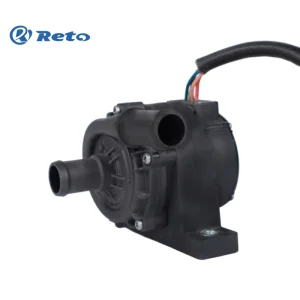
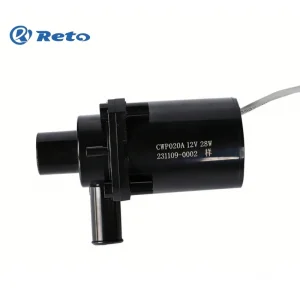
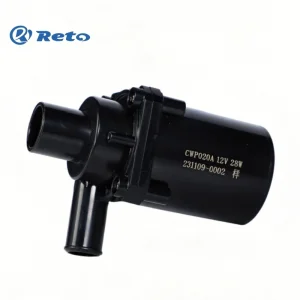
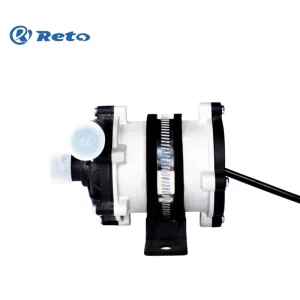
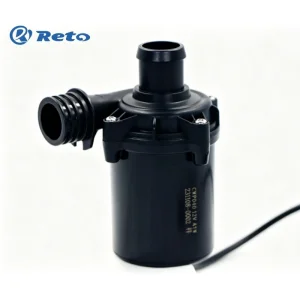
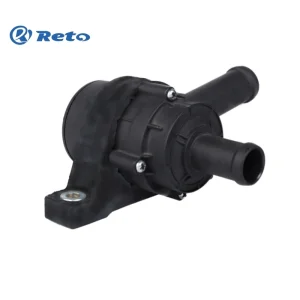
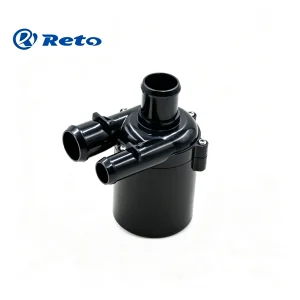
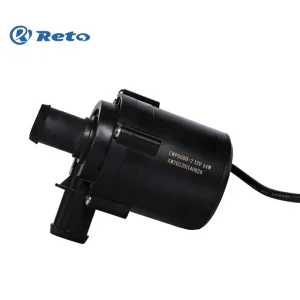
Precision-machined high-temperature, high-pressure, and quiet BLDC water pump units engineered for continuous commercial duty.
Accelerate your design cycle by submitting complete technical boundary parameters directly to RETO's Senior Engineering Board in Xiamen.
To achieve rapid first-pass design validation, prospective buyers and systems integrators are advised to formulate RFQ submissions covering:
Engage directly with our technical sales division for custom rapid prototyping, mold tool optimization, and comprehensive volume procurement terms.