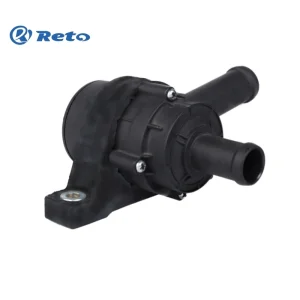
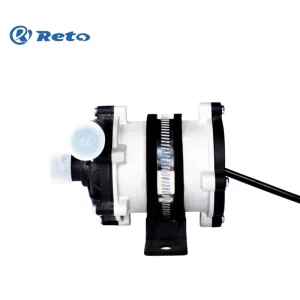
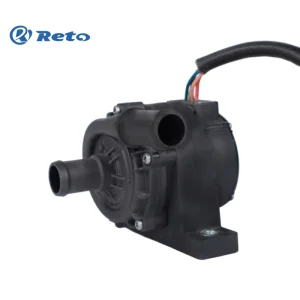
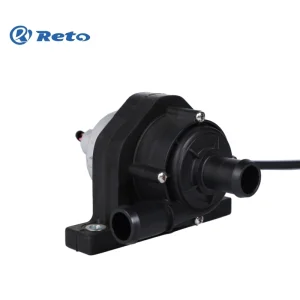
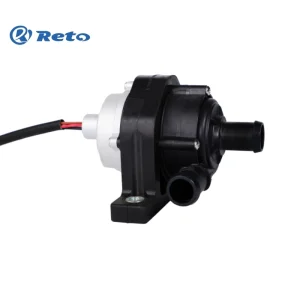
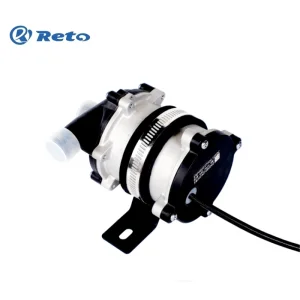
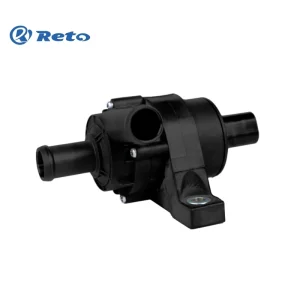
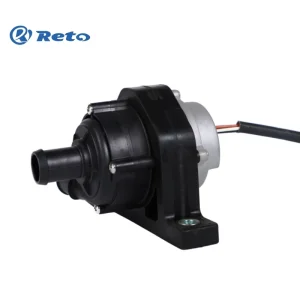
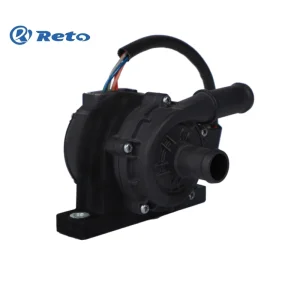
Engineered for high-vibration resilience, silent operations (<40dB), and micro-variable PWM modulation demanded by Silicon Valley mobility integrators.
Analyzing the Convergence of High-Compute Autonomy, Strict Emission Standards, and Fluidic Heat Dissipation.
The San Francisco Bay Area and Northern California represent not merely a regional market, but the supreme R&D testbed of the modern automotive revolution. Encompassing Silicon Valley tech corridors, autonomous vehicle (AV) test tracks, and major Tier-1 system architects, the San Francisco commercial landscape places radical demands on fluid dynamic components. As automated driving systems transition from Level 2+ assistance to Level 4/5 full autonomy (robotaxis, urban delivery shuttles, and commercial electrification fleets), thermal management has expanded far beyond simple engine temperature moderation.
Modern autonomous compute platforms in San Francisco consume upwards of 1.5 kW to 3 kW of electrical energy purely for sensor fusion (LiDAR, Radar, High-Resolution Vision Cameras) and algorithmic inferencing. Air cooling is structurally unviable in sealed vehicular compartments. Consequently, automotive liquid cooling pumps have emerged as the vital lifeline of system continuity. A thermal interruption in a compute unit running through downtown San Francisco traffic is not an inconvenience—it is a mission-critical safety threshold.
Delivering isolated liquid circuits that operate at dynamic flow rates to cool water blocks attached to high-TDP GPU/NPU acceleration boards under variable ambient temperatures.
Mitigating dendrite growth and lithium degradation through precise ±1.5°C thermal equalization across high-density 400V/800V prismatic and cylindrical pack structures.
Managing the ultra-dense localized heat spikes generated by fast-switching SiC MOSFET modules during violent acceleration and DC fast-charging cycles.
Why Mechanical Belt-Driven Pumps Are Obsolete and BLDC Architecture Dominates the Worldwide Landscape.
The macro automotive sector is undergoing its most radical architectural shift since the invention of the assembly line. Historically, internal combustion engine (ICE) vehicles utilized parasitic, mechanically driven coolant and oil pumps driven directly by timing chains or accessory serpentine belts. This design suffered from profound mechanical inefficiencies: fluid displacement was tied directly to engine rotational RPM, meaning pumps over-circulated at high highway cruising speeds (wasting mechanical kilowatts) and under-circulated during idle or post-shutoff heat soak (causing localized metal fatigue).
Today, the global market demands decoupled, electronically regulated auxiliary and primary fluid loops. Brushless DC (BLDC) automotive pumps solve this paradigm entirely. Through intelligent Field-Oriented Control (FOC) and CAN-bus/LIN-bus bi-directional communication, pumps operate strictly on-demand. According to international automotive engineering standards, switching from mechanical to intelligent BLDC thermal circuits yields an immediate 2% to 4% improvement in battery range for electric vehicles and equivalent CO2 reductions in hybrid platforms.
| Evaluation Parameter | Legacy Mechanical Automotive Pumps | Brushless DC (BLDC) Smart Automotive Pumps | OEM Impact & Strategic ROI |
|---|---|---|---|
| Displacement Control | Fixed ratio linked to engine crankshaft RPM | Continuous micro-variable PWM / LIN-bus modulation | Eliminates parasitical horsepower loss across driving cycles |
| Dynamic Thermal Response | Passive wax thermostatic valves (slow latency) | Sub-second electronic telemetry adjustment | Prevents thermal runaways in fast-charging battery cells |
| Mean Time Between Failure (MTBF) | Wear-prone dynamic mechanical face seals | Seal-less canned motor design with magnetic rotor coupling | Exceeds 50,000 operating hours with zero fluid weeping |
| In-Cabin NVH Footprint | Transmits engine vibration and belt whine | Acoustically isolated housing (<38 dB acoustic floor) | Imperative for ultra-silent EV passenger environments |
Collaborate directly with our senior application engineering team to obtain custom flow-rate simulations, CAD step models, and prototype samples.
Deep-Dive Architectural Implementations for Tier-1 Systems and Extreme Operating Envelopes.
Traditional automotive coolant pumps utilize mechanical seals consisting of carbon-graphite rings rotating against silicon carbide faces. These assemblies invariably degrade over time under temperature cycling (-40°C to +125°C), leading to coolant ingress into electronic control boards or external drip leaks. Our automotive platforms employ completely hermetic, canned rotor isolation chambers molded from PPS-GF40 (polyphenylene sulfide reinforced with 40% glass fiber). The wet rotor is encased inside a static separation cup, completely decoupling high-pressure fluid loops from dry stator winding packs and driver PCB electronics.
In high-temperature operations where 50/50 ethylene glycol-water mixtures exceed 95°C under high-altitude Bay Area terrain or highway cruising conditions, localized pump inlet pressure drops below vapor pressure, generating cavitation bubbles that erode impellers and generate noise. Our computational fluid dynamics (CFD) optimized closed impellers feature curved backward vanes and expanded volute channels. This geometry sustains positive net positive suction head (NPSH), suppresses bubble formation, and preserves volumetric pumping efficiency above 78% across dynamic flow spectrums.
High-voltage electric powertrains contain extreme electromagnetic noise generated by main drive inverters and DC-DC converters. Conversely, sensitive sensor wiring harnesses, radar transmitters, and GPS antennas must not be disturbed by auxiliary motor commutation. Our integrated smart pump controllers are certified to strict CISPR 25 Class 5 emission standards and ISO 11452-2/4 immunity protocols. By utilizing multi-stage common mode chokes, solid-state SMD filtering capacitors, and integrated metallic shielding cans, we ensure flawless electro-magnetic coexistence.
In lieu of traditional oil-lubricated ball bearings which seize when coolant detergents strip lubricant, our motors feature ultra-high purity zirconium oxide (ZrO2) or silicon nitride (Si3N4) ceramic shafts paired with self-lubricating graphite-carbon composite bushings. Fluid-film hydrodynamic lubrication creates near-frictionless operation, impervious to chemical corrosion from long-life organic acid technology (OAT) coolants, enabling maintenance-free continuous operation exceeding automotive lifecycle demands.
How San Francisco Autonomous Engineering Teams Accelerate Development Timelines.
The modern electric vehicle chassis no longer accommodates fragmented plumbing. Early generation EVs incorporated up to five separate pumps, multiple three-way valves, expansion tanks, and yards of convoluted rubber hosing. This led to assembly line complexity, high pressure drop penalties, and elevated failure point probabilities. In the San Francisco technology corridor, automotive architects are rapidly moving toward centralized thermal management modules—combining fluid manifolds, heat exchangers, directional multi-port proportional valves, and intelligent BLDC pumps into single drop-in structural sub-assemblies.
As an agile, vertically integrated manufacturer, we collaborate directly with OEM design teams to co-develop pump volutes molded directly into multi-port manifold blocks. This cuts package envelope volume by up to 35%, decreases overall dry mass, and completely eliminates inter-connecting hose clamps that frequently represent the primary leak source in long-term field validation.
Clarifications on Technical Validation, Certifications, and Production Capability.
All our production lines operate under audited IATF 16949:2016 and ISO 9001 quality management systems. Furthermore, our pumps are fully tested and certified to CE, RoHS, and REACH standards, with complete PPAP Level 3 documentation packages available for Tier-1 automotive sourcing audits.
Yes. In addition to standard 4-wire PWM duty-cycle speed control and frequency generation (FG) RPM feedback, our electronic driver platforms support LIN 2.1 / LIN 2.2 and automotive CAN bus protocols. This enables real-time diagnostic reporting such as dry-run protection, stall detection, over-temperature throttling, and over/under-voltage cutoffs.
Our validation protocols subject pumps to comprehensive design verification (DV) and process verification (PV) testing. This includes 500-hour continuous thermal shock testing (-40°C to +125°C), 3-axis high-amplitude vibration shaking matching ISO 16750-3, ingress protection testing up to IP67/IP6K9K, and 10,000-hour accelerated lifecycle run-ins.
We offer extensive custom engineering support. Our R&D division has over 10 senior design engineers capable of modifying volute geometries, inlet/outlet hose barb diameters (e.g., standard quick-connect VDA ports or 16mm/20mm barbed connections), custom automotive wiring pigtails, and tailor-made anti-vibration bracket mounting orientations.
Engineered for high reliability, dynamic modulation, and severe operational duty cycles.