Validated for continuous ethylene glycol-water loop circulation, cabin heating assistance, and active inverter heat suppression in compliance with stringent European standards.
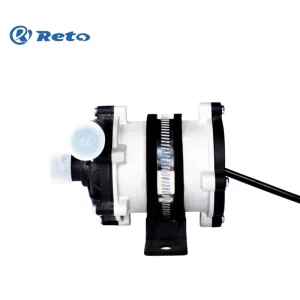
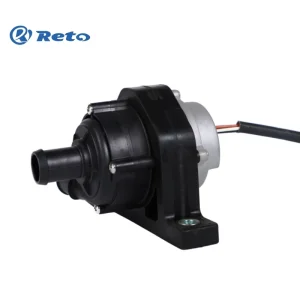
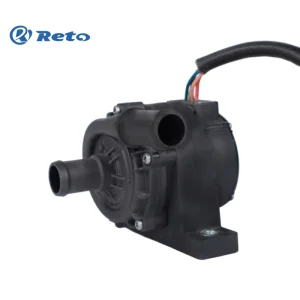
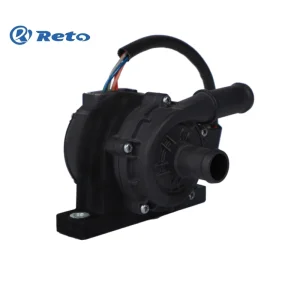
The French automotive sector is undergoing an unprecedented industrial transformation, steered by national decarbonization programs such as the France 2030 investment blueprint and stringent directives governed by the Plateforme Automobile (PFA). With national targets aiming to produce two million electrified vehicles (BEVs and PHEVs) locally by the decade's end, the legacy paradigm of belt-driven mechanical pumps is rapidly becoming obsolete. In modern electric and hybrid powertrains, mechanical auxiliary drives have been displaced by intelligent, electronically commutated brushless DC (BLDC) water pumps capable of decoupled, on-demand thermal management.
This market shift is anchored by northern France’s emerging "Battery Valley" (Vallée de la Batterie)—an industrial corridor encompassing gigafactories established by ACC (Automotive Cells Company) in Billy-Berclau/Douvrin, Envision AESC in Douai, and Verkor in Dunkirk. For French Tier-1 automotive systems integrators and major OEM groups such as Stellantis (Poissy, Sochaux, Mulhouse) and Renault Group (ElectriCity cluster encompassing Douai, Maubeuge, and Ruitz), vehicle thermal efficiency is no longer simply about preventing engine overheating. It directly dictates winter battery operating range, DC fast-charging acceptance rates, life expectancy of prismatic and pouch battery cells, and the continuous output capability of high-power silicon carbide (SiC) traction inverters.
Consequently, French automotive procurement authorities, engineering heads, and platform architects require pump manufacturing partners that offer far more than basic hydraulic assemblies. Sourcing teams demand tier-standard manufacturing maturity, automotive functional safety (ISO 26262), seamless electromagnetic compatibility (EMC CISPR 25 Class 5), complete chemical trace documentation via the International Material Data System (IMDS), and deep supply-chain resilience capable of mitigating volatile lead times.
Thermal pumps specifically calibrated for northern French gigafactory battery chemistries (high-nickel NMC and emerging LFP/solid-state modules), ensuring precise liquid thermal stabilization within narrow delta-T margins of ±2°C.
Electric vehicle cabins lack internal combustion noise masking. Our magnetic canned-rotor configurations operate below 35 dB(A), fully satisfying the strict subjective acoustics and passenger NVH specifications of European OEMs.
Comprehensive engineering documentation aligning with European Battery Regulation (EU) 2023/1542, EU RoHS 2011/65/EU, REACH SVHC declarations, and verifiable Life Cycle Assessment (LCA) data on embedded carbon.
The engineering evolution of automotive cooling pumps has transitioned from simple mechanical volumetric displacement into multi-domain mechatronic actuation. In electrified thermal systems, the pump must actively communicate with the central Thermal Domain Controller (TDC) or Vehicle Control Unit (VCU) to synchronize thermal dissipation across disparate components, ranging from high-voltage DC-DC converters to cabin heat pumps operating on high-pressure R290 or R1234yf refrigerants.
Unlike brushed DC or belt-driven pumps that exhibit fixed flow-versus-RPM ratios, our electronic BLDC pumps utilize dynamic Field-Oriented Control (FOC) algorithms coupled with sensorless position estimation. This architecture provides instantaneous torque response across varying coolant viscosities (water-glycol mixtures down to -40°C) while maintaining electrical efficiency above 82% across 70% of the operating envelope.
Our technical roadmap centers on four engineering breakthroughs designed to solve the chronic pain points encountered by vehicle system architects:
Eliminates mechanical shaft seals entirely. A deep-drawn, non-magnetic stainless steel or PPS containment sleeve hermetically segregates the stator windings from the conductive coolant fluid, preventing seal wear and catastrophic coolant leakage over the entire 15-year vehicle service lifecycle.
Utilizing high-order Computational Fluid Dynamics (CFD) optimization, the impeller blade profiles feature variable curvature angles that reduce localized low-pressure vortices. This suppression prevents cavitation pitting during high-temperature thermal runaways up to 125°C under low NPSH conditions.
Real-time bidirectional diagnostics reporting pump actual RPM, internal PCB junction temperature, bus current draw, locked rotor detection, dry-run warning states, and high-voltage supply transient protection adhering to ISO 7637-2 pulse benchmarks.
| Evaluation Parameter | Legacy Brushed DC Pump | Conventional Industrial BLDC | Automotive-Grade Smart BLDC (RETO Spec) |
|---|---|---|---|
| Commutation Mechanism | Mechanical Carbon Brushes & Commutator | Hall Sensor Discrete Commutation | ✓ Sensorless Field-Oriented Control (FOC) |
| Operational Lifetime (MTBF) | 2,500 – 4,000 Hours (Brush Limited) | 15,000 – 20,000 Hours | ✓ > 50,000 Hours (Continuous Heavy Duty) |
| Hydraulic Fluid Isolation | Dynamic Mechanical Face Seal (Wear Point) | Elastomer O-Ring Barrier | ✓ Hermetically Canned Rotor Isolation (Zero Leakage) |
| Acoustic Signature (1m distance) | > 52 dB(A) with electrical sparking noise | 42 – 46 dB(A) with motor cogging | ✓ ≤ 35 dB(A) Ultra-Low Psychoacoustic Profile |
| Control Interface & Diagnostic | Crude Voltage Trimming (0–12V DC) | Open-loop PWM duty cycle only | ✓ LIN 2.1 / CAN-FD with full diagnostic fault reporting |
| Automotive Compliance Level | Commercial standard / None | ISO 9001 generic industrial | ✓ IATF 16949 / ISO 26262 ASIL-B / CISPR 25 Class 5 |
In modern European EV platform designs—such as Stellantis STLA Small/Medium/Large architectures and Renault’s Ampere platform—thermal management is consolidated into highly integrated loops that exchange calories dynamically via multi-way coolant control valves and high-efficiency plate heat exchangers. Our pumps serve as the hydraulic heart across these dedicated subsystems:
Maintains lithium-ion pouch, cylindrical, or prismatic cells within the optimal 20°C to 35°C window. During 350kW ultra-fast DC charging along French motorway networks (e.g., Sanef, APRR corridors), the pump surges to maximum flow to extract resistive Joule heat and prevent localized thermal runaway.
High-power-density e-motors generate concentrated thermal spikes in hair-pin stator windings and silicon carbide MOSFET bridges during aggressive acceleration. Our low-vibration pumps deliver stable volumetric displacement against high hydraulic resistance curves.
In winter ambient conditions across northern France, resistive PTC heating rapidly drains battery capacity. Integrated with indirect heat pump systems, our BLDC water pumps circulate thermal calories harvested from electric drive waste heat directly into the cabin heater core.
Entering the European automotive supply chain requires verified, audited compliance across multiple technical and regulatory disciplines. RETO operates an advanced automotive engineering test facility in strict accordance with the following international frameworks:
Our complete automotive pump manufacturing line operates under third-party TÜV Rheinland audited IATF 16949 protocols. Process repeatability is validated through rigorous SPC, CPK > 1.67 metrics, and 100% End-of-Line (EOL) testing recorded in permanent batch databases.
High-voltage battery cables and inverter switching create severe electromagnetic environments. Our embedded motor controllers feature on-board multi-stage pi-filtering, common-mode chokes, and solid shielding, verified to eliminate radio and sensor interference.
Pumps undergo rigorous thermal cycling according to ISO 16750-4 (-40°C to +125°C), multi-axis random vibration profiles according to ISO 16750-3 Test VII, and pressurized immersion sealing validated to IP67 and high-pressure steam cleaning IP6K9K.
Headquartered in Xiamen, China, our advanced manufacturing hub combines deep vertical integration with Industry 4.0 automated execution. For French Tier-1 procurement managers, navigating supply vulnerability and fluctuating component lead times is a core risk. Our manufacturing infrastructure directly resolves these concerns through automated, precision-controlled production flow:
Precision multi-axis automated CNC winding systems guarantee consistent copper fill factors, balanced phase resistances (< 1% deviation), and automated insulation resistance checking up to 1500V DC breakdown limits.
100% of injection-molded magnetic impellers undergo robotic two-plane dynamic balancing down to residual unbalance levels of < 0.5 mg·mm, eliminating radial shaft vibration and acoustic harmonics at all rotational velocities up to 6,500 RPM.
Every single pump housing and canned barrier undergoes automated helium sniff testing before leaving the assembly cell, assuring micro-leak tightness lower than 1×10⁻⁶ mbar·l/s for absolute long-term coolant retention.
Global procurement teams at French automotive enterprises navigate intense commercial pressures: meeting aggressive cost-down targets while avoiding quality escapes that lead to warranty claims or recall campaigns. RETO bridges the gap between cost efficiency and automotive pedigree through an established Advanced Product Quality Planning (APQP) framework:
By producing proprietary BLDC motor cores, controllers, and injection toolings in-house, we eliminate intermediate subcontractor markups. This vertical architecture yields a 20% to 35% unit cost reduction compared to domestic European pump makers without sacrificing technical performance.
We provide full PPAP Level 3 documentation dossiers upon prototype sign-off: Design Failure Mode and Effects Analysis (DFMEA), Process Flow Diagrams, Process FMEA, Control Plans, Gage R&R studies, Material Certification, and dimensional CMM inspection reports.
Direct intermodal maritime connections from Xiamen to major French entry ports (Port of Le Havre, Port of Marseille-Fos), complemented by express air-freight options to Paris-Charles de Gaulle (CDG) for rapid sample evaluation, pre-series runs, and tooling trials.
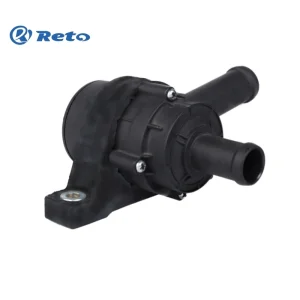
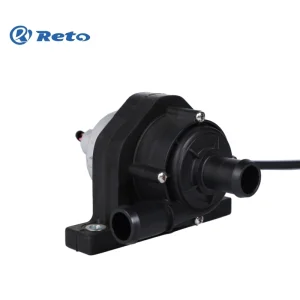
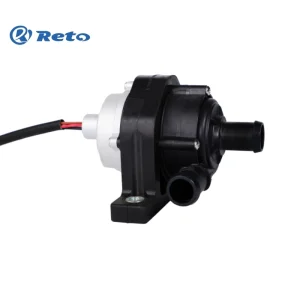
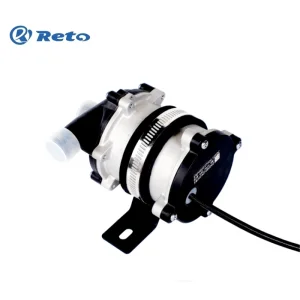
Browse our extended product portfolio of brushless DC circulating, cooling, and boosting pumps, specifically tailored for integration into French electric cars, light commercial vehicles (LCVs), and industrial mobile machinery.
Direct technical answers addressing system validation, environmental qualification, and procurement logistics for French Tier-1 automotive partners.
Our automotive pumps are engineered and tested in climatic chambers down to -40°C in conformance with ISO 16750-4. When operating with standard European 50/50 ethylene glycol and water solutions, the high-torque FOC motor control algorithm detects increased fluid dynamic viscosity and applies boosted starting torque to prevent stall conditions and cold-start cavitation.
Yes. Our electronics R&D team can customize LIN 2.1 / 2.2 / SAE J2602 software stacks or high-speed CAN / CAN-FD interfaces to match your specific vehicle architecture. This allows your central VCU to monitor pump speed, power consumption, internal electronics temperature, and dynamic error flags (e.g., dry-running, over-temperature, over-voltage, rotor blockage).
Our automotive brushless canned-motor pumps have an engineered Mean Time Between Failures (MTBF) exceeding 50,000 continuous operating hours. Because there are no mechanical carbon brushes or dynamic mechanical shaft seals to wear out, lifecycle limits are primarily determined by high-purity ceramic shaft and carbon-graphite bearing wear, which operate in frictionless hydrodynamic lubrication regimes.
We supply complete PPAP Level 3 documentation packages according to AIAG standards. This includes Design Records, DFMEA, PFMEA, Process Flow Charts, Dimensional Results (CMM), Material Test Results, IMDS database submissions, and initial process capability studies demonstrating CPK > 1.67 on critical safety dimensions.
In electric vehicles without internal combustion engine masking noise, acoustic criteria are severe. Our canned-rotor designs, magnetic balancing, and sinewave FOC drive yield an acoustic emission footprint lower than 35 dB(A) at a distance of 1 meter under nominal operating loads, avoiding irritating high-frequency whine or structural resonance.
Yes. With the emergence of direct immersion cooling for extreme fast-charging EV batteries, we offer custom-engineered hydraulic wet-ends constructed from fluoropolymers, high-grade PPS, and specialized fluorosilicone O-rings that resist non-conductive synthetic hydrocarbons and ester-based dielectric cooling fluids without swelling or chemical extraction.
For custom hydraulic volutes, port geometries, or mounting brackets, rapid 3D SLA/SLS functional prototypes can be delivered in 7 to 10 working days. Soft-tooling for validation samples requires 3 to 4 weeks, while hardened multi-cavity automotive production injection tooling takes 6 to 8 weeks, backed by accelerated life testing in our Xiamen test laboratory.
We provide full DDP (Delivered Duty Paid), CIF, or FOB shipment terms to French hubs such as Le Havre, Fos-sur-Mer, or Lyon via intermodal rail/sea. Furthermore, in compliance with European Battery Regulation 2023/1542, we provide cradle-to-gate Life Cycle Assessment (LCA) data to verify the embedded carbon intensity of each pump assembly.