Engineered for high-viscosity cold fluid start (-40°C), precise PWM variable modulation, and hermetically sealed brushless DC drive units.
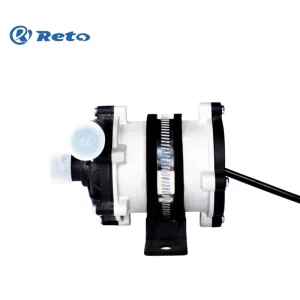
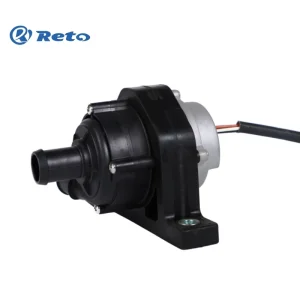
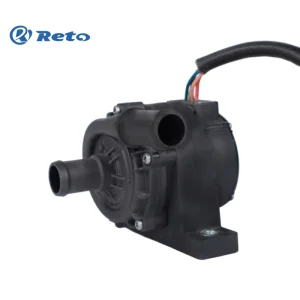
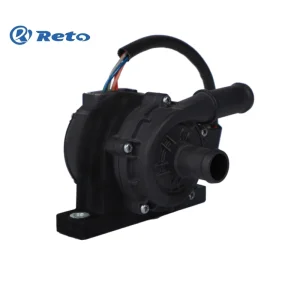
Examining supply chain dynamics across Ontario's automotive heartland, Quebec's battery corridor, and the engineering imperatives of extreme northern climates.
The Canadian automotive landscape is undergoing a monumental transition. Anchored in Southern Ontario—spanning Windsor, Oakville, Oshawa, Brampton, and Cambridge—alongside the emerging clean-tech and battery materials nexus in Bécancour, Quebec, the country represents one of the world's most sophisticated vehicle assembly networks. Global automakers and Tier-1 integrators are deploying multi-billion-dollar capital investments into battery electric vehicle (BEV), plug-in hybrid (PHEV), and hydrogen fuel cell vehicle (FCEV) manufacturing. However, supplying automotive pumps into this market demands technical capability far beyond conventional domestic appliance engineering.
The Sub-Zero Cold Start Reality: In Canadian winter operations where ambient temperatures plunge to -40°C (-40°F), 50/50 ethylene glycol-water coolant mixtures experience exponential surges in kinematic viscosity (escalating from ~1 cSt at 100°C to over 25–30 cSt at -40°C). Conventional pumps encounter severe hydraulic drag, magnetic stall, or dry-friction bearing seizure during initial cranking. RETO’s specialized automotive BLDC pumps integrate field-oriented control (FOC) motor drive electronics with dynamic stall recovery, zero-cogging wet-rotor geometries, and heavy-duty polyphenylene sulfide (PPS) wear sleeves to guarantee instantaneous fluid displacement under brutal polar conditions.
Furthermore, the Canada-United States-Mexico Agreement (USMCA / CUSMA) imposes stringent Regional Value Content (RVC) thresholds, elevating the necessity for Tier-1 and Tier-2 suppliers to establish thoroughly audited, traceable component sourcing. Sourcing automotive fluid pumps requires verifiable materials declaration through the International Material Data System (IMDS), full compliance with RoHS and REACH standards, and adherence to production part approval processes (PPAP Level 3) with full Failure Mode and Effects Analysis (DFMEA/PFMEA).
Critical evaluation factors used by global procurement committees when validating Tier-2 hydraulic pump partners.
Integration of fail-safe operational states, over-voltage/under-voltage protection, dry-run stall detection, and real-time diagnostic feedback via LIN 2.X or CAN-FD telemetry networks.
Automotive electronics require stringent electromagnetic compatibility (EMC). Our onboard controllers incorporate four-layer PCB layouts, differential chokes, and optimized pulse-width modulation (PWM) slew rates.
Zero carbon-brush wear architecture. Static seal containment utilizing high-grade EPDM fluoropolymer O-rings with custom-molded ceramic shafts and high-purity graphite bushings for maintenance-free service.
In contemporary electric vehicle platforms, thermal management is no longer a localized cooling loop; it is a unified, multi-zone thermodynamic network. A single vehicle may feature between 3 to 6 dedicated electric auxiliary pumps handling disparate temperature loops:
1. Traction Battery Loop: Requires delicate temperature stability (target: 20°C to 35°C) to prevent lithium plating during fast-charging while precluding thermal runaway events. Our pumps offer ultra-low pulsation and high flow rates (up to 40–80 L/min at 40 kPa) to equalize temperature across large pack plates.
2. Power Electronics & Inverter Loop: Silicon carbide (SiC) modules operate under intense thermal flux spikes. Rapid response variable-speed pumps react within milliseconds to thermal sensor inputs, ramping up flow to maintain junction temperatures safely below 150°C.
3. Cabin Climate Control & Heat Pump Scavenging: Sourcing waste heat from the motor and ambient atmosphere requires reversible, multi-port valve and pump clusters capable of maintaining silent operation (less than 35 dB(A) at 1 meter).
| Specification Parameter | Auxiliary Turbo Coolant Loop | BEV Battery Cold Plate Loop | E-Axle Motor Cooling Loop |
|---|---|---|---|
| Nominal Operating Voltage | 12V DC (9V – 16V Operating) | 12V / 24V DC Auto-Switching | 12V DC (PWM Controlled) |
| Flow Rate Range | 15 – 35 L/min @ 30 kPa | 40 – 90 L/min @ 45 kPa | 20 – 50 L/min @ 50 kPa |
| Operating Fluid Media | 50:50 Water/Ethylene Glycol | Dielectric Fluid or 50:50 Glycol | 50:50 Glycol or Low-Viscosity ATF |
| Acoustic Emission (NVH) | < 42 dB(A) @ 1 Meter | < 38 dB(A) @ 1 Meter | < 45 dB(A) @ 1 Meter |
| Ingress Protection Rating | IP67 / IP6K9K (High-Pressure Wash) | IP67 / IP6K9K Hermetic | IP67 / IP6K9K Immersion-proof |
| Control & Telemetry | PWM Linear Speed (50Hz–1kHz) | LIN 2.1 / CAN-FD Feedback | PWM / LIN Bidirectional Status |
Pioneering hydraulic innovations built to address the high volumetric efficiency requirements of future-generation architectures.
Traditional automotive water pumps have historically suffered from hydraulic cavitation when operating near boiling points in pressurized combustion cooling systems, or when operating with highly dense fluids at -35°C in northern Canadian environments. RETO’s R&D engineering division in Xiamen, collaborating with international tier partners, has formulated a multi-tiered technological roadmap focusing on three key pillars:
Unlike trapezoidal commutation or standard 6-step Hall sensor motor drives that produce torque ripples and high-frequency acoustic whine, our sensorless FOC algorithms employ continuous sinusoidal current excitation. By reading back-EMF vectors with high-precision shunts, the integrated microprocessor determines rotor angle within fractions of an electrical degree. This yields up to a 15% increase in electrical-to-hydraulic conversion efficiency, eliminates cogging torque during polar cold starts, and minimizes cabin NVH (Noise, Vibration, Harshness) to near-silent levels.
By leveraging 3D CFD transient hydrodynamic simulations, our impeller blade curvature minimizes the local low-pressure vortex zones that induce vapor-bubble inception (cavitation). The static pressure recovery within the diffuser is maximized, reducing Net Positive Suction Head required (NPSHr). This guarantees that even under rapid acceleration or extreme thermal cycling, the pump impeller preserves laminar boundary-layer flow without erosive pitting or acoustic rattle.
Automotive under-hood electronics are exposed to road splash, calcium chloride de-icing salts used on Canadian highways, and severe vibration profiles (SAE J1455 standards). RETO employs a vacuum potting encapsulation process utilizing automotive-grade silicone and polyurethane resins. The stator winding is completely hermetically sealed from the wet rotor cavity, yielding lifetime ingress protection up to IP6K9K and thermal resilience ranging from -40°C to +150°C.
Real-time current signature analysis dynamically adjusts motor torque when detecting high-viscosity cold fluid, preventing stall shutdowns at sub-zero Canadian winter temperatures.
High-purity sintered zirconium oxide (ZrO2) and silicon carbide (SiC) thrust bearings eliminate mechanical scoring, providing virtually friction-free rotation for continuous-duty operation.
Full support for LIN 2.2 and CAN-FD communication protocols enables real-time diagnostic reporting for speed feedback, over-temperature flags, and dry-run fault identification directly to the vehicle ECU.
Ensuring complete supply chain transparency, comprehensive PPAP documentation, and rapid logistics to North American OEM assembly plants.
Entering the Canadian OEM supply chain necessitates an uncompromising commitment to verified quality systems. Xiamen Reto Electric Appliances Co., Ltd. (RETO) operates modern manufacturing centers certified under IATF 16949 (Automotive Quality Management System), ISO 9001, and verified by TÜV Rheinland. Our comprehensive production protocols are structured to support both Tier-1 system assemblers and specialized EV manufacturers with zero-defect methodologies.
Strict Inspection Benchmark: Every pump off our automated production line undergoes 100% automated end-of-line (EOL) testing, encompassing dynamic hydraulic performance verification (P-Q curve validation), high-voltage dielectric insulation resistance testing, hermetic helium leak detection, and precision acoustic Fourier-transform spectral analysis. Defect rates are controlled below strict parts-per-million (PPM) thresholds.
Our international commercial engineering desk coordinates directly with North American procurement teams, providing:
• Full PPAP Level 3 Submission: Inclusive of dimensional evaluation, Process Capability Studies (Cpk > 1.67), Control Plans, Gage R&R, and Material Certifications.
• IMDS & Conflict Minerals Reporting: Full substance disclosure guaranteeing non-hazardous compliance with Canadian Environmental Protection Act (CEPA) and global REACH/RoHS mandates.
• Rapid Prototyping & Customization: Rapid tooling and 3D SLA hydraulic sampling allow customized port geometries, custom electrical pigtails, and tailored mounting brackets delivered within accelerated turnaround windows.
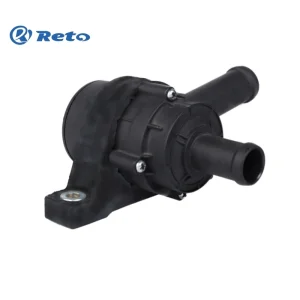
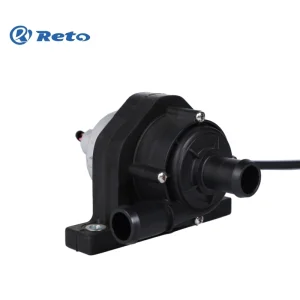
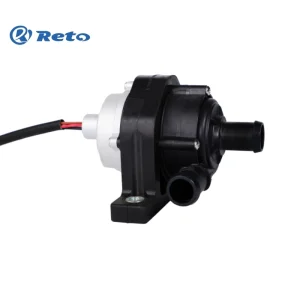
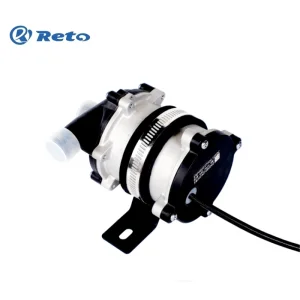
Explore our targeted selection of high-efficiency pumps designed for EV batteries, motor inverters, and high-duty commercial vehicles in Canada.
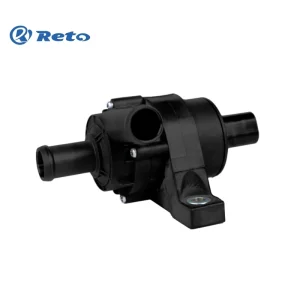
Clear, engineering-backed answers addressing the operational, design, and regulatory parameters critical to Canadian sourcing engineers.
Our pumps feature smart microcontroller firmware programmed with dynamic current monitoring. When cold-cranking in high-viscosity 50/50 ethylene glycol at -40°C, the driver avoids over-current tripping by initiating a low-frequency micro-step excitation sequence. This prevents magnetic rotor decoupling, warms the internal fluid cavity through controlled inductive dissipation, and achieves stable flow within seconds of activation.
We provide multiple telemetry options based on platform architecture. Standard configurations support frequency-generator (FG) tachometer output pulses. Advanced platforms integrate LIN 2.X or CAN-FD transceivers providing bidirectional communication: real-time speed monitoring, motor temperature, supply voltage, dry-run cavitation warnings, locked-rotor fault codes, and predictive wear flags directly accessible by master powertrain control units.
To eliminate high-frequency radiation that can interfere with vehicle radar, ADAS sensors, and onboard infotainment, RETO designs automotive pumps with onboard LC filtering, metallic Faraday can shields over the driver stage, multi-layer ground-plane decoupling, and soft-switching sinusoidal PWM profiles that suppress dV/dt transient spikes, ensuring full compliance with CISPR 25 Class 5 emission standards.
Yes. We routinely develop customized pump volutes for OEM projects. Options include quick-connect automotive spigots (e.g., VDA-style quick disconnects, SAE barb fittings), 90-degree rotated inlet/outlet geometries, and integrated isolation dampeners. Custom mold tooling can be finalized in as few as 30–45 days, supported by rapid SLA prototypes for early chassis mockups.
Connect with RETO's automotive fluid applications engineering team to review system schematics, flow targets, and PPAP submission timelines.