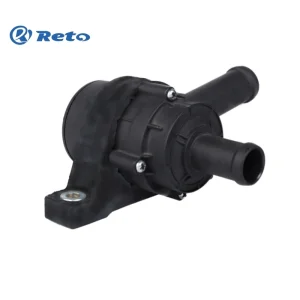
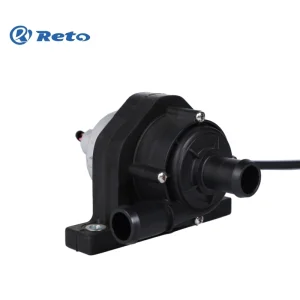
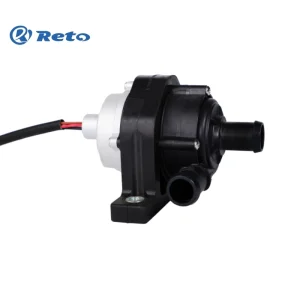
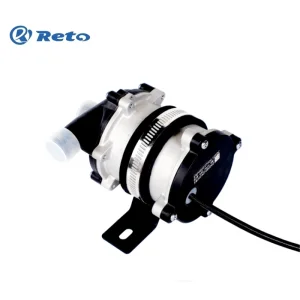
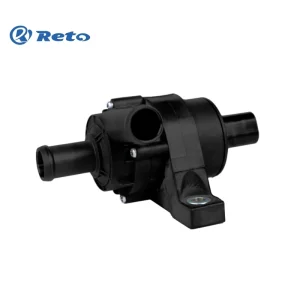
Engineered for sustained duty cycles across Metro Manila's high-density traffic and demanding inter-island freight systems, these automotive liquid cooling water pumps provide precision thermal management.
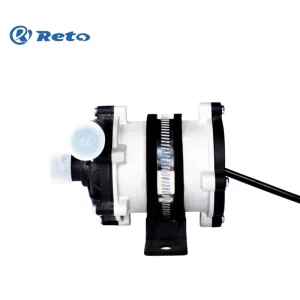
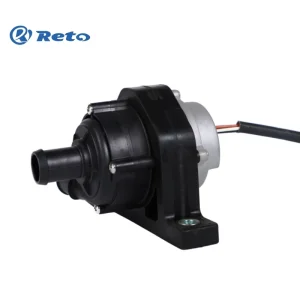
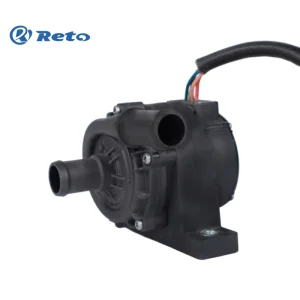
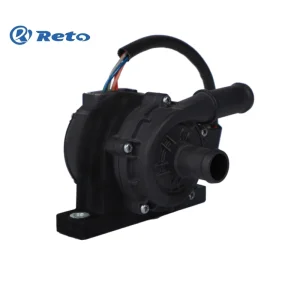
Strategic analysis of local supply chains, modernization programs (PUVMP), and extreme climate requirements governing fluid control systems across Luzon, Visayas, and Mindanao.
The Philippine Public Utility Vehicle Modernization Program (PUVMP) is transitioning over 200,000 internal combustion jeepneys to Euro-4 and fully electric powertrains (e-Jeepneys). This rapid transition demands compact 12V and 24V BLDC electric water pumps to cool high-discharge lithium iron phosphate (LFP) battery packs during slow, stop-and-go routes in tropical urban conditions.
Operating temperatures across Philippine roads regularly push engine bays and under-chassis compartments beyond 65°C ambient, paired with sustained 90%+ relative humidity. Traditional mechanical belt-driven pumps experience parasitical losses and seal degradation under these conditions. Sealed, electronically commutated brushless pumps ensure leak-proof fluid cycling without mechanical shaft seals.
Industrial clusters within the Philippine Economic Zone Authority (PEZA) in Laguna, Cavite, and Batangas house Tier-1 assembly lines and parts fabrication plants. Manufacturers require IATF 16949 verified supply lines providing stable JIT (Just-in-Time) delivery, strict PPM defect control, and comprehensive PPAP documentation to maintain automotive certification.
Our engineering division collaborates directly with automotive OEMs and Tier-1 suppliers to customize voltage, impeller dynamics, PWM control, and port geometries.
Worldwide automotive manufacturing has decisively pivoted from engine-dependent belt pumps to intelligent, decoupled BLDC thermal management systems to meet global carbon targets.
Traditional mechanical pumps consume power directly proportional to engine revolutions per minute (RPM), leading to parasitic drag at high highway speeds and under-cooling during low-speed idle. Electronic Brushless DC pumps operate entirely on demand via Pulse Width Modulation (PWM) or Controller Area Network (CAN-bus) telemetry, consuming electrical energy only when the thermal threshold requires it. This cuts vehicle energy usage by 2% to 4% while extending battery range.
Conventional pumps utilize mechanical carbon-ceramic or dynamic rubber face seals that are prone to wear, particulate abrasion, and eventual coolant fluid leakage onto critical electrical subsystems. RETO BLDC pumps utilize a brushless canned motor design where the fluid-immersed impeller assembly is statically hermetically sealed from the drive stator via engineering fluoroplastics, ensuring zero shaft wear and leak-free operations over 25,000 continuous hours.
Ensuring complete regulatory conformity for automotive platforms entering the Philippine market and exporting throughout ASEAN economic regions.
Our pump systems are fully engineered to comply with the Department of Trade and Industry (DTI) and Bureau of Philippine Standards (BPS) specifications. Thermal loops are validated under ISO/DIS 21782 and UN ECE Regulation 100 for electrical powertrain safety, preventing electrical leakage and short-circuits during tropical monsoons.
Every internal PCB and driver module employs AEC-Q100/101 qualified semiconductor chips, automotive-rated hall sensors, and industrial-grade high-temperature capacitors. This architecture survives harsh automotive electrical spikes, load dump transients (ISO 7637-2), and reverse polarity scenarios common in commercial automotive networks.
OEM projects are backed by full Production Part Approval Process (PPAP) documentation, Failure Mode and Effects Analysis (DFMEA/PFMEA), and Design Verification Plan and Report (DVP&R). Rigorous testing includes salt spray corrosion (500 hrs), thermal shock cycling (-40°C to +125°C), and random 3D vibration screening.
From modern inter-city buses navigating mountain inclines in Benguet to urban logistics vans tackling flooded lowland passages in Bulacan and Manila.
Cooling loops for 48V/72V/96V traction motors, motor controllers (inverters), and lithium battery storage boxes. The pump guarantees that coolant fluid maintains battery core temperatures between 25°C and 38°C, preventing thermal runaway during severe solar radiation exposure.
Auxiliary turbocharger after-run cooling and exhaust gas recirculation (EGR) cooling in diesel-powered commercial logistics vehicles traversing the Pan-Philippine Highway (AH26). Pumps continue circulation after engine shut-off to eliminate coking and thermal shock.
High-power DC fast-charging stations across NCR, Clark, and Cebu rely on our high-pressure BLDC pumps to circulate dielectric coolant through liquid-cooled charging cables and power converter cabinets, preventing thermal throttling during 150kW+ energy transfers.
Continuous hydraulic and sensory innovation aligned with the next era of high-voltage electric vehicle platforms, 800V architectures, and smart vehicle integration.
Transition from standard six-step trapezoidal commutation to Field-Oriented Control (FOC) algorithms, delivering <35dB acoustic silence, reduced electromagnetic emissions, and silky hydraulic transitions.
Full integration of bi-directional LIN/CAN-FD communication chips, providing real-time data on fluid temperature, impeller rotational speed, dry-running warnings, and early bearing anomaly alerts.
Direct DC-bus connection eliminating DC-DC converters for heavy duty and high-end automotive segments, cutting electrical transformation heat and increasing overall efficiency up to 92%.
Multi-port integrated manifold modules combining multiple electric pumps, proportional expansion valves, and thermal sensors into a unified plug-and-play automotive thermal module.
Straight answers regarding technical parameters, environmental resistance, customization lead times, and import compliance.
Our pumps feature static potting encapsulation where the drive electronics and PCB are fully cast in high-grade thermally conductive epoxy resin. The motor chamber is mechanically isolated with dual O-ring fluororubber seals, achieving IP67 and IP68 waterproof ratings. Even if a vehicle navigates flooded urban streets, the pump remains protected against moisture penetration and electrical short circuits.
Yes. Our in-house electronics engineering team configures control input signals according to client Vehicle Control Unit (VCU) specifications. We support standard 100Hz–1000Hz PWM frequency regulation, analog 0–5V speed control, and customized LIN/CAN-bus digital messaging protocols for status diagnosis, RPM reporting, and failure protection alerts.
Standard prototyping samples are dispatched within 5 to 7 business days via air courier. Customized port designs, specific brackets, or specialized harnesses require 2 to 3 weeks for tooling and laboratory verification. Mass production orders typically ship within 25 to 35 calendar days directly from our Xiamen manufacturing base to Port of Manila, Batangas, or Cebu via sea freight.
Mechanical water pumps slow down dramatically when a vehicle idles in bumper-to-bumper EDSA traffic, resulting in poor cooling flow exactly when high ambient heat demands it most. Our BLDC electric pumps operate independently of engine speed, delivering full rated flow (up to 120 L/min depending on model) continuously during standstill conditions to prevent vehicle overheating.
Every automotive-grade batch is covered under our IATF 16949 and ISO 9001 certified quality management system. Shipments can include Certificates of Analysis (CoA), material safety declarations under RoHS and REACH, salt spray and acoustic chamber test reports, and PPAP Level 3 documentation upon agreement.
Explore the full selection of high-efficiency brushless DC automotive pumps engineered for battery cooling loops, electric drive motors, and vehicle heat management.