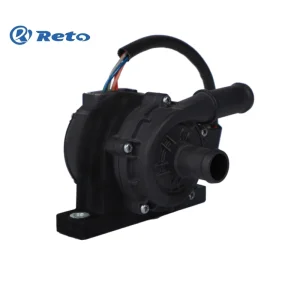
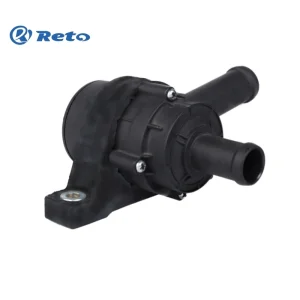
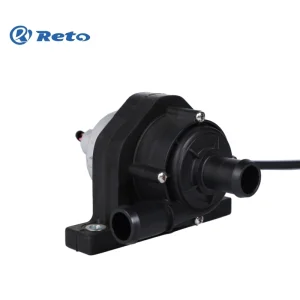
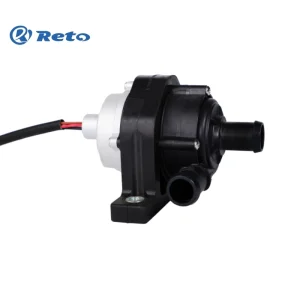
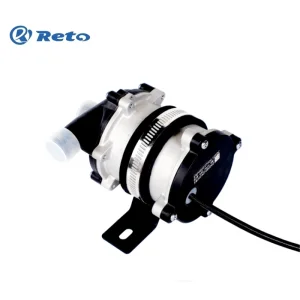
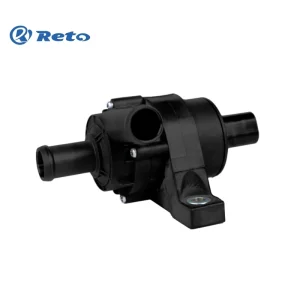
Engineered for hybrid drivetrains, EV battery thermal loops, and high-temp auxiliary turbo cooling operating across European climatic gradients.
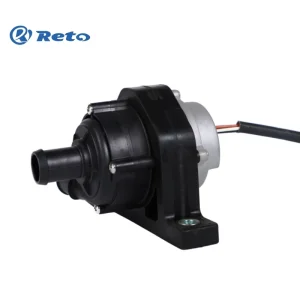
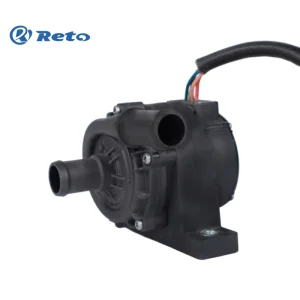
Strategic thermal management component positioning for the world’s per-capita automotive manufacturing leader.
The Slovak Republic occupies a singular status in global automotive manufacturing. Producing more than 180 light vehicles per 1,000 inhabitants, the nation serves as the industrial core for Central and Eastern Europe. Anchored by major manufacturing plants—Volkswagen in Bratislava, Stellantis in Trnava, Kia Motors in Žilina, Jaguar Land Rover in Nitra, and the new Volvo Cars dedicated electric vehicle plant in Valaliky near Košice—the country’s economic vitality relies directly on component innovation.
As the European Union’s Fit for 55 directives accelerate the transition toward zero-emission mobility, the Slovak automotive supplier ecosystem (ZAP SR) faces a technological pivot. Traditional internal combustion engines relied on mechanical, belt-driven impellers characterized by parasitic crankshaft draw and non-modulated volumetric flow. Today's architectures—encompassing Mild Hybrids (MHEV), Plug-in Hybrids (PHEV), Battery Electric Vehicles (BEV), and Hydrogen Fuel Cell (FCEV) platforms—mandate multi-circuit, electronically commutated Brushless DC (BLDC) automotive water pumps capable of decoupled thermal regulation.
Demands ultra-precise active chilling pumps for multi-brand premium SUV platforms and modular small-car battery loops requiring high vibrational resilience and ISO 26262 functional safety.
Focuses on long-life coolant circulation for internal combustion downsized turbochargers, EGR systems, and hybrid transmission fluid heat-exchanger modules.
Anticipates next-generation 800V EV architectures, necessitating high-flow, low-voltage (12V/24V) auxiliary pumps configured with LIN-bus dynamic communication and smart diagnostics.
From single-circuit passive cooling to intelligent multi-loop thermodynamic networks.
Thermal management is no longer merely an engine longevity requirement; it has transformed into a primary driver of electric range extension, ultra-fast charging efficiency, and cabin thermal comfort. In modern electric vehicles produced across Europe, battery cells must operate strictly between 20°C and 35°C to prevent accelerated electrochemical degradation and mitigate the catastrophic risk of thermal runaway. Simultaneously, silicon-carbide (SiC) traction inverters and permanent-magnet synchronous motors (PMSM) produce localized heat fluxes requiring rapid heat dissipation via ethylene glycol-water mixtures.
This reality has driven the fragmentation of vehicle cooling loops into dedicated sub-circuits: (1) High-Voltage Battery Pack Cooling/Heating, (2) Power Electronics and E-Axle Coolant Circuits, (3) Passenger Cabin Heat Pump Interfacing, and (4) Secondary Turbo/Exhaust After-treatment Cooling in Hybrid Variants. Fixed-displacement pumps are inadequate for these configurations; OEMs demand demand-responsive BLDC centrifugal pumps capable of variable RPM operation via Pulse Width Modulation (PWM) or Local Interconnect Network (LIN) protocol communication.
| Thermal Loop Architecture | Typical Fluid Medium | Operating Temp Range | Key OEM Operational Pain Point | RETO Pump Engineering Solution |
|---|---|---|---|---|
| EV Traction Battery Chilling | 50/50 Water-Glycol | -40°C to +65°C | Pressure drop across compact cold plates; cavitation risks | High hydraulic head (up to 9m), wet-rotor design with PPS impeller |
| SiC Inverter & Motor Loop | Ethylene / Propylene Glycol | -40°C to +105°C | Electromagnetic interference disrupting power electronics | CISPR 25 Class 5 EMC suppression, integrated brushless ECU |
| Turbocharger After-Run (ICE/PHEV) | High-Boiling Coolant | -40°C to +125°C | Heat soak-back boiling fluid; motor bearing failure | Zirconia ceramic shaft, PPS-GF40 thermal barrier, canned motor isolate |
| Cabin HVAC & Waste Heat Recovery | Water-Glycol Solutions | -30°C to +90°C | Acoustic NVH disturbance transferred to quiet EV passenger cabins | Field-Oriented Control (FOC) firmware algorithm, silent operation <38 dB(A) |
Bridging Chinese precision agile production with Central European automotive engineering standards.
Slovak automotive procurement executives face persistent pressure: aggressive platform timelines, escalating raw material overhead, and stringent warranty covenants. RETO Pump resolves these challenges by integrating advanced, vertically integrated motor manufacturing with localized tier-supply methodologies.
Located in Xiamen, China's advanced manufacturing corridor, RETO eliminates traditional subcontracting bloat. High-precision plastic injection molding for polyphenylene sulfide (PPS) pump chambers, automated precision stator winding, surface-mount technology (SMT) for internal motor drivers, and automated dynamic balancing are conducted under a single roof. This consolidation affords Slovak partners an unmatched 30% to 45% total landed cost advantage compared to domestic Western European pump makers, without conceding on PPM quality rates.
Every automotive production run complies rigidly with APQP (Advanced Product Quality Planning) and PPAP (Production Part Approval Process) Level 3 protocols. From initial DFMEA and PFMEA audits to 100% dry-run helium leak testing, high-temperature thermal endurance validation, and salt-spray corrosion assessments, our pumps integrate seamlessly into Slovak production lines in Bratislava, Trnava, or Žilina.
Proven thermal hydraulic execution under European operating conditions and climate profiles.
Winter temperatures in the Tatra mountains and rural Slovakia frequently plunge below -25°C. RETO BLDC pumps operate flawlessly down to -40°C, circulating PTC-heated coolant to bring lithium-ion cells up to operating temperature rapidly, safeguarding charging speed and battery lifespan.
Traversing European transit corridors (D1/D2 motorways) at sustained speeds creates severe thermal loads across dual-motor electric drivetrains. Our dynamic PWM-controlled pumps ramp to peak volumetric output (up to 40 L/min) to cool high-current inverters within milliseconds of thermal feedback.
Without the masking noise of an internal combustion engine, hydraulic hum and vibration can severely degrade cabin luxury indices. RETO’s canned-rotor structure and sensorless FOC algorithms keep acoustic emissions below 38 dB(A), meeting stringent luxury German and UK OEM cabin criteria.
Mitigating geopolitical risk while unlocking high-velocity prototyping and serial production stability.
Modern European sourcing protocols prioritize resilient supply architectures that combine Western European Tier-1 integration capability with high-competence Tier-2/Tier-3 component specialists. Sourcing automotive pumps from RETO offers Slovakian engineering groups a standardized framework:
1. Comprehensive Material Compliance: All automotive housing polymers, fluorosilicone dynamic seals, electronic soldering flux, and magnet coatings comply with EU REACH, RoHS, and IMDS (International Material Data System) registration guidelines, ensuring prompt regulatory clearance for intra-EU assembly lines.
2. Magnetic Drive Hermetic Isolation: Conventional dynamic mechanical seals eventually degrade, creating moisture pathways into internal motor coils. RETO implements an advanced canned-rotor isolation chamber formed from carbon-fiber-reinforced PPS, permanently separating the pumped fluid from electronic PCB elements and stator coils. This eliminates leakage pathways throughout the vehicle’s design life (>30,000 operational hours).
3. Advanced Telemetry and Diagnostic Reporting: Our pumps feature intelligent integrated controllers supporting 2-way communication. In addition to accepting PWM or LIN speed command inputs, our pumps transmit real-time diagnostics back to the vehicle Central Thermal Management Controller, alerting to dry-running, over-temperature, rotor lock, over-current, and under-voltage events.
Complete modular portfolio for battery packs, traction motors, and automotive heating circuits.
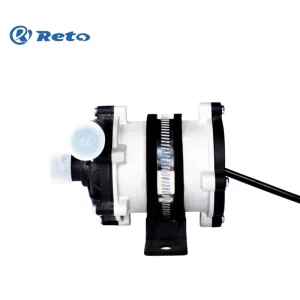
Detailed technical answers for Slovak component sourcing engineers and systems architects.
Connect with our senior thermal management engineering team in Xiamen. Request comprehensive engineering 3D CAD files, test samples, and competitive landed RFQ bids today.