
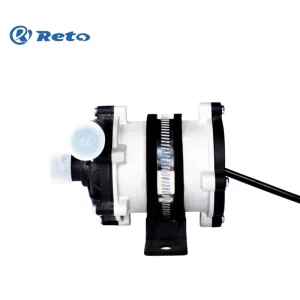
Direct technical compatibility with Kansai industrial benchmarks. Fully automated production lines providing verified zero-defect liquid cooling architectures for hybrid and battery electric vehicle propulsion systems.
The Kansai manufacturing corridor—centered around Osaka, Hyogo, and Kyoto—represents a globally renowned center of precision mechatronics, power electronics, and advanced automotive components.
Osaka's automotive supply chain is pivoting rapidly toward hybrid systems (xEV) and zero-emission vehicles. Commercial fleets, light EV trucks, and urban logistics platforms manufactured or engineered across Kansai demand ultra-reliable BLDC fluid loops capable of operating silently across dense urban delivery routes.
With Osaka research hubs advancing next-gen SiC (Silicon Carbide) power inverters and solid-state battery packaging, thermal heat flux has spiked significantly. Standard mechanical water pumps cannot provide the dynamic volumetric cooling rates required to protect sensitive power semiconductor switches.
Automotive supply chain managers in Osaka require suppliers who fully understand just-in-time logistics, strict PPAP (Production Part Approval Process) milestones, and zero-compromise acoustic benchmarks (NVH), ensuring pump components integrate seamlessly into domestic chassis designs.
Global procurement teams moving away from conventional brushed motors face rigorous thermal cycles, vibration stresses, and electromagnetic compliance requirements. Here is how our custom automotive pump platform addresses these engineering mandates.
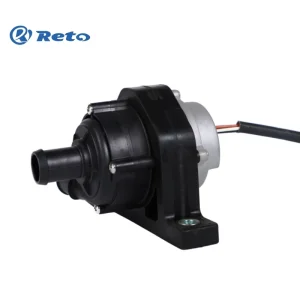
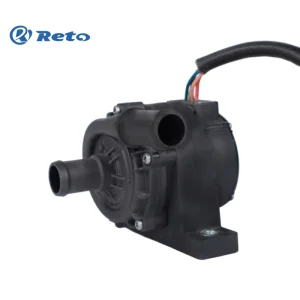
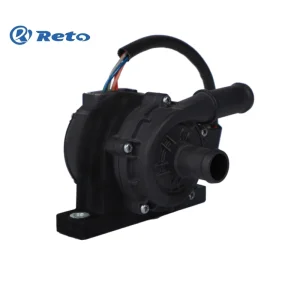
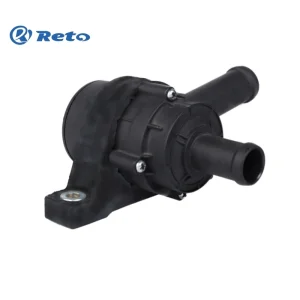
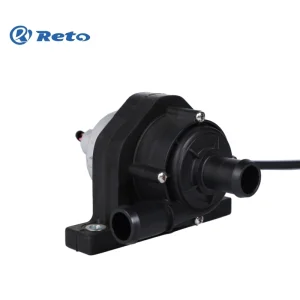
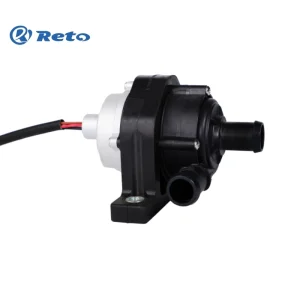
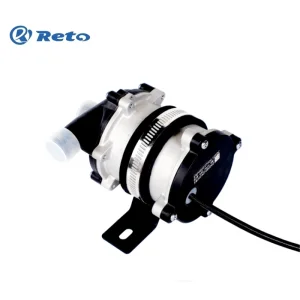
Our automotive coolant pumps eliminate carbon brush friction completely. By coupling the impeller magnetically across a static PPS barrier, we ensure that coolant fluids never contact internal motor windings, eliminating shaft seal wear and preventing leakage over years of extreme thermal expansion.
Integrated microcontrollers interpret vehicle thermal ECU commands in real-time. Instead of continuous full-throttle operation, the pump modulates speed via PWM or LIN-bus protocols, conserving battery energy during highway cruise modes while ramping instantaneously during regenerative braking spikes.
Modern connected cockpits and autonomous sensor suites in Japanese vehicles are highly susceptible to radio frequency interference. Our automotive electronic architecture includes dedicated multi-stage filtering that meets CISPR 25 Class 5 limits, guaranteeing clean RF coexistence.
| Evaluation Parameter | Legacy Mechanical / Brushed Pumps | RETO Custom BLDC Solutions (Osaka Specs) | OEM Operational Benefit |
|---|---|---|---|
| Mean Time Between Failures (MTBF) | 4,000 – 6,000 hours | > 25,000 continuous hours | Exceeds 10-year / 200,000 km automotive durability guarantees |
| Hydraulic Flow Efficiency | 35% – 48% (Fixed belt / friction losses) | 68% – 82% (CFD optimized impellers) | Up to 4.2% EV driving range preservation under urban stop-and-go |
| Thermal Range Endurance | -20°C to +90°C | -40°C to +135°C (Glycol 50/50 mix) | Ensures reliable cold-start in Hokkaido and extreme heat resilience in Kansai summers |
| Diagnostic Capabilities | None (Total binary failure) | Real-time FG Speed, Dry-Run & Stall feedback | Enables predictive maintenance alerts before vehicle thermal runaway occurs |
Entering the Japanese supply ecosystem requires compliance beyond basic consumer certifications. Our manufacturing footprint is audited to the most demanding international and regional standards.
Every phase of our design, prototyping, tooling, and mass assembly operates under audited IATF 16949 procedures. Full traceability is logged through optical serialization, from copper wire lot numbers to final automated potting resins.
Automotive pumps serving Osaka are tested to severe multi-axis random vibration profiles and thermal shock endurance cycling (-40°C to +125°C within 15 seconds) to emulate rough surface dynamics and heavy engine compartment loads.
Raw materials meet RoHS 3 and REACH regulations. Our wet components are chemically neutral to diverse Japanese glycol coolant formulations (including silicate-free and hybrid organic acid technology coolants).
RETO actively invests over 10% of annual revenue into advanced mechatronic R&D. We are closely aligning our pump architectures with Osaka's emerging 800V EV platforms, hydrogen fuel cell applications, and intelligent thermal management nodes.
Developing ultra-pure, deionized fluid circulating pumps constructed with zero metallic ion-leaching plastics. This architecture protects sensitive catalyst membranes in commercial fuel cell trucks operating throughout the port of Osaka.
Engineering smart power drive units with integrated galvanic isolation, allowing high-power auxiliary pumps to operate directly from DC fast-charging bus rails without requiring bulky step-down DC-DC conversion hardware.
Embedding high-frequency acoustic sensing algorithms within the onboard motor controller to identify vapor micro-bubbles and low fluid conditions before thermal performance degrades or cavitation damages the impeller blades.
Engineered for high-volume automotive integration. Full technical documentation, CAD step models, and prototype samples available for Osaka-based R&D engineering centers.
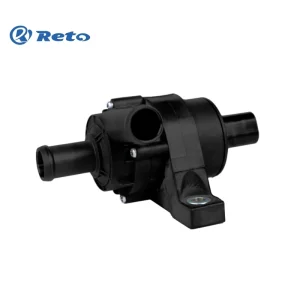
Clear, direct insights for Japanese automotive system integrators, component distributors, and Tier-1 sourcing directors.
Collaborate directly with senior motor and hydraulic engineers. Receive dedicated technical feasibility analyses, customized 3D CAD files, and formal quotations tailored to your exact application constraints within 24 hours.