Engineered to operate seamlessly across high-altitude mountain corridors and coastal corridors such as Limón and Puntarenas, guaranteeing active thermal regulation for passenger and commercial vehicle platforms.
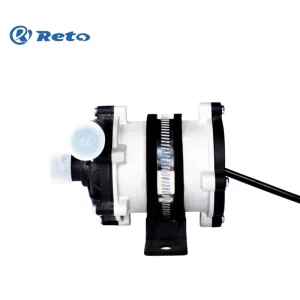
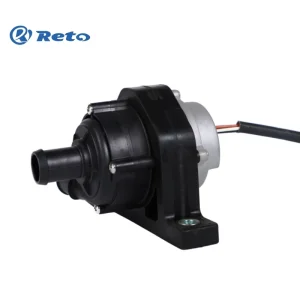
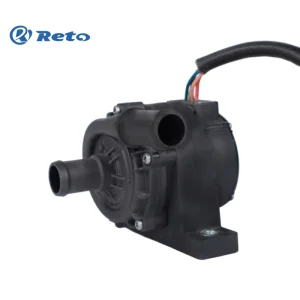
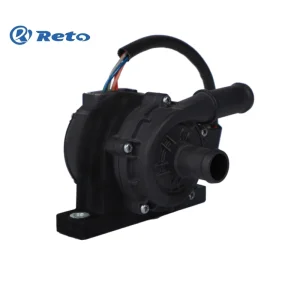
A technical assessment of how Costa Rica’s National Decarbonization Plan (Plan Nacional de Descarbonización) and geographic microclimates govern high-efficiency auxiliary pump requirements.
Costa Rica stands as Latin America’s undisputed front-runner in clean energy adoption, generating over 98% of its electricity from renewable resources (hydroelectric, geothermal, and wind). Consequently, governmental focus has intensely pivoted toward the transportation sector, which historically accounts for more than half of national greenhouse gas emissions. Through Law 9518 (Incentives and Promotion for Electric Transportation), Costa Rica provides strong fiscal exemptions that have sparked an influx of Battery Electric Vehicles (BEVs), hybrid buses, and electrified delivery fleets across the Gran Área Metropolitana (GAM).
For Tier-1 component buyers, fleet retrofitting facilities, and EV assemblers located in Free Trade Zones (Zonas Francas) like Coyol and El Barreal, sourcing automotive pumps is no longer an afterthought. Electric vehicles lack mechanical drive belts; thus, water circulating functions for high-voltage traction batteries, insulated-gate bipolar transistors (IGBT), onboard chargers (OBC), and cabin climate control rely 100% on standalone Brushless DC (BLDC) electric water pumps. Meeting Costa Rican regulatory standards requires continuous operating lives exceeding 20,000 hours without maintenance.
Vehicle operating parameters within Costa Rica differ vastly from flat European or North American test circuits. Driving routes regularly span from sea level at Puerto Caldera directly up through the Cerro de la Muerte passes exceeding 3,000 meters in altitude, coupled with relative humidity rates swinging between 75% and 98% in wet seasons.
Sourcing directly from Xiamen Reto Electric Appliances Co., Ltd. affords Costa Rican distributors, conversion workshops, and industrial integrators crucial strategic advantages:
Targeted thermal solutions addressing regional duty cycles, retrofits, and micro-grid logistics fleets.
Interurban electric transit buses operating along routes connecting Cartago, Heredia, and Alajuela require heavy-duty auxiliary water circulation pumps capable of cooling multi-pack lithium iron phosphate (LFP) banks under frequent stop-and-go congestion.
Transporting temperature-sensitive pineapples, bananas, and coffee beans from farms in the Sarapiquí valley to port hubs requires hybrid diesel-electric transport refrigeration units (TRUs) equipped with silent, continuous-duty 12V/24V coolant pumps.
Costa Rica’s active conversion workshops transform legacy 4x4 utility pickups into zero-emission trail vehicles. RETO’s PWM speed-controlled pumps provide variable flow, reacting instantly to motor controller CAN-bus signaling.
Addressing supply chain risk mitigation, customs compliance, and direct factory technical verification for procurement officers across Central America.
Direct container routes from Xiamen to Puerto Limón and Puerto Caldera ensure consistent inventory lead times, minimizing supply chain latency for assembly plants.
PPS and PA66-GF30 reinforced composite housings resist salt-spray corrosion, ensuring long-term integrity along coastal humidity zones.
Built-in microcontrollers safeguard against run-dry conditions, over-voltage, reverse polarity, and rotor jamming with auto-recovery cycles.
Every pump unit features laser-etched serial tracking, providing full material batch and testing record recall under ISO 9001 and IATF 16949 rules.
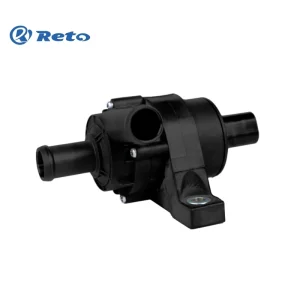
Explore our audited range of mini BLDC coolant circulation units, high-temperature auxiliary motors, and EV battery thermal units.
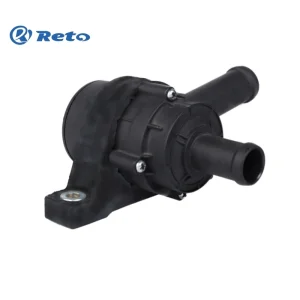
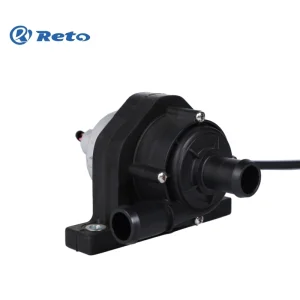
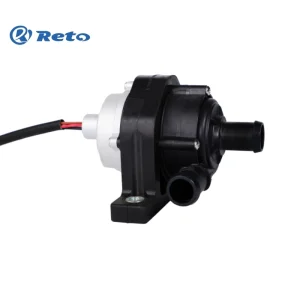
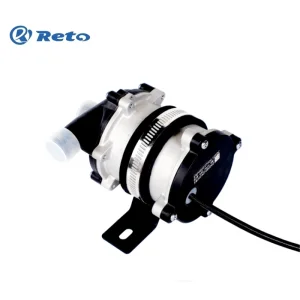
Direct technical answers regarding customs, fluid dynamics, voltage variation, and engineering customization for automotive pump orders.