IATF 16949-certified BLDC electronic water pumps, intelligent auxiliary cooling systems, and high-efficiency fluid circulation architectures tailored for Southeast Asia’s booming EV & commercial vehicle assembly corridors.
Engineered to meet the stringent ambient cooling requirements of tropical duty cycles, our top-tier 12V automotive brushless pumps ensure exceptional MTBF, low acoustic vibration (NVH), and precise closed-loop thermal regulation.
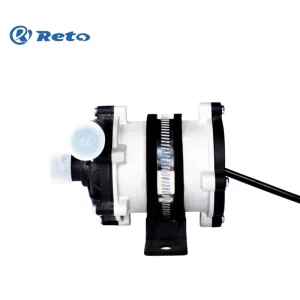
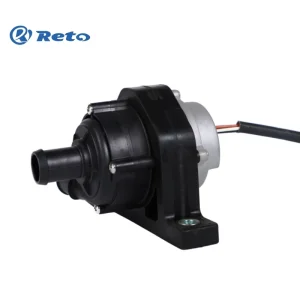
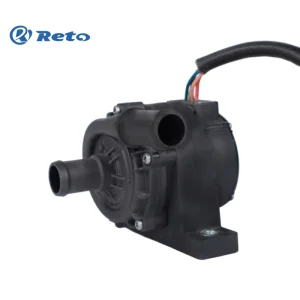
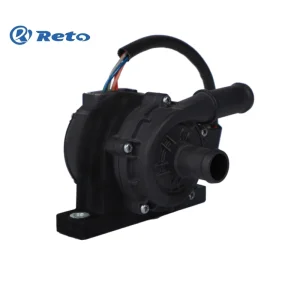
Long heralded as the "Detroit of the East", Thailand is undergoing its most radical supply-chain metamorphosis in half a century. From high-output internal combustion pickup manufacturing to regional electrification, pump technologies are at the heart of vehicle performance.
Thailand’s Eastern Economic Corridor (EEC)—spanning Rayong, Chonburi, and Chachoengsao—has historically centered on mechanical powertrain components for internal combustion engines (ICE) and 1-ton pickup trucks. However, the Thai Government's ambitious "30@30 National Electric Vehicle Policy" mandates that zero-emission vehicles constitute at least 30% of domestic automotive production by 2030.
This mandate has triggered an influx of global EV titans and Tier-1 sub-assemblers erecting mega-factories across the EEC. For automotive pump suppliers and factories in Thailand, the transition necessitates discarding traditional parasitic, belt-driven mechanical pumps in favor of digitally governed Brushless DC (BLDC) electric water pumps. These modern systems ensure active thermal stabilization for traction motor stators, SiC power inverters, battery chillers, and intelligent cabin climate control.
Globally, automotive fluid dynamics is experiencing an architectural convergence. Historically, engine coolant pumps operated proportionally to crankshaft rotations per minute (RPM). This archaic model resulted in under-cooling during low-speed high-torque hill ascents and parasitic over-cooling during steady highway cruising.
The contemporary global standard decouples hydraulic circulation from mechanical rotations. Electronic coolant pumps (ECPs) governed by LIN (Local Interconnect Network) or CAN (Controller Area Network) communications monitor closed-loop thermistor arrays, activating variable volumetric displacement strictly on thermal demand. By slashing parasitic drag on the electrical powertrain, custom automotive pumps can recover up to 4.8% of battery driving range while preventing destructive thermal runaway events.
Off-the-shelf automotive pumps engineered for temperate European or North American climates frequently face premature failure when operating in Thailand and neighboring ASEAN territories. Thermal engineering requires hyper-localized adaptation.
Thailand frequently experiences tarmac-level ambient temperatures surpassing 45°C with sustained relative humidity exceeding 90%. In an enclosed automotive under-hood or chassis-mounted battery bay, thermal envelope ceilings can soar to 125°C. Custom automotive pumps must utilize high-temperature-rated polyphenylene sulfide (PPS) composite housings and fluororubber O-rings to prevent thermal distortion and seal creep.
Urban flooding during Southeast Asia's prolonged monsoon season places pumps situated in lower chassis subframes at extreme risk. Our custom pumps feature hermetically potted stator assemblies with dual-chamber silicon seals, achieving both IP67 immersion and IP69K high-pressure thermal washdown resistance, preventing galvanic corrosion of the internal driver electronics.
The backbone of Thai transport is the 1-ton commercial pickup and urban delivery minibus. These vehicles run extended 16-to-18-hour daily shifts under heavy payload conditions. Pumps customized for these platforms demand ultra-hard graphite ceramic bearings with zero maintenance requirements, rated for continuous operation exceeding 30,000 fluid hours without lubrication breakdown.
As vehicle architectures transition from decentralized 12V topologies to integrated 800V multi-zone thermal networks, custom automotive pump design must evolve proactively.
Pervasive adoption of sensorless Field Oriented Control (FOC) algorithms embedded within the pump’s microcontroller. Integration of LIN 2.1 protocol allowing bidirectional fault diagnostics—detecting dry-running, over-voltage, impeller stalling, and cavitation micro-bubbles before system degradation occurs.
Consolidation of discrete water pumps, multi-way rotary valves, and coolant expansion vessels into single composite manifolds. Direct assembly onto the battery pack or e-axle structure, reducing vehicle plumbing weight by 35% and slashing assembly time across Thailand’s OEM assembly plants.
Native integration of Silicon Carbide (SiC) and Gallium Nitride (GaN) driver switches allowing direct tapping into 400V/800V DC traction buses without stepping down through low-efficiency DC-DC converters. Ultra-compact, sealless magnetic levitation pumping for mission-critical autonomous commercial fleets.
We partner directly with automotive design teams in Thailand and globally to solve complex fluid transport bottlenecks from conceptual Computational Fluid Dynamics (CFD) modeling to high-volume IATF 16949-regulated production.
Without the masking decibels of an internal combustion engine, auxiliary electric pumps become a primary source of passenger irritation if not rigorously tuned. Our engineering suite optimizes pump acoustics through:
Automotive supply chain contracts in Thailand demand uncompromising process discipline. Every pump batch manufactured in our facility undergoes rigorous Advanced Product Quality Planning (APQP) and Production Part Approval Process (PPAP Level 3):
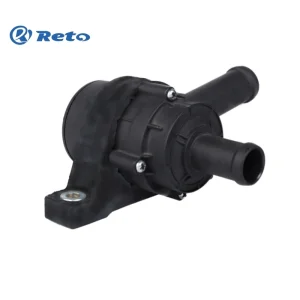
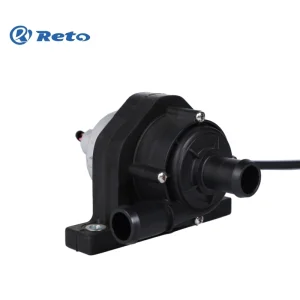
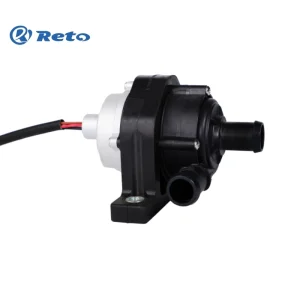
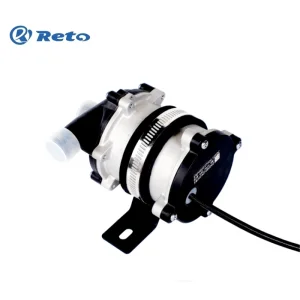
Explore our complete catalog of certified brushless DC cooling, booster, and circulation pumps engineered for hybrid drivetrains, battery chilling loops, and automotive motor electronics.
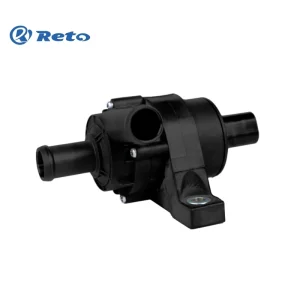
Direct answers addressing technical qualification, communications interfacing, fluid compatibility, and OEM supply chain integration in Thailand and ASEAN.
Traditional brushed pumps suffer from mechanical friction and carbon brush degradation, typically limiting operating lifetime to 3,000–5,000 hours. Furthermore, brush arcing generates electromagnetic interference (EMI) that disrupts sensitive ADAS radar and ECUs. Our brushless DC (BLDC) pumps replace physical commutators with electronic microcontrollers, driving continuous operational MTBF beyond 35,000 hours with negligible EMI and compliance with CISPR 25 Class 5 automotive standards.
Our automotive pump platforms support both PWM (Pulse-Width Modulation) duty-cycle control and automotive bus protocols (LIN 2.1 / CAN 2.0B / CAN-FD). Through intelligent feedback channels, the pump sends real-time diagnostic telemetry to the central thermal controller, including actual rotational speed (RPM), stator temperature, supply voltage, current draw, and automated fault flags (e.g., dry-run protection, rotor lock, over-temperature cutoff).
The pump’s wetted materials (PPS polymer casing, ceramic/graphite thrust bearings, EPDM/Fluororubber O-rings) are extensively validated for compatibility with standard 50/50 and 60/40 water-ethylene glycol (OAT and Si-OAT Organic Acid Technology) anti-freeze formulations. They are also optimized for low-viscosity non-conductive dielectric fluids used in direct-immersion battery pack immersion cooling applications.
Yes. We support Tier-1 and OEM platform engineering programs through our rapid custom prototyping pipeline. Using high-precision rapid injection tooling and CNC fluid housing machining, we deliver functional, bench-tested prototype units with custom port orientations (quick-connect or barbed), specific mounting bracket geometries, and programmed PWM/LIN firmware maps within 15 to 25 business days for local bench testing and rig qualification.
All products and production lines conform strictly to ISO 14001, RoHS, and REACH directives. Automotive series components are tested according to ISO 16750 standards for mechanical vibration (up to 4.5g RMS), thermal shock cycles (-40°C to +125°C), and chemical spray exposure, ensuring compliance with both Thai Board of Investment (BOI) domestic production standards and international export mandates.
Whether you are developing next-generation electric pickup trucks, hybrid drivetrains, or specialized industrial vehicle thermal management systems in Thailand or globally, our fluid engineering team is ready to analyze your flow rate, pressure, and packaging envelope.